DEIR AL-BALAH, Gaza Strip /PNN / Stor by Nesma N Harazeen
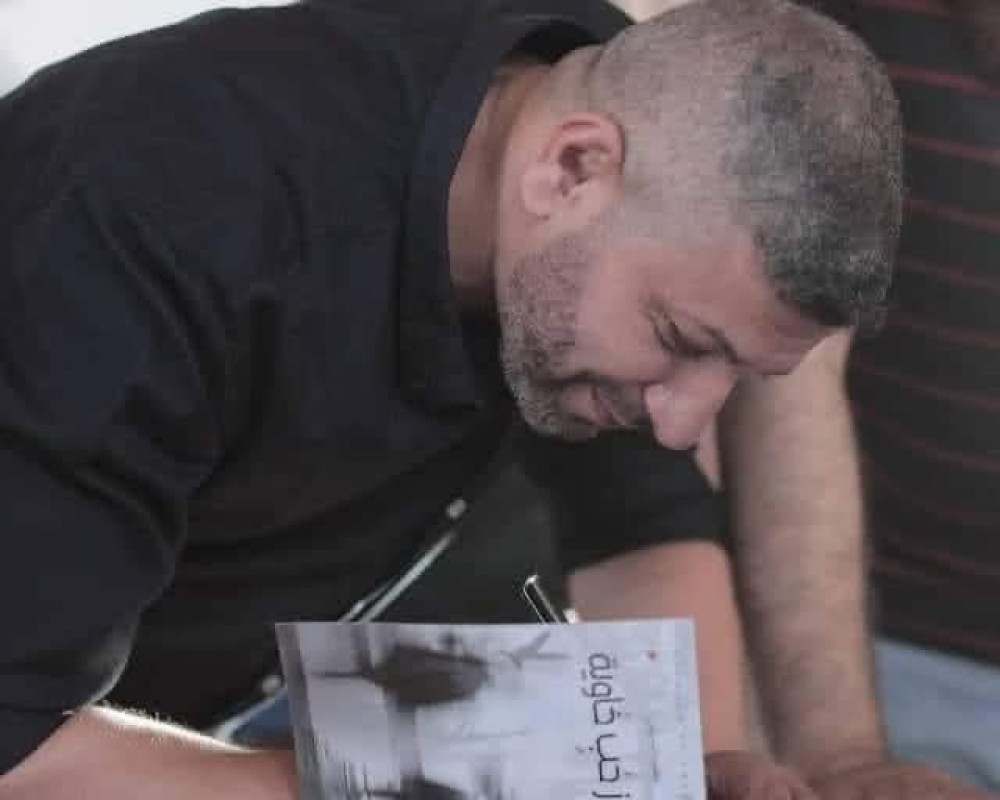
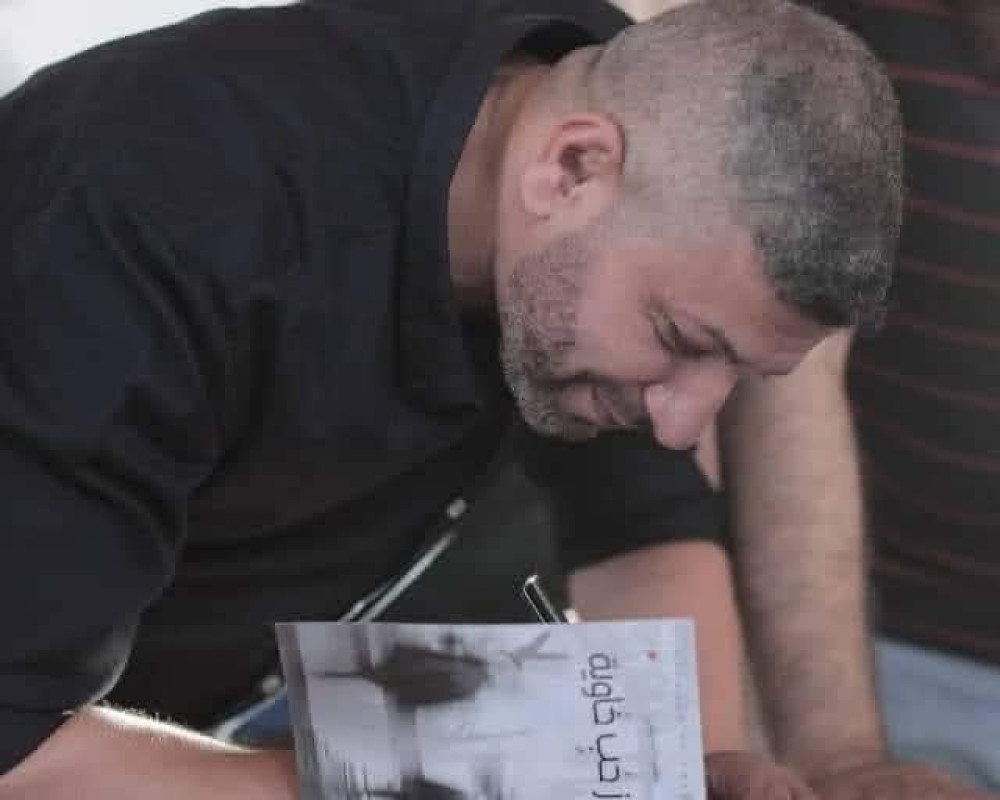
In a small tent stitched together with patterned fabric that offers little more than the illusion of walls, Palestinian writer Mahmoud Albasiony continues to write, surrounded by the fragile remnants of a life repeatedly uprooted by war.
A thin, worn mat covers the ground. A small plastic table holds a few notebooks, pens and books that survived displacement. Nearby, a basil plant releases a faint scent — a quiet reminder that life persists, even here.
Albasiony, speaking by phone while holding a cup of tea, pauses as the constant hum of Israeli drones fills the sky above Gaza. Outside, children move between rows of tents, searching for water in a place where even the simplest parts of childhood have become a daily struggle.
“We do not write because writing is a luxury,” he said. “We write because we are afraid that silence will erase what is left of us.”
Since the Israeli war on Gaza began in October 2023, writing has taken on a new meaning for Albasiony — no longer just art, but a form of survival and memory in a landscape reshaped by destruction, hunger and displacement.
Like many families in Gaza, he has been forced to move repeatedly, each tent becoming a temporary refuge until another evacuation order arrives.
“Writing is not tied to a certain hour or place,” he said. “It comes with me everywhere — before sleep, after waking up, during blackouts, while waiting for water or standing in line for food.”
He paused briefly, then added with a faint smile, “To be attached to writing during war can feel like a gift, but it can also feel like a burden.”
In Gaza, even language has shifted. Houses have become tents, streets have turned into paths between rubble, and daily routines have been replaced by long queues for basic necessities.
Albasiony said he resists turning his writing into political slogans.
“The war did not only take homes and loved ones,” he said. “It took away the natural rhythm of life.”
At times, even the act of writing is interrupted. During the interview, the internet connection dropped more than once. When it returned, he laughed quietly.
“Sometimes I write a whole text, and before I save it, my phone battery dies,” he said. “It feels as if I have lost part of my memory — not just words, but the feeling behind them.”
Before the war, poetry was his primary form of expression. He had published a collection titled Between the Arms of the Fog and mentored young writers in cultural centers across Gaza, believing literature could help preserve Palestinian identity.
But the war reshaped his writing. Poetry, he said, could no longer contain the weight of what people were experiencing, prompting him to turn to fiction.
His latest novel, A Spark from the Fire, published by the Palestinian Ministry of Culture, follows a Jewish woman who falls in love with a Palestinian man and becomes trapped in Gaza during the war. Through her perspective, the novel explores bombardment, displacement and the struggle to retain humanity under siege.
“I did not feel I was inventing the story,” he said. “Reality around me had already provided everything the novel needed.”
As he spoke, the sound of drones returned — audible both inside his tent and through the phone line — underscoring how even conversations unfold under the shadow of war
Beside him sat his wife, Faten Shamali, the first reader of his work and a steady presence throughout his writing process.
He then spoke about his mother, who died during the war. Because of the siege, he was unable to say goodbye.
For a moment, he fell silent. “After my mother died, I understood that in Gaza a person can lose everything at once,” he said. “Maybe that is why I now write with such urgency.”
“I write as if I am trying to save the people I love, and the places I miss, from disappearing completely.”
Even basic materials are scarce. Notebooks and pens are difficult to find, forcing him to write on his phone or on scraps of paper that may be lost during the next displacement.
“Sometimes I write while carrying firewood,” he said. “Sometimes while waiting for water, or while trying to charge my phone. Writing has become broken into pieces, just like our lives.”
Despite the conditions, Albasiony is working on a new trilogy. He said he knows literature cannot stop bombs, but believes it can challenge silence.
“Words may not change reality,” he said. “But they can prevent us from becoming only numbers in the news.”
In Gaza, where entire neighborhoods can disappear overnight and libraries can be reduced to rubble, writing remains one of the last ways to preserve what is being lost.
As buildings collapse around him, Albasiony continues to build another kind of home — one made of words, memory and the hope that Gaza’s story will endure long after the war ends.