Bethlehem /PNN /
The West Bank’s health system is being pushed toward a collapse comparable to Gaza’s, not by airstrikes but by financial pressure and restrictions on movement, the head of a US-based medical aid group said on Thursday.
Dr. Zaher Sahloul, president and CEO of MedGlobal, said that the mechanisms differed from those that devastated Gaza’s hospitals and clinics but the outcome for patients could be similar.
“Gaza’s health system was largely dismantled through direct bombing, restrictions on medical supplies and fuel, and the effects of siege and displacement,” he said.
“The West Bank trajectory is different in form but convergent in effect: chronic fiscal strangulation combined with movement restrictions and operational interference.”
His comments followed a statement by the rights group Physicians for Human Rights-Israel, which said that 447 of the Palestinian Health Ministry’s 590 service branches had sharply reduced operations and were open only once or twice a week.
The crisis has intensified as Israel continues to restrict the Palestinian Authority’s access to tax revenues it collects on the authority’s behalf under the Oslo agreements.
Israel began withholding some of the funds after the Gaza war began in October 2023. The World Bank said monthly deductions from the clearance revenues rose from about $66 million to roughly $165 million, reducing transfers to the PA by more than half.
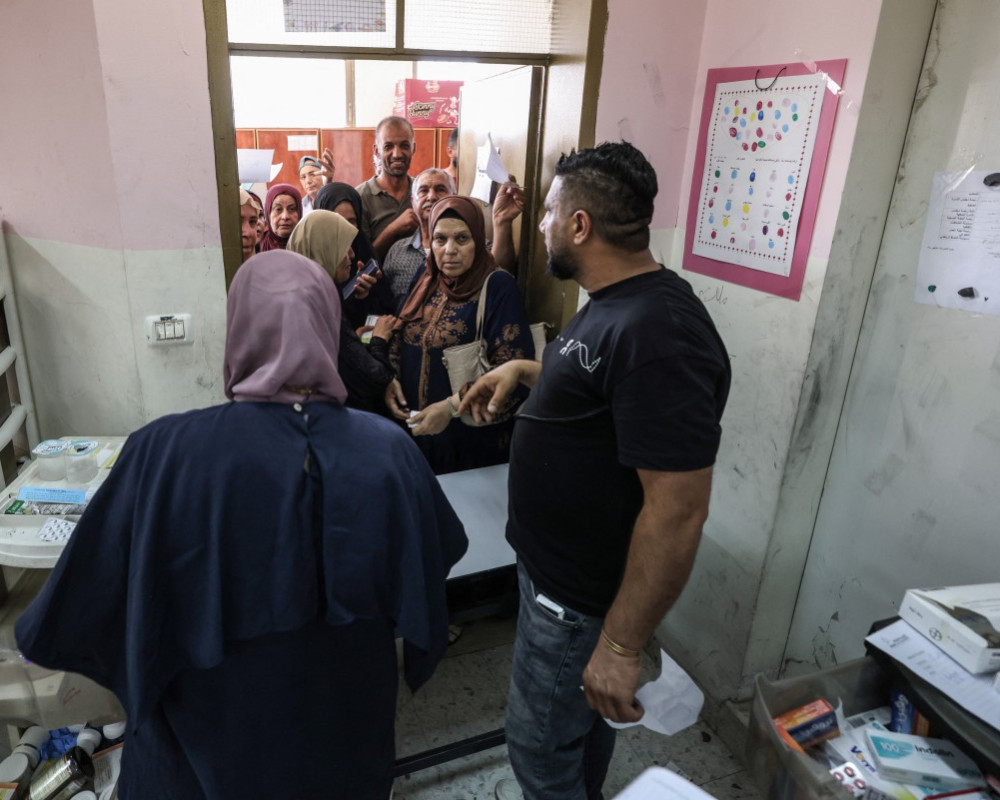
By 2025, only 63 percent of primary health centers in the West Bank were partly operational, PHRI said. Many were open one day a week, compared with six days before the war.
As the financial crisis has worsened, Palestinian President Mahmoud Abbas last month sought an Arab League funding mechanism.
The revenue shortfall has affected health workers as well as patients. PHRI said employees received delayed and partial salaries, prompting a strike on May 9, after which staff returned to work.
The Health Ministry’s arrears exceeded $1.18 billion, while hundreds of essential medicines were unavailable or nearing depletion, the group said.
“The system can no longer deliver reliable primary care, chronic disease management, maternal care or emergency referral,” Sahloul said.
The financial squeeze had left the ministry unable to fully pay workers, restock pharmacies or keep facilities operating at full capacity, he said.
The consequences include delayed cancer treatment, disrupted maternal care and patients unable to obtain medicines for chronic illnesses including hypertension and diabetes, he said.
Financial constraints had also been compounded by checkpoints, military raids and other movement restrictions, Sahloul said.
These can delay ambulances, prevent patients from reaching referral hospitals and interrupt clinic operations.
Since the start of the Gaza war the West Bank has seen intensified Israeli military operations and increased settler violence, arrests, movement restrictions and economic decline.
At least 1,100 Palestinians were killed and more than 11,000 were injured in the West Bank between October 2023 and December 2025, according to UN figures.
The broader deterioration has strained healthcare, livelihoods and the PA’s ability to provide public services.
“The cumulative result is a health system that is being hollowed out rather than bombed out — slower, quieter but ultimately producing the same outcome for patients: preventable illness and excess deaths,” Sahloul said.
Under international humanitarian law, an occupying power has obligations toward the health of the protected population.
“Withholding fiscal transfers that the population depends on for basic services while simultaneously constraining physical access to care is incompatible with those obligations,” Sahloul said.
“It also undermines the possibility of any meaningful localization or capacity building that organizations like MedGlobal advocate elsewhere.”
In May 2025, the World Health Organization said at least 94 percent of Gaza’s hospitals had been damaged or destroyed.
UN experts in August last year accused Israel of deliberately attacking and starving health workers, paramedics and hospitals in what they described as an effort to destroy medical care in the enclave, calling it “medicide.”
“Once essential medicines, staffing continuity and referral pathways are broken, the system does not degrade gracefully,” Sahloul said.
“Chronic conditions become acute, acute conditions become fatal and the remaining functional capacity is quickly overwhelmed.
“The West Bank still has more infrastructure and human capacity than Gaza. That residual capacity is precisely what is being eroded. Acting while it still exists is both a medical and a moral imperative.