RAMALLAH / PNN/
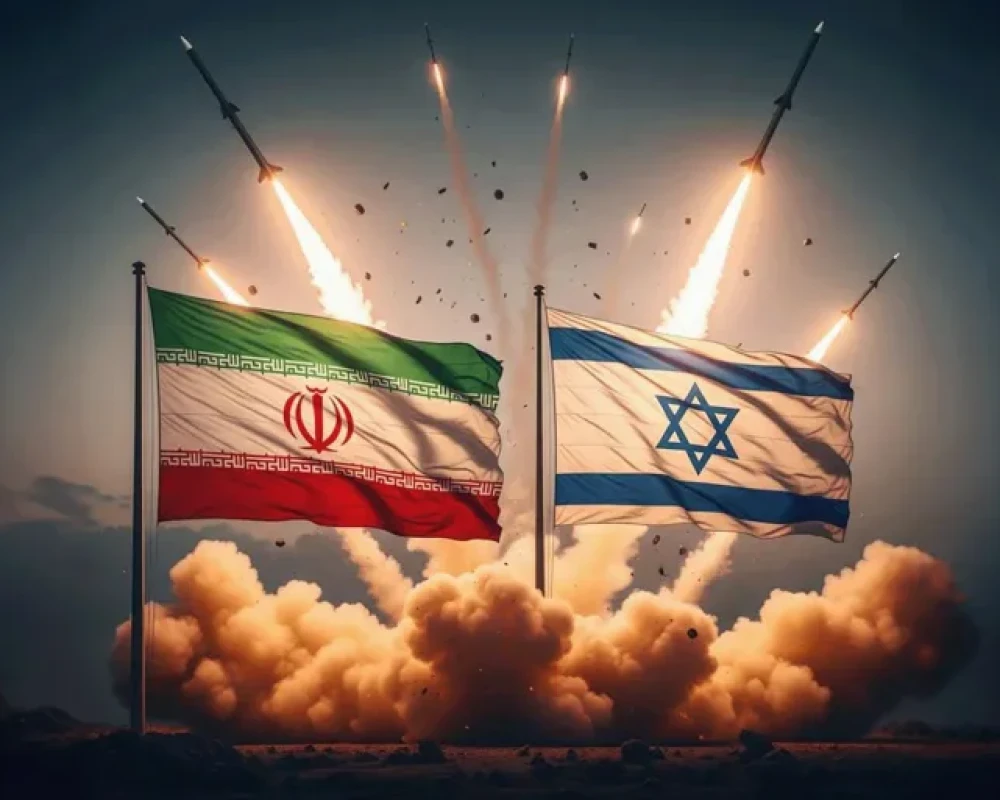
Most Palestinians prefer to remain neutral in the escalating regional conflict involving Iran, Israel, and the United States, while expressing deep concern about its political and economic consequences for Palestinians and the broader Middle East, according to a new public opinion poll.
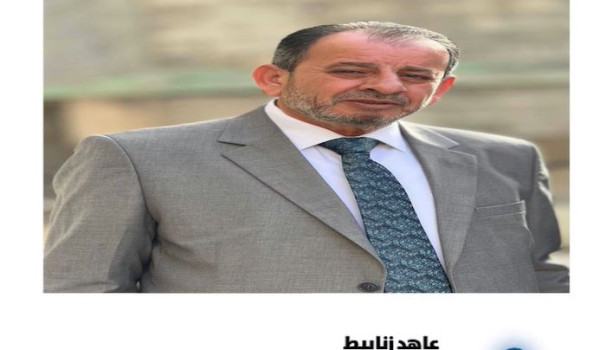
The survey, conducted by the Palestinian Center for Public Opinion and prepared by its founder and president Nabil Kukali, found that 78.3% of respondents said they do not lean toward any side if the war continues.
Only 19.4% expressed sympathy toward Iran, while 1.3% said they lean toward Israel and the United States, and about 1% said they were unsure.
Shared responsibility for the war
When asked who bears responsibility for the outbreak of the war or military escalation in the region, 56.6% of respondents said all parties share responsibility.
Another 22.3% blamed Israel, 7.8% blamed the United States, and 5.5% blamed Iran, while 7.8% said they did not know.
The results suggest that most Palestinians view the crisis as part of a broader regional confrontation involving multiple actors rather than the actions of a single party.
Palestinians closely follow regional developments
The poll found that Palestinians are closely following developments in the region.
About 32% said they follow the war or military tensions with great interest, while 33% said they follow them to some extent. Another 27.2% said they follow them slightly, while 7.8% said they do not follow them at all.
Taken together, the findings show that about 65% of Palestinians follow regional developments either closely or moderately, reflecting widespread public awareness of the unfolding conflict.
Social media platforms were identified as the primary source of information, cited by 59.5% of respondents. Satellite television channels ranked second with 23%, followed by friends and social networks at 11%. News websites accounted for 4.2%, while newspapers and radio together made up 2.3%.
Fear of broader regional escalation
When asked about the likelihood that the war could expand to include other countries in the region, 41.1% said the probability is high, while 27.8% said it is moderate and 25.6% said it is low. About 5.5% said they did not know.
Overall, nearly 69% believe there is either a high or moderate likelihood that the conflict could expand, reflecting widespread concern about further regional instability.
Pessimism about regional stability
A majority of respondents expressed pessimistic expectations about the war’s impact on the stability of the Middle East.
About 58.6% said the war would significantly increase instability in the region, while 30.4% said it would raise tensions for a limited period. Only 9.4% said it would not have a major impact, and 1.6% said they did not know.
Concerns about impact on Palestinians
The poll also highlighted concerns about the potential consequences of the war for Palestinians themselves.
About 77% of respondents said the war would worsen the economic and political conditions of Palestinians, while 57.9% believed it would negatively affect the future of the Palestinian cause.
Meanwhile, 21.4% believed the war could have a positive impact, while 17.8% said it would not significantly affect the Palestinian issue, and 2.9% said they did not know.
Views on Hezbollah and regional politics
The survey also explored Palestinian attitudes toward Hezbollah and its potential role in the conflict.
Only 18.8% supported Hezbollah’s participation in the war, while 8.7% supported it under certain conditions. In contrast, 52.1% opposed Hezbollah’s involvement, and 20.4% said they had no opinion.
Regarding the Lebanese government’s decision to consider Hezbollah’s military wing outside the legal framework of the state, 57% of respondents said the issue should be treated as an internal Lebanese matter, while 16.2% supported the decision and 20.4% opposed it.
Religion remains a strong social factor
Beyond political questions, the survey also examined social attitudes.
About 16.2% of respondents described themselves as very religious, while 64.1% said they were somewhat religious. Another 7.4% described themselves as slightly religious, while 10% said they were not religious, and **2.3% declined to answer.
These results suggest that more than 80% of Palestinians consider themselves moderately or highly religious, reflecting the continuing importance of religion in Palestinian social identity.
Poll methodology
The poll was conducted using Random Digit Dialing (RDD) and Computer-Assisted Telephone Interviewing (CATI).
It surveyed 309 respondents in the West Bank and the Gaza Strip, with a 69% response rate and a margin of error of ±5.57% at a 95% confidence level. Fieldwork was conducted between March 7 and March 11, 2026.
Commenting on the findings, Kukali said the results indicate that Palestinian public opinion is characterized by political realism and caution rather than alignment with any side in the regional conflict.
“Despite strong interest in the tensions between Iran, Israel and the United States, most Palestinians tend to remain neutral and focus primarily on the possible consequences of the war for the region and for their own future,” he said.