BETHLEHEM / West Bank
In the stone-cutting workshops of the West Bank, heavy industrial saws that once hummed relentlessly now stand mostly silent, operating at barely a fraction of their capacity. Meanwhile, in the devastated Gaza Strip, Palestinian engineers and builders are sifting through mountains of pulverized concrete, salvaging twisted iron rods and shattered aluminum frames to construct vital public shelters from the ruins of war.
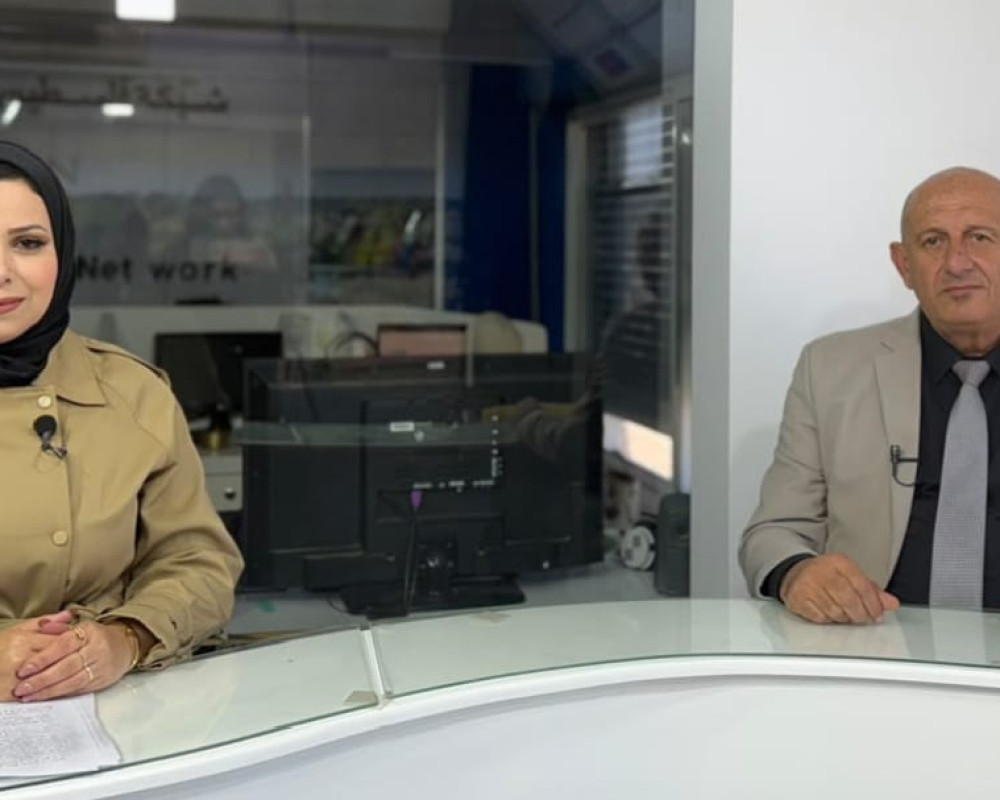
These twin crises—the economic strangulation of Palestine's signature stone industry and the urgent push to rebuild Gaza from its own debris—were recently examined on "Al-Makshouf" (In the Open), a current affairs program produced by the Palestine News Network (PNN) and hosted by Sara Rizk.
Omar Diriyeh, head of the Palestinian Stone and Marble Union, warned that one of the territory's most vital economic pillars is facing cumulative collapse. Historically exported to more than 76 countries, the sector directly employs between 25,000 and 30,000 workers, alongside thousands more in auxiliary trades. Today, factories are running at just 40% capacity.
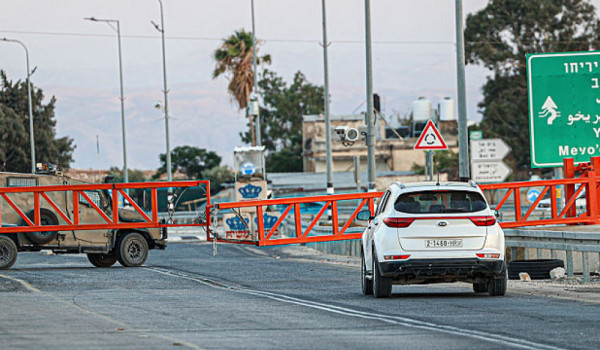
Diriyeh attributed the downturn to Israeli military road closures, gate blockades, attacks on quarries, and soaring energy costs. Forced onto rugged detour routes, freight carriers face an extra 5,600 Israeli shekels (roughly $1,500) in transport costs per single shipment. This logistical tax has priced Palestinian stone out of traditional markets, leaving local producers vulnerable to cheaper imports from Egypt, Turkey, and China.
To prevent widespread factory closures and the permanent loss of generational craftsmanship, Diriyeh called for anti-dumping regulations, international trade support, and a sustainable national industrial strategy built on clear legislation rather than temporary fixes.
In Gaza, where severe blockades have created an acute shortage of construction materials, survival depends on architectural improvisation. The broadcast highlighted a grassroots initiative that successfully reclaimed iron, stone, and aluminum from bombed-out structures to erect a new community service building.
Dr. Shafiq Jendia, former dean of the Faculty of Civil Engineering at the Islamic University of Gaza, praised the effort as a testament to local engineering ingenuity. However, he drew a sharp technical distinction between salvaging intact fixtures—such as doors and windows—and structurally recycling crushed rubble into new building materials.
Because war has destroyed most of Gaza's testing laboratories and heavy crushing machinery, Jendia warned that salvaged materials must undergo rigorous structural and environmental testing to ensure they are safe and free of toxic contaminants. Properly processed rubble, he noted, could eventually pave roads, reinforce infrastructure, and generate vital local jobs.
Jendia urged the creation of an independent national authority to map Gaza's rubble, establish sorting centers, and enforce safety standards. "Palestinian engineers possess the expertise to lead a major part of the reconstruction," Jendia said, emphasizing that with international equipment, funding, and political backing, Gaza's professionals are ready to rebuild.