JENIN/ West Bank
In the agricultural fields of Jalameh, a small village north of Jenin, a group of Palestinian women are transforming a forgotten agricultural tradition into a flourishing, eco-friendly export industry. For these women, cultivating organic loofah (Luffa) is not just an homage to the farming practices of their mothers and grandmothers; it has become a critical engine for economic independence in a region severely strained by financial crises.
Since 2010, the Jalameh Women’s Center Association has driven this initiative, systematically scaling production from a localized backyard craft to an industrialized operation capable of competing on international department store shelves.
"The idea sparked from a desire to revive organic loofah cultivation, which Palestinian women relied on decades ago, and adapt it to meet contemporary market standards," explains Wasfiyya Shaaban, the association's secretary.
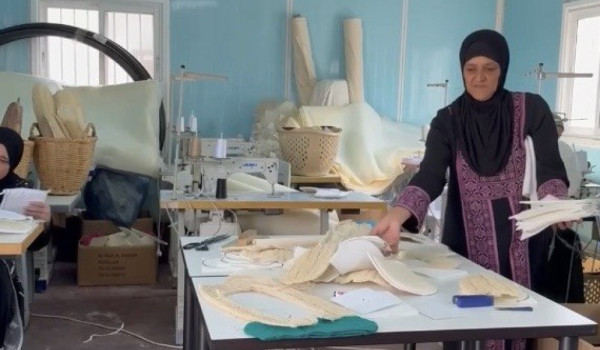
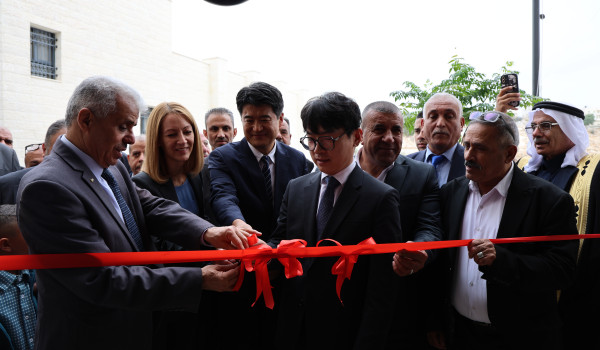
The path to industrialization was fraught with structural hurdles. Early on, the artisans attempted to manufacture the personal care items using standard textile sewing machines, which constantly jammed, broke, or failed against the tough, fibrous texture of the dried plant material. The breakthrough came via technical intervention from the Applied Research Institute – Jerusalem (ARIJ), which provided specialized heavy-duty industrial machinery and intensive production training to unlock high-quality outputs.
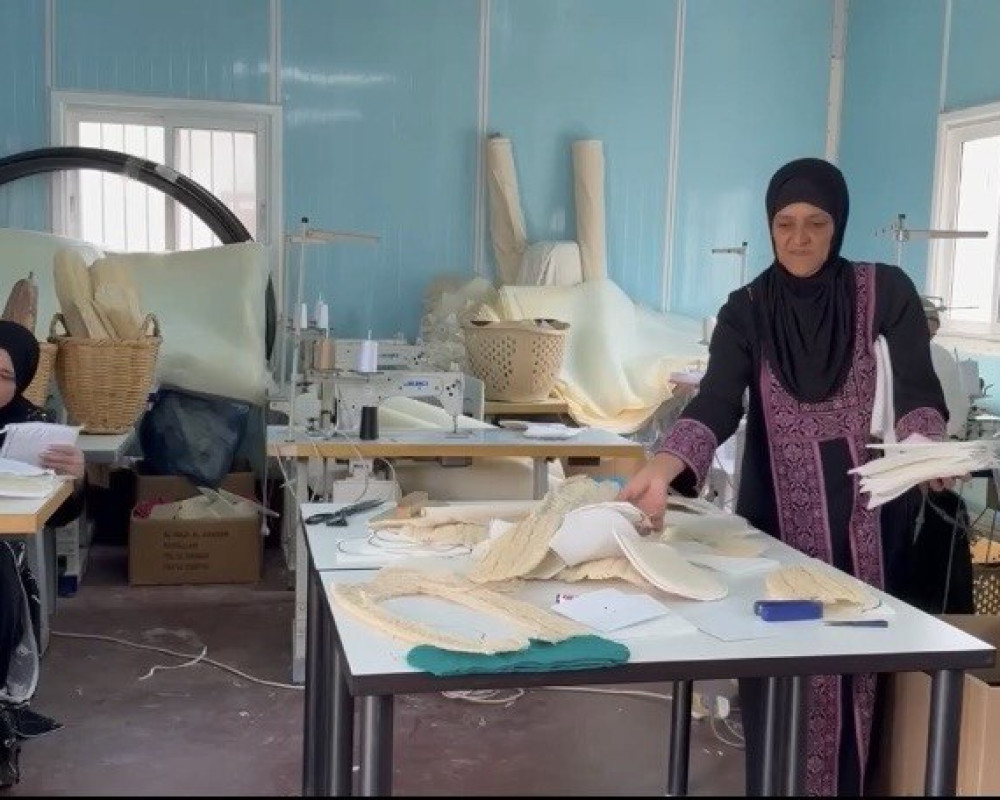
Today, the collective manages a complete vertical supply chain within Jenin. The women oversee every phase: planting the seeds, harvesting the mature gourds, sun-drying, peeling, pressing, cutting, and stitching the final organic sponges using 100 percent natural cotton backing to ensure it remains biodegradable and gentle on the skin.
While the enterprise presently sustains eight full-time female workers and their families, marketing efforts have shattered local boundaries. Driven by international delegations visiting Jenin and participation in foreign trade expos, the Jalameh loofahs have successfully penetrated European markets—including the Netherlands, Poland, and Germany—alongside Gulf markets like Saudi Arabia, Kuwait, and Qatar.
Faced with steep competition from mass imports like Egyptian loofahs, the collective's perseverance highlights the dynamic capability of Palestinian women to transform cultural heritage into sustainable livelihood solutions. "Reaching this level of quality was a grueling journey of trial and error," Shaaban says. "But it proves that our heritage can safeguard our future.