GAZA / PNN /
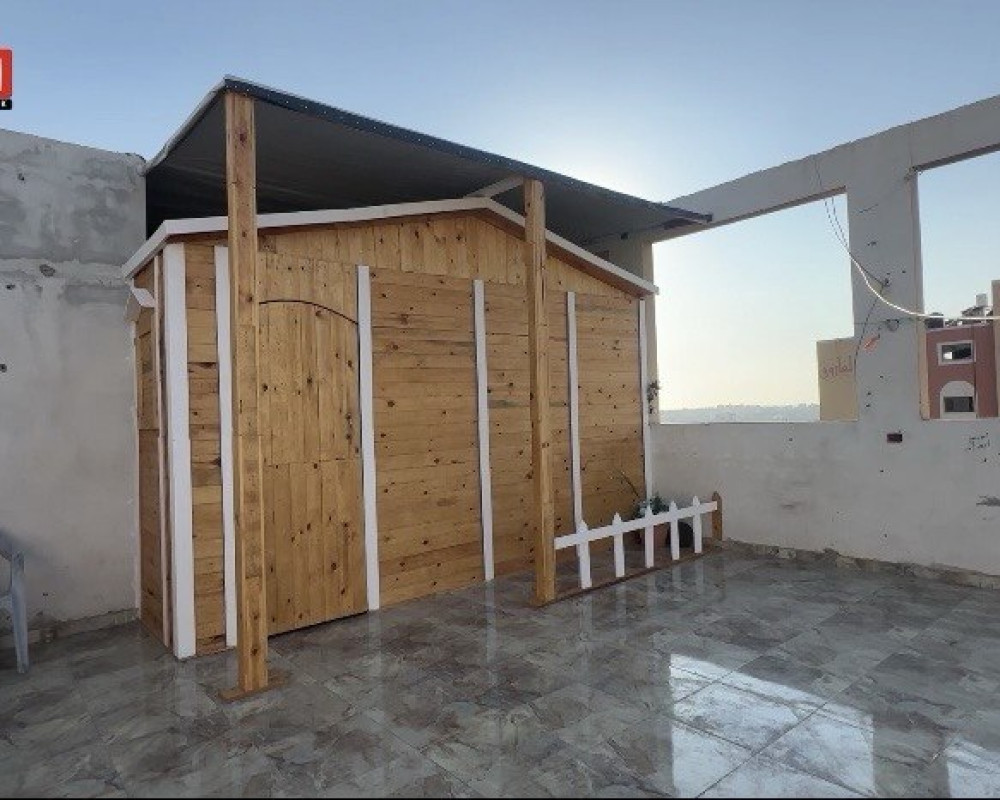
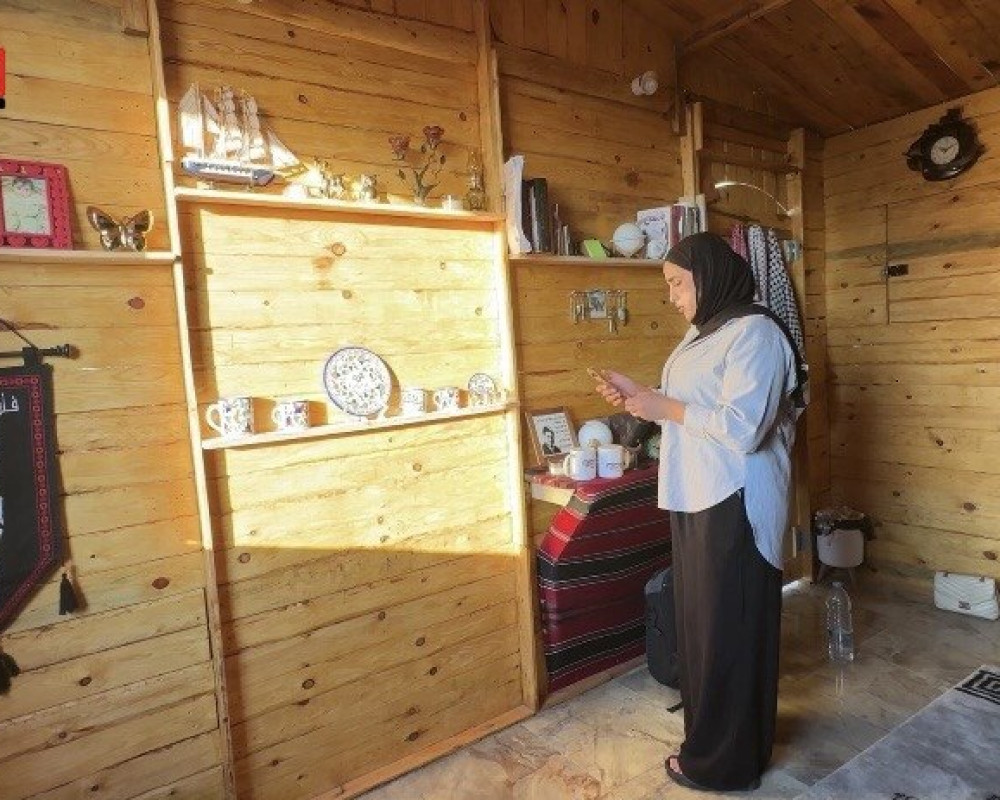
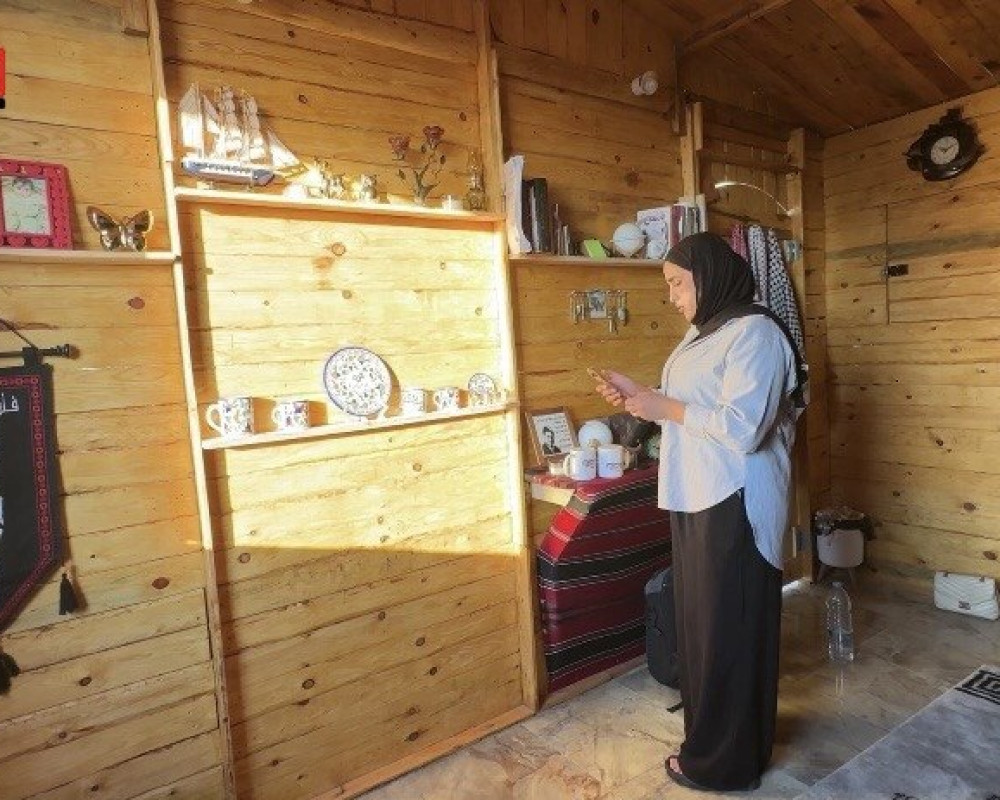
War and destruction have not stopped Palestinian content creator and photographer Tala Darwish from returning to her work. Using timber from pallets that carry humanitarian aid into the Gaza Strip, she has built a modest studio in an effort to reclaim her professional space and continue sharing Palestinians’ experiences and hardships with the world.
Before the war, Darwish worked in content creation and television presenting. But the destruction of the studios and workplaces where she had built her career forced her to stop working for a period.
She eventually decided to return, driven by the realities of war and the urgent need to document the personal stories and events unfolding on the ground in Gaza.
Darwish said her sense of being part of a broader media and humanitarian mission motivated her to resume her work. She believes documenting people’s stories and using the camera to convey the details of their daily lives to the world remains essential.
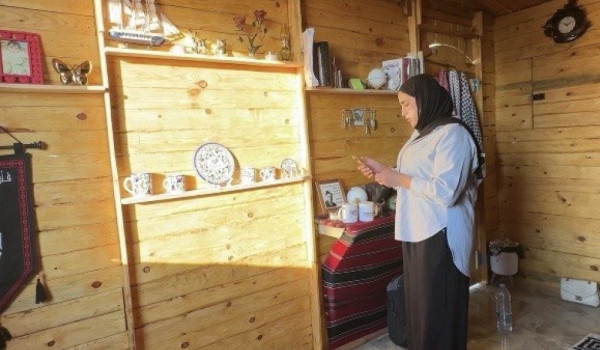
To build the studio, Darwish collected wooden pallets used to transport humanitarian aid into Gaza through border crossings. She gathered usable pieces from different locations, then reassembled, painted and prepared the timber to create a small space where she could film programmes and produce media content.
Finding suitable wood was not easy. She had to search for pieces fit for construction and collect enough material at a time when building supplies were difficult to obtain and expensive. The project ultimately depended on recycling what was available and making the most of limited resources.
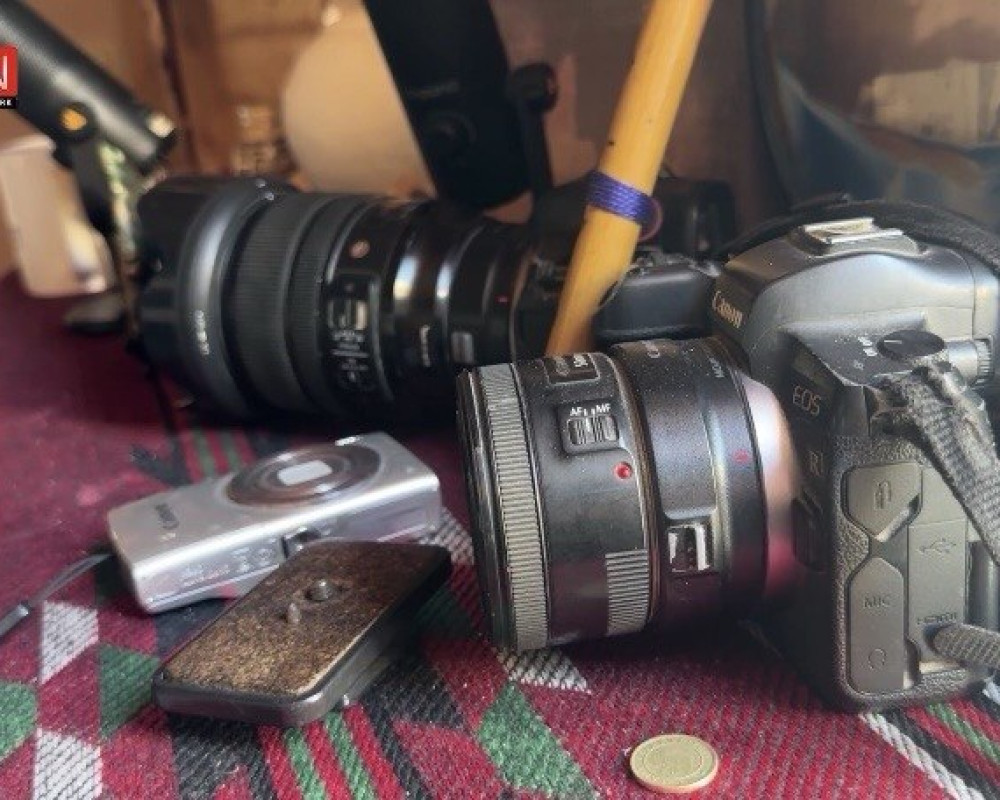
The challenges extended beyond construction to the equipment needed to work, amid restrictions on bringing devices and supplies into the territory.
Darwish said her team searched different locations for tools, repaired broken equipment and even reused electrical wires, connecting them to secure a power supply from nearby shops and cafes.
Microphones were another costly and difficult item to obtain. Darwish and her colleagues had to look for affordable alternatives and repair damaged microphones rather than replace them.
She recalled how her return to work began with filming a podcast inside a friend’s tent in Khan Younis, alongside several colleagues, including the late journalist Saleh al-Jaafarawi.
Despite the basic setting and limited equipment, the team managed to record and publish episodes intended to share the personal experiences of Gaza’s residents and show the world how they were living through the war and coping with its daily realities.
Returning to work gave Darwish a sense of hope and the possibility of recovering a part of life, after the devastating events that have made it difficult for people across the territory to live as they once did.
But she stressed that regaining motivation is neither easy nor constant. There are moments of exhaustion when people struggle to continue, she said, before finding the strength to carry on, driven by their responsibilities to their families, their homeland and the stories they feel compelled to tell.
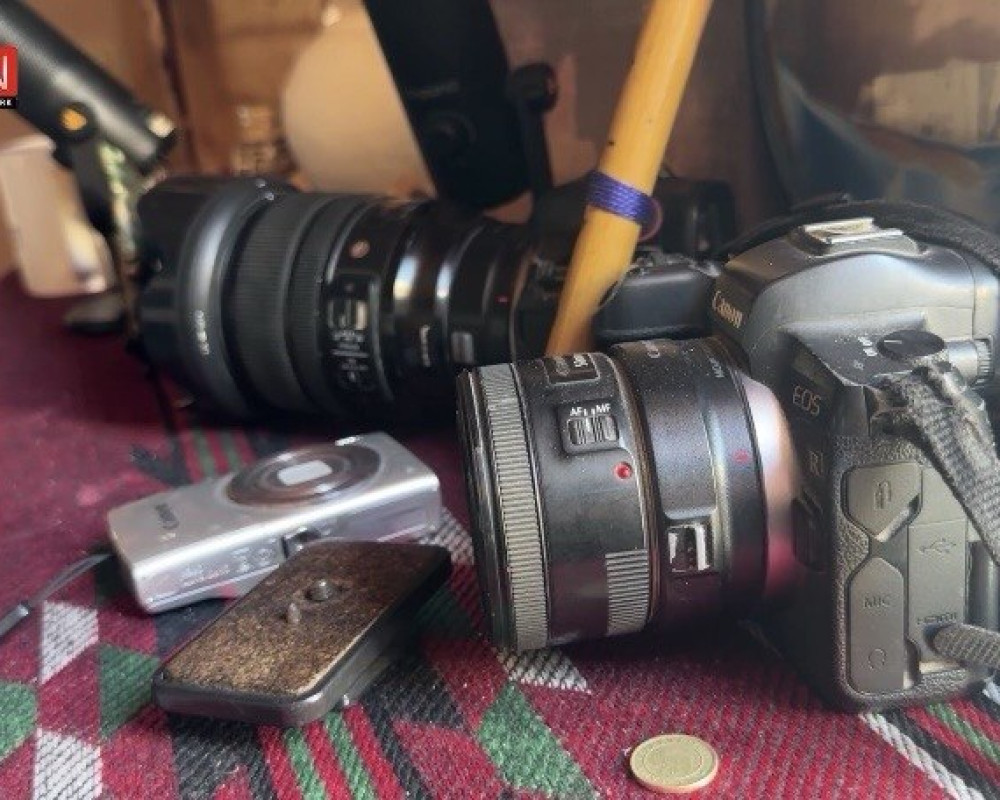
Building the studio, despite its limited resources, was a step towards keeping her media work alive and continuing to convey the Palestinian experience. Her aim, she said, was not simply to reclaim a place to film, but to create a means for people to share their voices and experiences with the world.
Darwish cautioned, however, that adapting to new circumstances should not be mistaken for a return to normal life in Gaza. Conditions remain extremely difficult, and the ability to secure a few basic resources does not mean everyone has the same opportunity.
Her ability to obtain timber and build a studio does not mean others can find the same materials, she said, adding that some people are struggling even to secure a tent to protect them from the elements and help them endure the conditions around them.
Darwish said the experience of one individual could never represent the reality facing everyone in Gaza. The fact that some people manage to continue working or find ways to adapt does not diminish the suffering of those who cannot, she said.
Across the territory, she added, life remains far from what it was before the war.
This video was produced as part of the Media Support in Times of Crisis project, supported by the Palestinian Network and implemented in cooperation with Palestine Journalism Hub.