RAMALLAH, Palestine (PNN) —
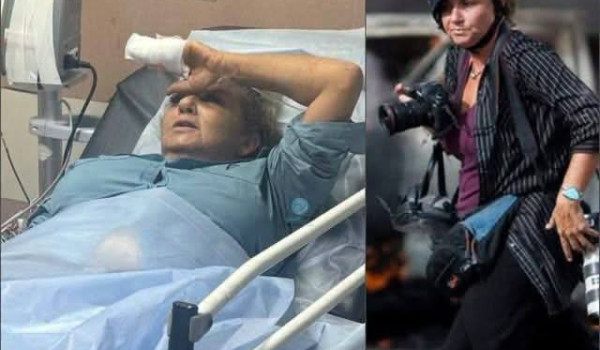
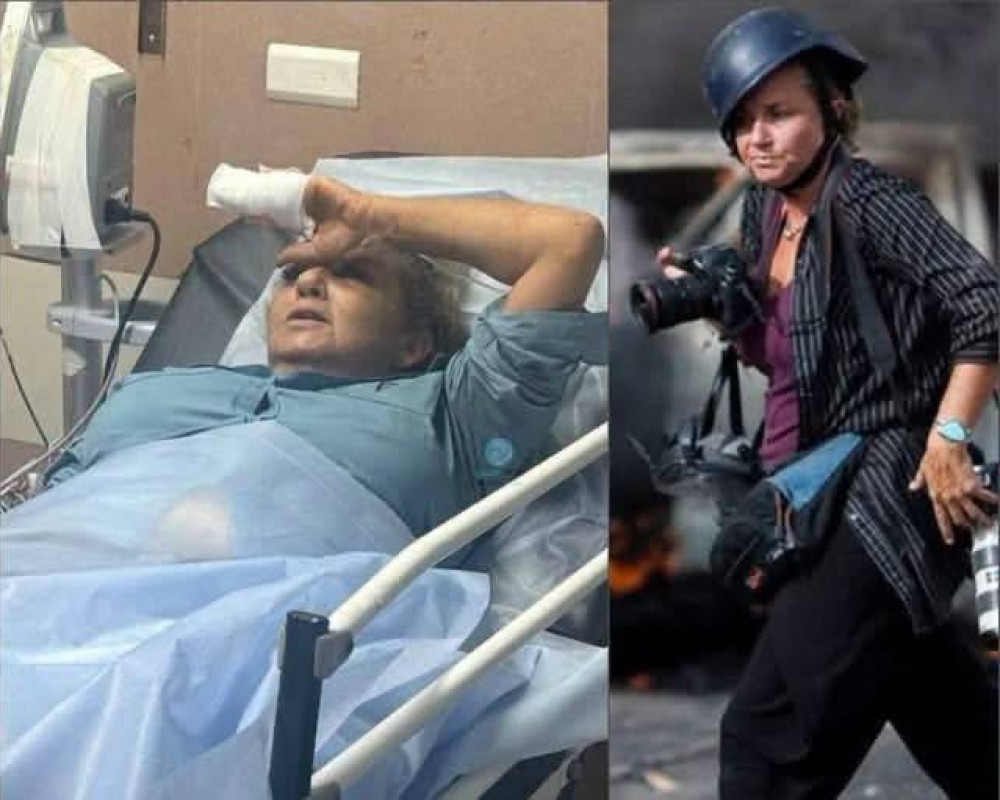
Heidi Levine, a 63-year-old photographer for The Washington Post, says her protective helmet may have saved her life after about 15 masked Israeli settlers brutally attacked her while she was covering the olive harvest in the Palestinian village of Abu Falah, north of Ramallah.
Levine suffered fractures and other injuries in the assault, which she described as a violent attack that left her equipment smashed and raised fresh fears about the dangers facing journalists documenting events in the occupied West Bank.
“I saw them attacking from about 500 meters away,” Levine said, referring to the group of masked settlers. When they approached, she tried to move away with her equipment, but the assailants caught up with her, pushed her to the ground and struck her on the head.
“They kicked me at least 15 times,” she said, recounting how the attackers stopped her after about 10 minutes before knocking her to the ground again.
Levine said she tried to shield her camera and other equipment as the assailants attacked her. Her phone and other gear were destroyed, including the earphone cable around her neck.
“Had it not been for my helmet, I wouldn’t be alive here,” she said.
Palestinian journalists and medical teams rushed to help Levine after the attack. They took her first to a medical center in Abu Falah and then transferred her to a hospital for treatment.
In the aftermath, Levine expressed gratitude to those who came to her aid, particularly her Palestinian colleagues, many of whom she knows personally.
“I want to thank everyone, especially my fellow journalists, many of whom I know, who took such great care of me,” she said.
The assault came just two days after Levine returned to Palestine from Ukraine, where she had been covering the war. She said she has reported on the conflict in Palestine for at least three decades, and that this was the second time she had been assaulted while working in the field.
She recalled a previous attack about 15 years ago near the Israeli settlement of Havat Gilad, which she said took place in the presence of Israeli soldiers and police.
The latest assault also brought into focus the fears shared by her family. Levine said she had spoken at length with her son, Michael, the day before the attack. Their conversation centered on his fear that his mother could be killed by Israeli settlers while carrying out her work.
Addressing the attackers’ parents, Levine questioned how people could be raised to commit such violence against others.
“How can parents raise these human monsters instead of human beings?” she asked, referring to what she described as the settlers’ repeated attacks on Palestinian families.
Levine called the assailants “Jewish terrorists” and said their actions cast a terrible shadow over their community. She also voiced deep pessimism about whether those responsible would face justice.
“Unfortunately, I know very well that none of them will be prosecuted for what they have done and continue to do,” she said.
The attack took place during the annual Palestinian olive harvest, a vital source of income and a deeply rooted cultural tradition for families across the occupied West Bank. The season has repeatedly been marked by reports of attacks by Israeli settlers against Palestinian farmers, international activists and journalists seeking to document events on the ground.
For journalists covering the olive harvest, the violence presents a stark reality: even those carrying cameras and documenting events can become targets themselves.
Levine’s account underscores the risks faced by Palestinian and international journalists working to document attacks on Palestinian communities, as concerns persist over the protection of civilians, media workers and farmers in the occupied West Bank.