Bethlehem /PNN/
A new public opinion poll has found that the Palestinian clearance revenue crisis has expanded beyond public finances to become a widespread cost-of-living emergency, affecting household incomes, purchasing power and debt levels, while raising concerns over deeper economic fallout if the situation persists.
According to the survey conducted by the Palestinian Center for Public Opinion between June 24 and July 5, 2026, on a sample of 503 adults across the West Bank and Gaza Strip, 70.2% of respondents said their living conditions had been significantly or very significantly affected by delayed salaries linked to the crisis. Overall, about 90.7% reported being affected to varying degrees.
The findings show that most households were already financially vulnerable, with 84.9% reporting monthly incomes below 4,000 shekels (about $1,100), limiting their ability to absorb economic shocks. As a result, 79.3% said they faced at least one of three key impacts: reduced income, rising debt, or difficulty meeting basic needs.
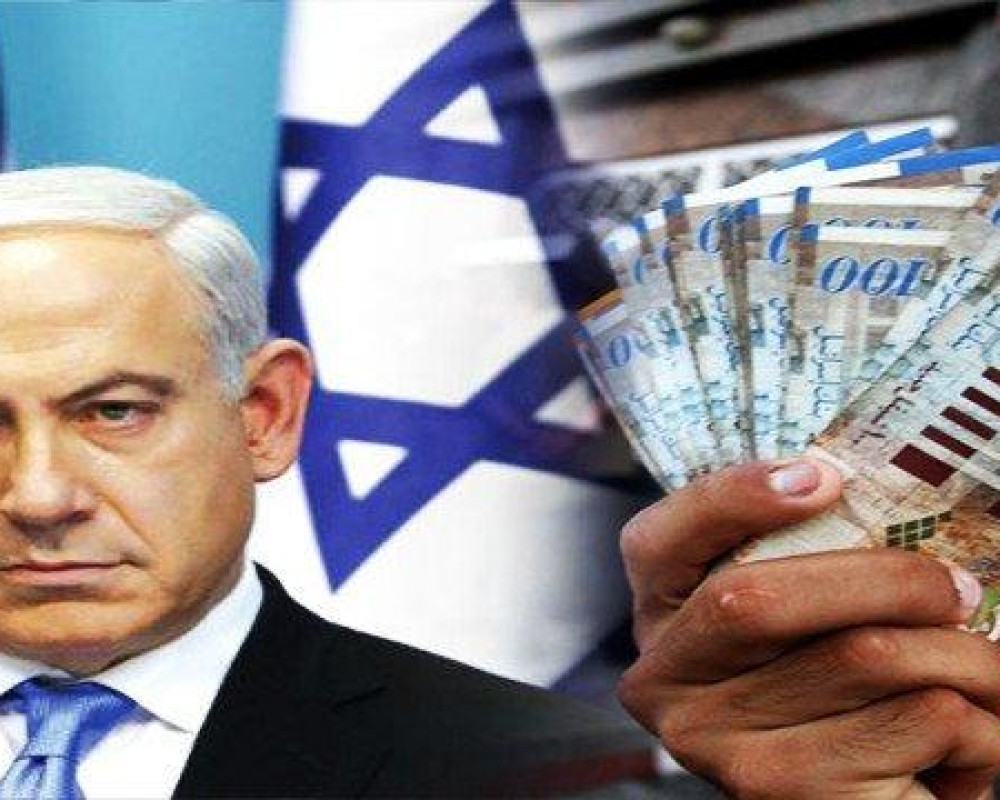
The poll also found that 64.4% of households had significantly changed their spending patterns, with many cutting consumption and postponing essential expenses. Overall, 83.5% said they had been forced to reprioritize their spending. Meanwhile, 92.6% believed the crisis had weakened purchasing power, and 95.6% said it had contributed to rising poverty and unemployment.
The crisis comes amid continued restrictions on the transfer of clearance revenues — Palestinian tax funds collected by Israel under the Paris Economic Protocol — which typically account for 60% to 70% of public revenues. Any delay or deduction directly affects the Palestinian Authority’s ability to pay salaries and maintain services.
Nabil Kukali, head of the center, said the findings reflect how the crisis has “shifted from the public treasury to households and the market,” warning that its continuation could lead to a “prolonged economic and social contraction cycle.”
The survey suggests the crisis is no longer a temporary liquidity problem but a structural vulnerability in the Palestinian economy, where a key revenue stream depends on external decisions, undermining financial stability and economic activity.
The report warned that continued withholding of clearance revenues, combined with pressure on the banking sector and liquidity constraints, could deepen the economic slowdown, with declining consumption, production and employment further reducing public revenues and widening the fiscal deficit.