Dr. Nabil Kukal is the Founder and President, Palestinian Center for Public Opinion (PCPO)
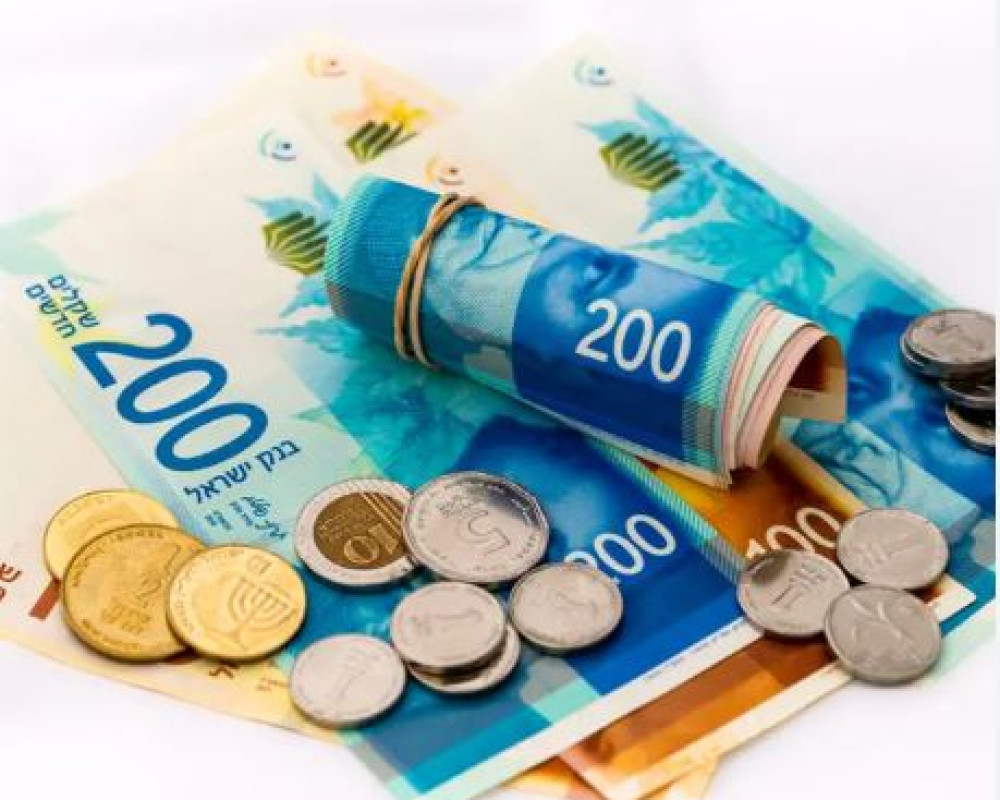
Recent movements in currency markets have reignited debate over the future of the Israeli shekel after the US dollar posted gains against the Israeli currency, pushing the shekel back from the exceptionally strong levels it maintained for much of the past year.
The shift followed comments by the Governor of the Bank of Israel suggesting the possibility of faster interest-rate cuts, alongside growing regional and international uncertainty that prompted investors to reassess economic risks and future market expectations.
While the shekel’s decline remains modest in numerical terms, its significance extends beyond exchange-rate fluctuations. The development raises a broader question: Is the era of extraordinary shekel strength beginning to face new economic and structural challenges?
The latest developments closely mirror trends highlighted in two analyses I published earlier this year: “The Decline of the Dollar Against the Israeli Shekel: Why Are Palestinians Paying the Price?” and “The Shekel Under Pressure.”
In the first article, I argued that the shekel’s strength should not be viewed as a permanent reality and identified three factors capable of altering its trajectory: intervention by the Bank of Israel through monetary policy, major geopolitical developments, and a significant strengthening of the US dollar globally.
The second article expanded the discussion by examining the impact of a strong shekel on Israel’s own economy. While the currency’s strength reduced inflationary pressures, it also created growing challenges for exporters, technology firms and businesses that generate revenues in dollars while paying most expenses and salaries in shekels.
Recent events appear to validate those concerns.
The importance of the earlier analysis was never about predicting a specific exchange rate or forecasting whether the dollar would rise from 2.84 to 2.88 shekels. Currency markets fluctuate constantly. The real value of economic analysis lies in identifying the monetary, economic and geopolitical forces capable of changing market direction before their impact becomes fully visible.
One of those forces has already emerged.
Markets reacted swiftly after the Governor of the Bank of Israel signalled the possibility of accelerating interest-rate reductions. Investors interpreted the remarks as evidence that policymakers are increasingly aware of the economic costs associated with a persistently strong shekel. At the same time, heightened regional tensions have added a new layer of uncertainty, encouraging investors to reassess risk across the region.
From a monetary perspective, lower interest rates generally reduce the attractiveness of a currency by lowering returns on assets denominated in that currency. Against that backdrop, it was unsurprising that the shekel weakened following the governor’s comments while the dollar recorded noticeable gains.
Although the decline remains relatively limited, it has reopened a debate that extends beyond short-term market movements. The question is no longer whether the shekel remains strong, but whether the foundations supporting that strength are beginning to weaken.
It would be premature to conclude that a long-term reversal is underway. However, recent developments suggest that the factors driving the shekel’s exceptional performance may no longer be as powerful as they once were. Markets appear increasingly responsive to variables that analysts have been discussing for months.
Perhaps most notable is the fact that concerns over the shekel’s strength are no longer confined to Palestinians whose incomes, savings and financial obligations are linked to the dollar or the Jordanian dinar.
The issue has become an increasingly prominent topic within Israel itself.
Over recent months, export-oriented industries and high-tech companies have repeatedly warned that a strong shekel undermines their competitiveness in global markets. Their revenues are often earned in dollars, while salaries and operating costs are paid in shekels, creating mounting pressure on profit margins.
Recent comments from the Bank of Israel suggest a growing recognition that while a strong currency can help contain inflation, it may also constrain economic growth, weaken exports and affect employment.
Viewed through this lens, the shekel’s recent retreat is more than a routine market adjustment. It reflects a broader effort to balance price stability with the needs of economic expansion.
This highlights a striking paradox.
For Palestinians, the shekel’s strength has long translated into reduced purchasing power for households dependent on dollar- or dinar-denominated income. Yet for growing segments of the Israeli economy, that same strength is increasingly viewed as an obstacle to competitiveness and long-term growth.
Exchange-rate movements have therefore evolved from a purely financial matter into a wider economic and social issue affecting both economies linked to the shekel.
For Palestinians, the dollar’s recent gains may offer limited short-term relief to families holding savings or earning income in foreign currencies. But they do little to address the deeper structural challenges facing the Palestinian economy, including its vulnerability and dependence on external economic forces beyond Palestinian control.
What we are witnessing today should not be interpreted as the end of the strong-shekel era, nor does it necessarily signal the beginning of a sustained dollar rally.
What it does indicate is that some of the early warning signs identified in previous analyses are beginning to emerge. It is a reminder that understanding the forces driving markets is often more valuable than attempting to predict precise figures.
Recent developments demonstrate that the shekel’s strength is not a fixed economic reality but a condition shaped by changing policies, shifting market expectations and geopolitical events.
That is ultimately the purpose of sound economic analysis: not to predict the next exchange-rate level, but to understand the forces capable of reshaping market trends before those changes become obvious.
The central question remains unanswered: Are currency markets entering a new phase of equilibrium, or will the shekel regain its previous momentum?
The answer will depend on decisions taken by the Bank of Israel, the direction of the US economy and the trajectory of regional and international tensions in the months ahead.
What is already clear, however, is that the debate over the shekel is no longer solely a Palestinian concern. Increasingly, it has become a question about the future direction of the Israeli economy itself — making the issue more consequential than ever before.