Bethlehem/PNN / By Tasneem Elridi
This year’s Ramadan arrives while Palestine is suffering from severe hunger. The Gaza Strip is facing an acute food crisis despite a ceasefire that has been in place for months. Approximately 1.6 million people, or about 77% of the population, are experiencing dangerous levels of hunger, including more than 500,000 people in emergency or catastrophic conditions.
Children under the age of five are the most affected. It is estimated that around 101,000 children are suffering from acute malnutrition, including 31,000 severe and life-threatening cases. Pregnant and breastfeeding women are also severely impacted, with approximately 37,000 cases of acute malnutrition reported.
Reports further indicate that around 39% of the population spend days without sufficient food, while acute malnutrition rates among children in some areas have exceeded 16%.
In the West Bank, the food situation is also becoming increasingly difficult due to economic deterioration, leading to rising levels of hunger and food insecurity. According to reports from the World Food Programme, about 40% of households in the West Bank are experiencing inadequate food consumption.
Millions of Meals and Thousands of Beneficiaries
Humanitarian initiatives multiply every year, yet their impact varies. Some alleviate hardship, while others struggle to address the depth and complexity of the crisis.
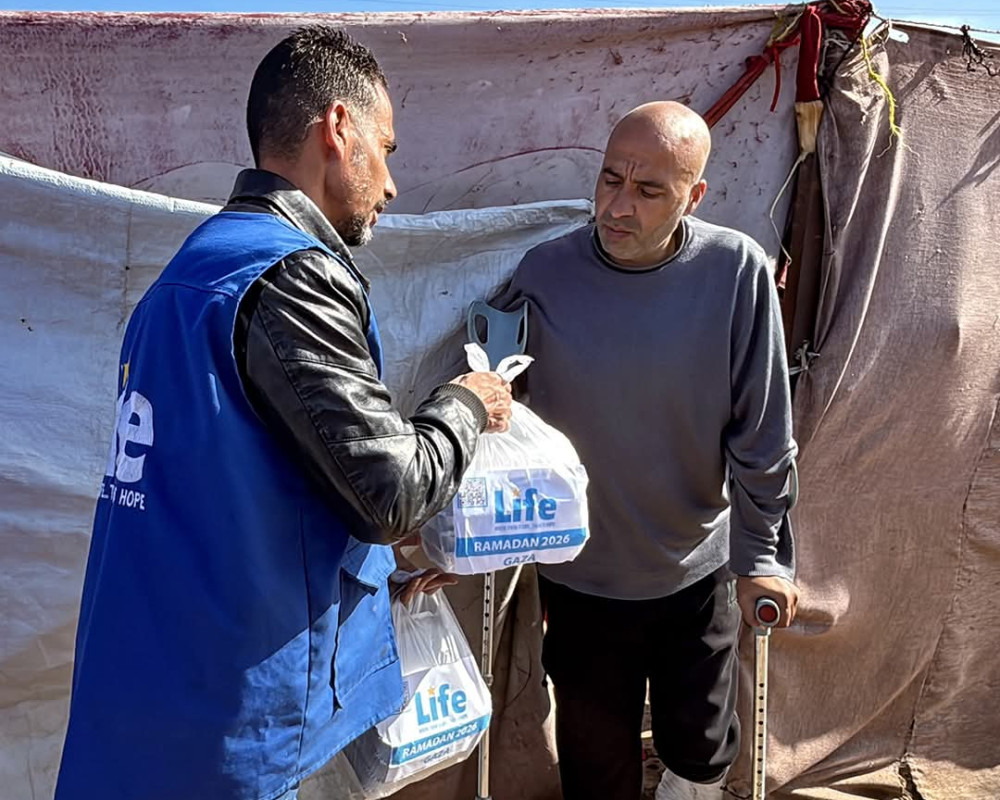
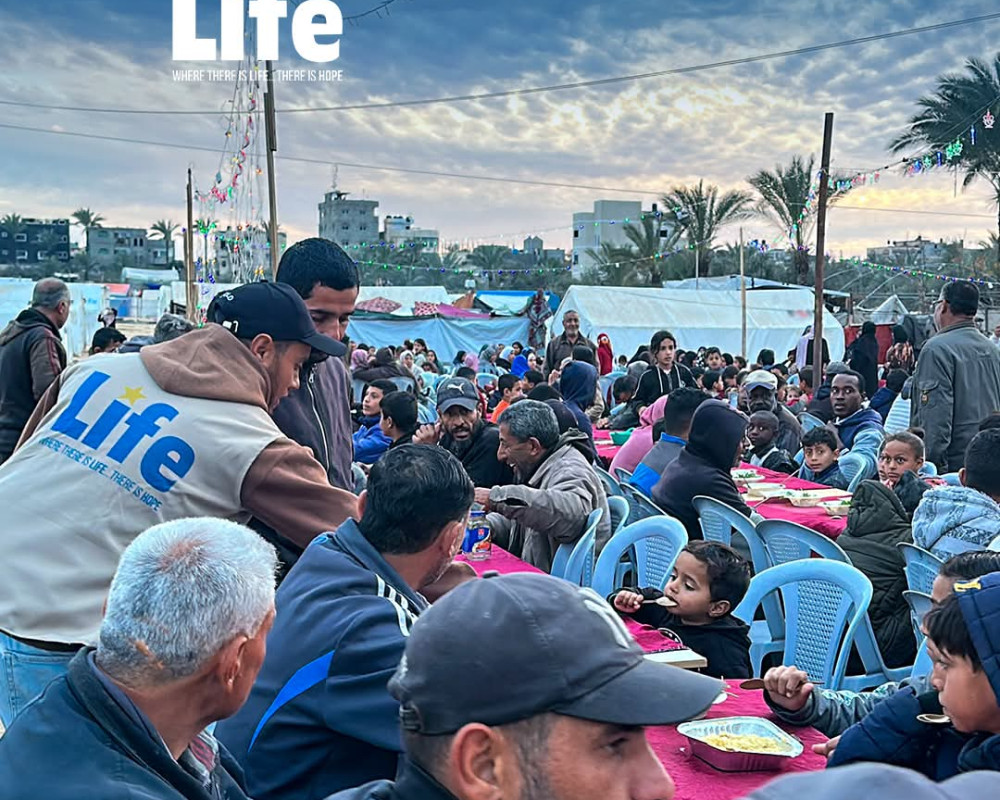
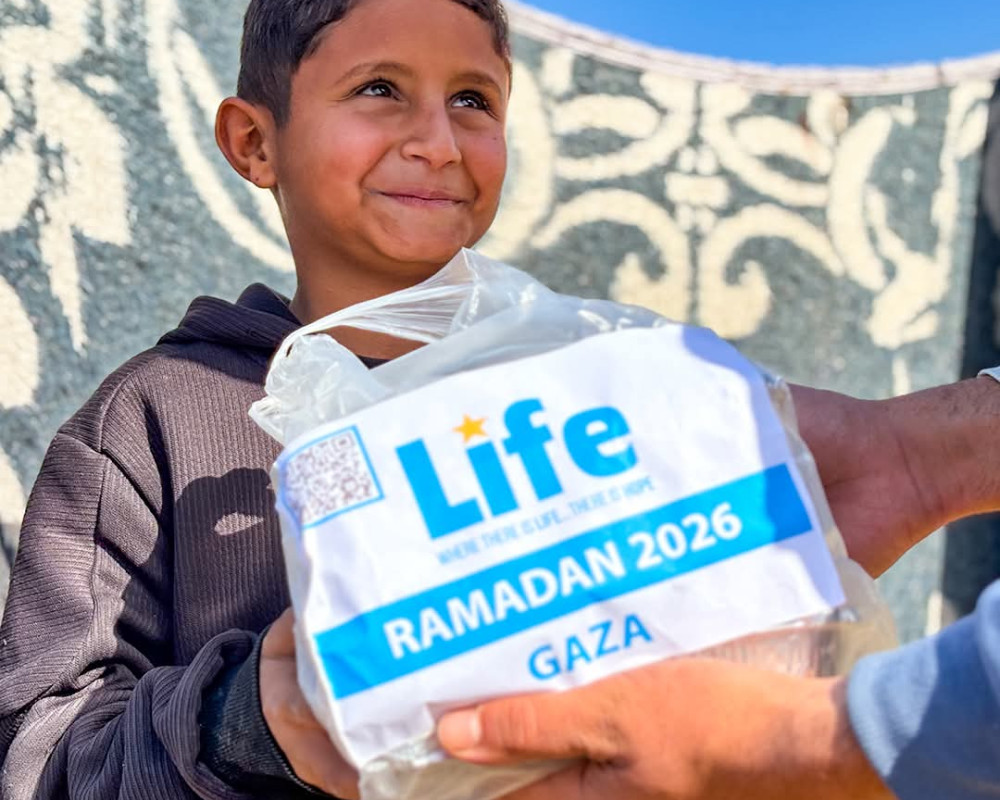
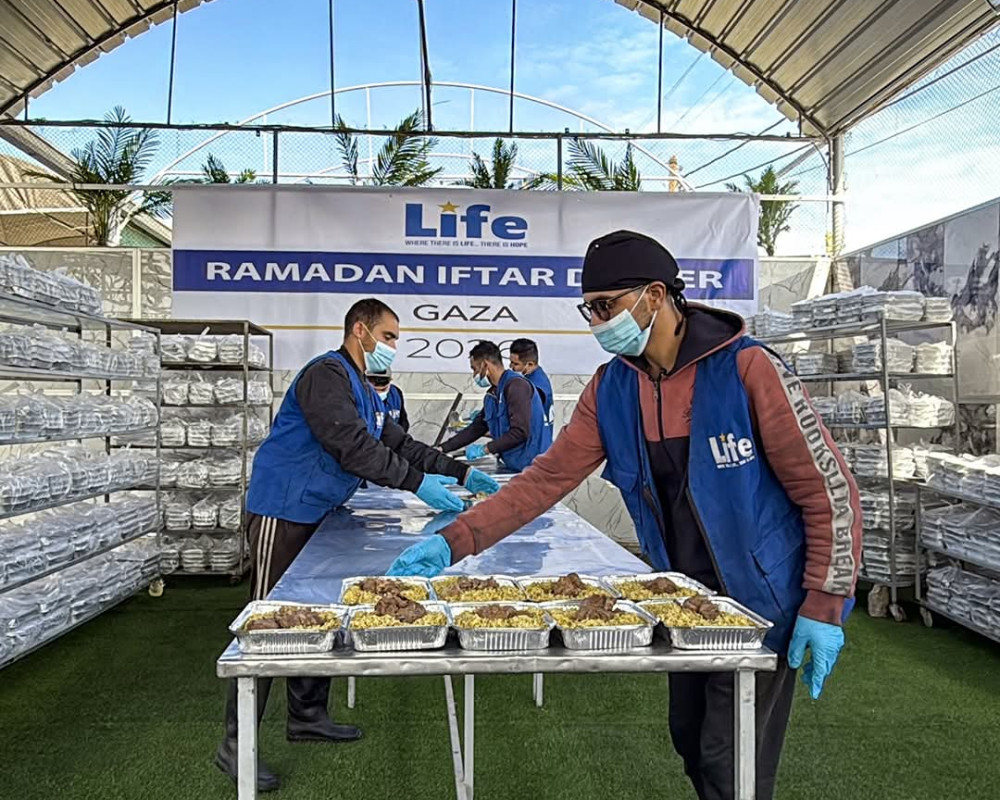
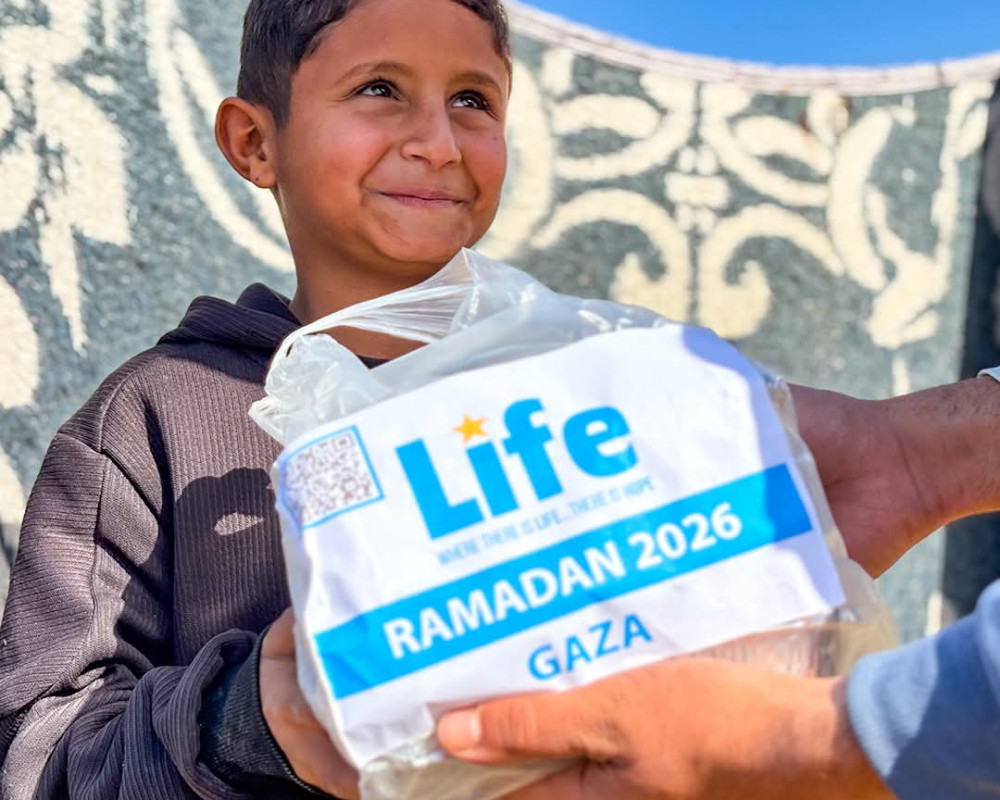
For 33 years, LIFE for Relief and Development has continued mobilizing its humanitarian efforts during the holy month of Ramadan by implementing relief programs that focus on meeting the essential needs of the most vulnerable families. These efforts include distributing food parcels and organizing communal iftar meals, reaching hundreds of thousands of families in need around the world.
LIFE teams operated in 37 countries out of the 60 countries where the organization runs its humanitarian and development projects. During Ramadan 2025, nearly 6 million meals were distributed through 16,000 nutritionally balanced food baskets, along with 51,000 freshly prepared hot meals, benefiting approximately 97,000 fasting individuals.
A Ceasefire Without Food… A Harsh Ramadan in Palestine
Palestine was among LIFE’s priority areas. Amid the harsh reality and the aftermath of war, displaced families recall memories of past Ramadans—when families gathered around one table and smiles came before the meal.
Although those moments seem distant today, LIFE continues to revive the spirit of solidarity and bring a glimpse of compassion and hope to people exhausted by ongoing crises.
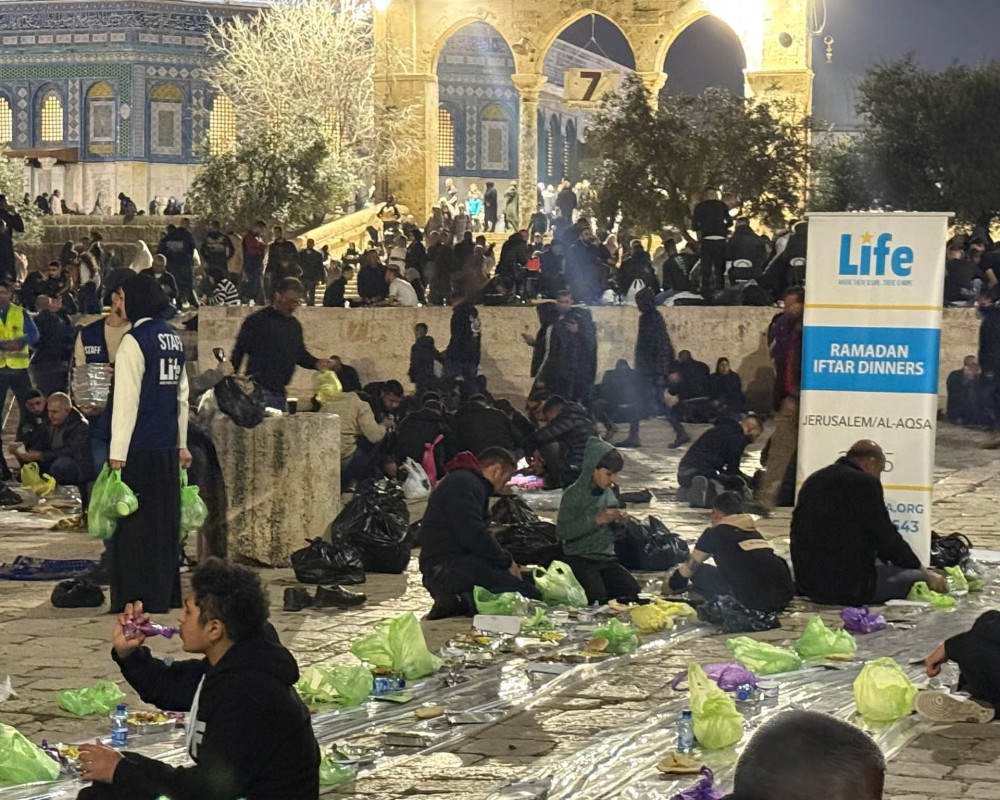
The organization worked to provide food security for 2,883 families, covering their needs for three months. In addition, communal iftar gatherings welcomed anyone suffering from hunger—bringing joy even though some of these gatherings were held amid the ruins.
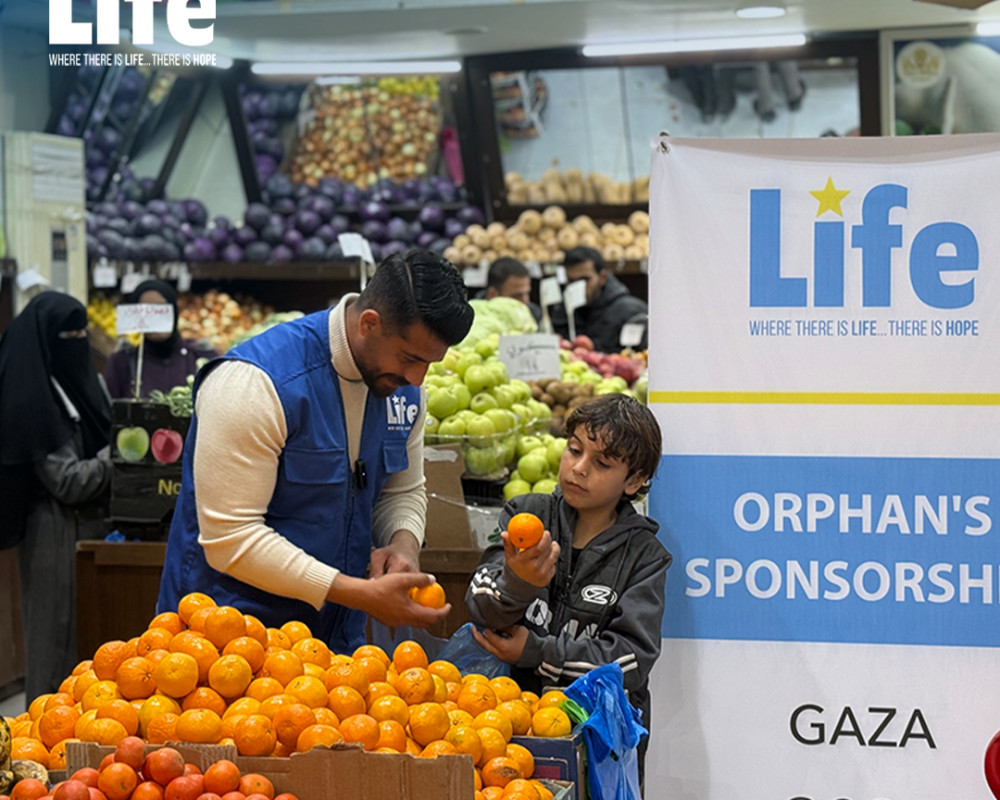
The organization also held Eid celebrations for orphaned children, benefiting 7,660 orphan families, including 1,200 families in Gaza.
In the West Bank, Noura Sawalmeh said:“Last Ramadan, we worked in the heart of Jenin refugee camp, distributing suhoor and iftar meals to 392 families, as well as providing iftar and suhoor meals to 322 worshippers observing spiritual retreat at the blessed Al-Aqsa Mosque. We also distributed nutritionally balanced food baskets to 1,920 vulnerable families in the camps.”
Reaching the Poorest Communities in Remote Areas
Speaking about the organization’s expected activities this year, Omar Mamdouh, Director of the Projects Department, said:“We will intensify the efforts of our teams in the poorest areas facing potential famine according to United Nationsreports. We plan to support vulnerable families and displaced people in crisis-affected areas by strengthening social solidarity and bringing hope through food distribution projects, communal iftar events, and the distribution of hot meals and food baskets in remote areas where charitable organizations rarely reach.”
He added that before Eid, LIFE will also implement orphan sponsorship programs by providing Eid clothing, gifts, and financial and food assistance, along with distributing zakat, charity donations, fidya, and expiation contributions to the most deserving families.
Ranked Third Among the Best Organizations Fighting Hunger
Vicky Rob, Director of International Programs, added:“We will expand food distribution programs in developing countries, particularly in displacement camps where children suffer the most, such as those along the Pakistan–Afghanistan border, as well as in war-affected regions like Sudan and parts of Africa, and in countries experiencing hidden poverty in Southeast Asia.”
She noted that LIFE distinguishes itself by targeting areas that most humanitarian organizations cannot reach—often due to ongoing conflict, such as in Gaza, Sudan, and Lebanon.
LIFE teams have delivered Ramadan meals and food baskets on foot, navigated deadly floods by boat in Bangladesh, and even used horses in Afghanistan to reach isolated communities despite muddy terrain and extremely difficult conditions.
In Tanzania, team members left their families for days to reach remote regions suffering from hunger and food shortages, traveling through multiple modes of transportation to ensure that food arrived before the start of the holy month.
Notably, LIFE for Relief and Development was ranked this year among the top ten humanitarian organizations worldwide fighting poverty and hunger, according to international reports for 2026.