BETHLEHEM, West Bank, PNN — Report by Monjed Jadou, Camera man Ahmad Jabr —
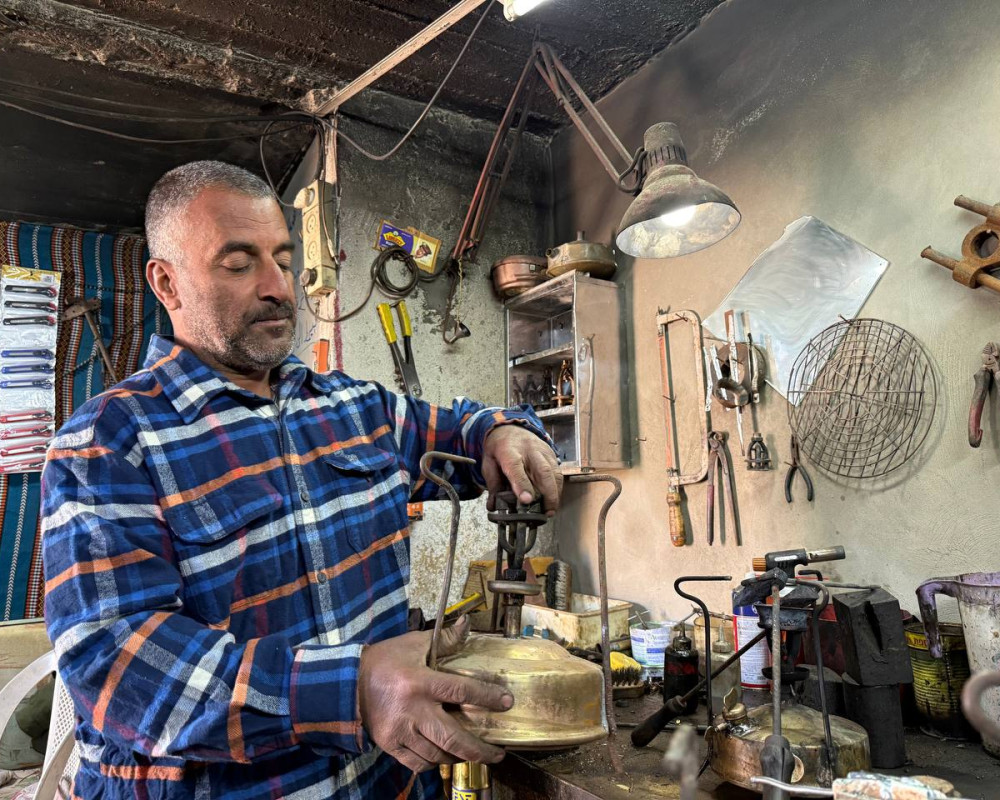
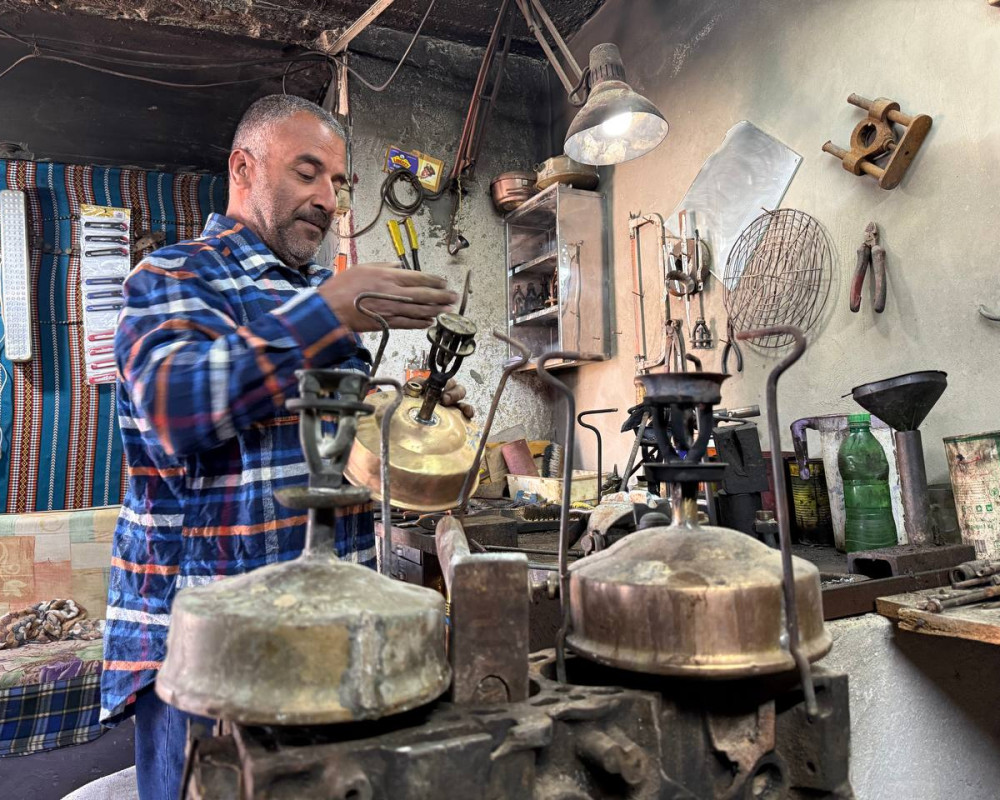
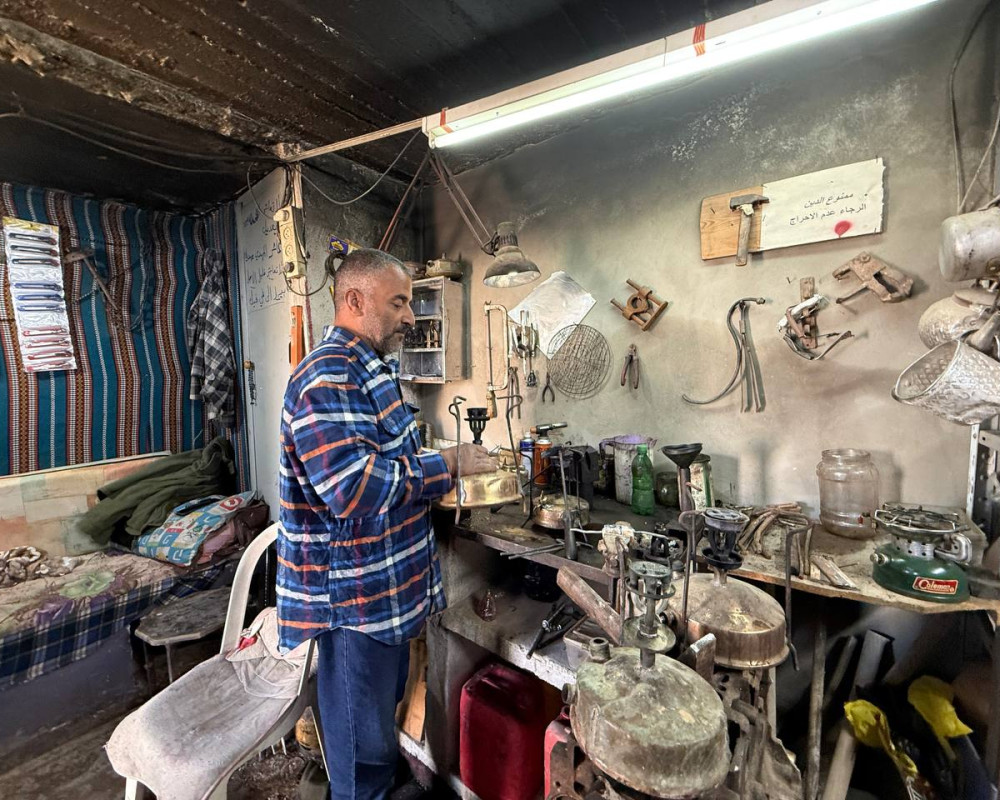
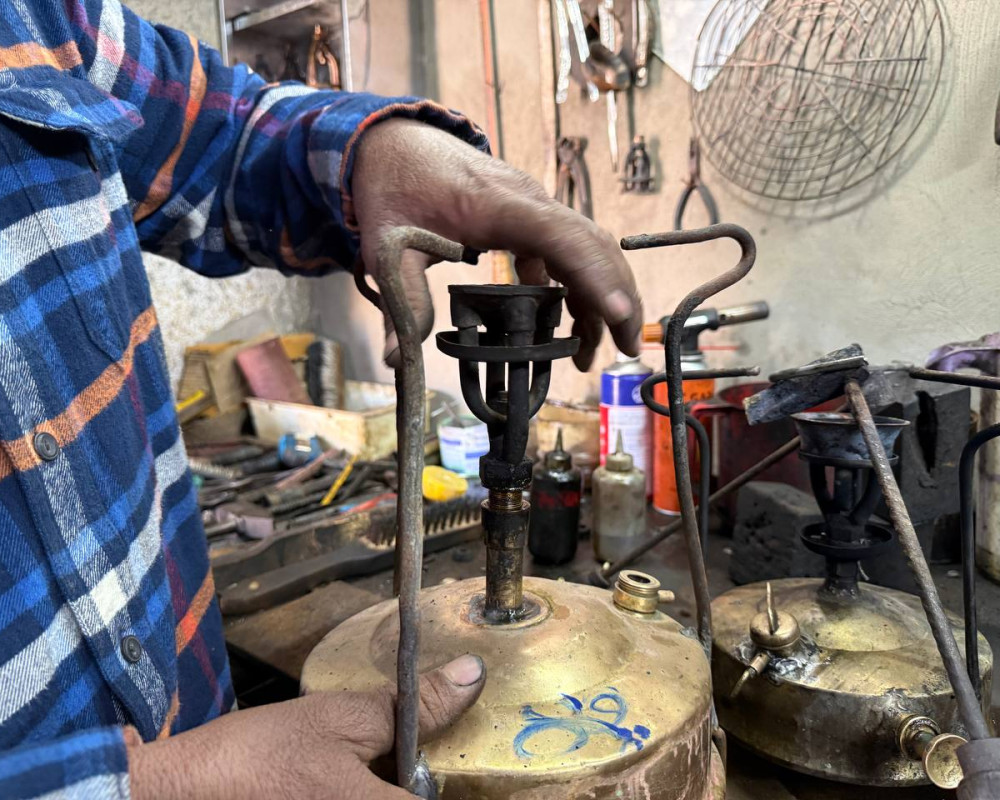
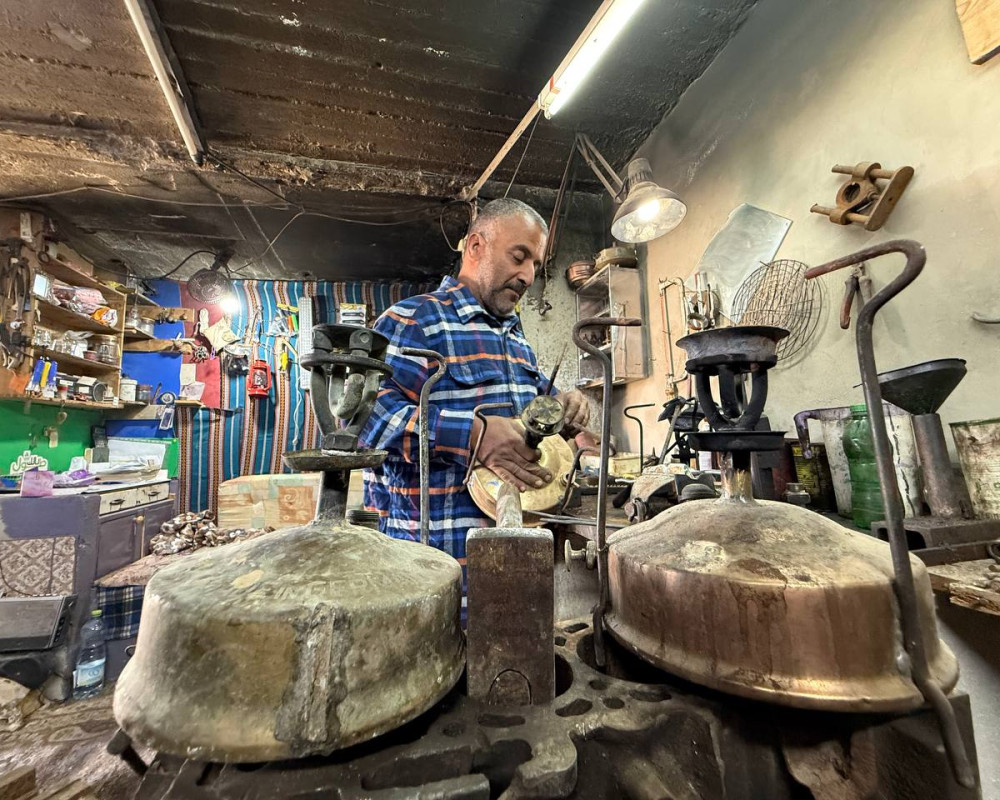
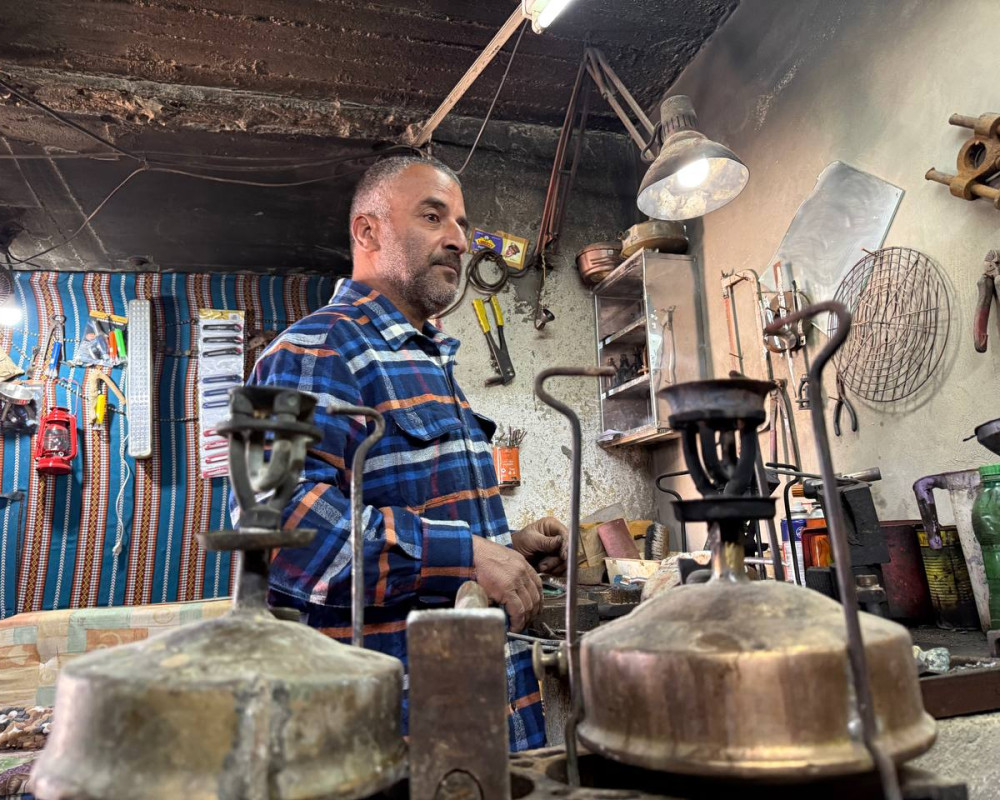
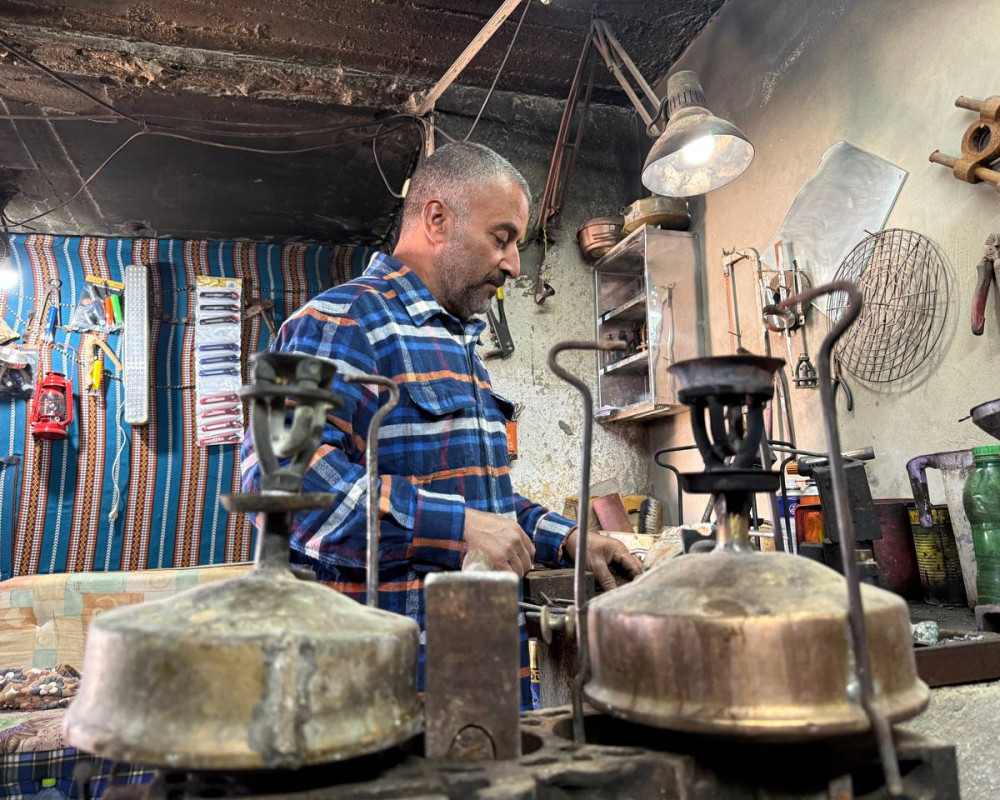
Inside a small workshop in the village of Za’atara, east of Bethlehem, Ibrahim Shenouda — known locally as Abu Al-Walid — bends over a rusted kerosene stove, carefully restoring what Palestinians call a “babour al-kaz.”
As a shortage of cooking gas grips, the Palestinian territories and fears of a new war circulate, customers have begun returning to his shop in growing numbers.
Shenouda, who inherited the stove-repair trade from his father, says demand for the traditional kerosene stove has surged in recent months as cooking gas has become increasingly difficult to obtain. The West Bank has experienced repeated supply disruptions in recent weeks, adding to uncertainty for many families.
In an interview with PNN, Shenouda said some households have not received gas cylinders for weeks. The shortage has prompted people to search storerooms and rooftops for kerosene stoves long abandoned. These stoves were once the primary cooking tool in Palestine during the 1950s, 1960s and into the 1980s, before electricity and gas became widespread.
Before the crisis, Shenouda said he would see perhaps one customer every 10 days — sometimes even less frequently. Now, residents arrive daily carrying stoves manufactured 50, 60 or even 80 years ago.
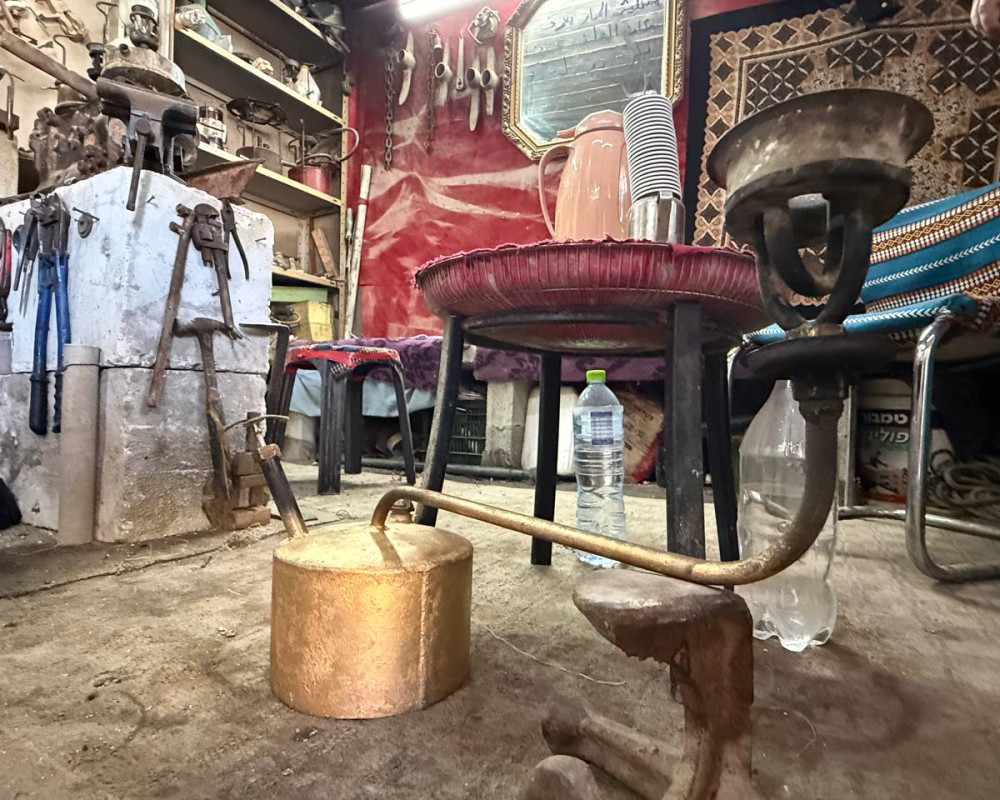
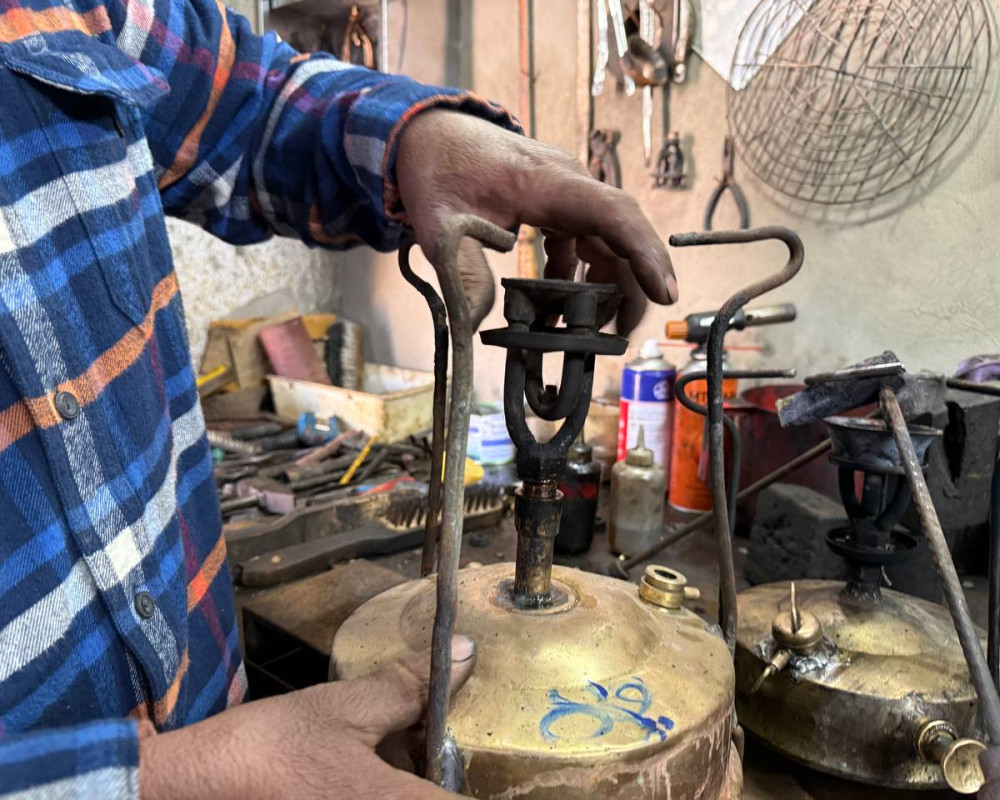
Pointing to one sitting in front of him, he identified it as a “long-neck” model. Its owners told him it had not been used for 60 years. The stove was heavily rusted, its condition reflecting decades of neglect in a storage room filled with old tools.
“I was surprised by its age,” Shenouda said. “But I told myself I had to bring it back to life.”
He described the restoration as a difficult task. He sanded it down, repainted it, replaced internal components and installed a new burner head. “We repaired it, and it is working perfectly again,” he said.
Most of the kerosene stoves that reach his shop are abandoned and require rare spare parts, forcing him to travel to Hebron to purchase necessary equipment. Limited cash flow presents an additional challenge, particularly as prices rise.
“The price of a used stove has increased from about 100 shekels to between 170 and 180,” Shenouda said. “A new Indian-made stove costs around 200 shekels, and it’s not widely available in the markets because demand has increased.”
Shenouda supports a large family. Traditionally, he says, business improves between October and February before slowing again. This year, however, the gas shortage has disrupted that seasonal pattern.
“What’s happening reflects a general feeling of uncertainty,” he said. “We are going back to the past — searching for the stove and searching for kerosene.”
Amid concerns that the crisis may persist, Shenouda urges residents to preserve their old stoves. “If you don’t need it today, you may need it tomorrow,” he said. “We don’t know what the future holds, especially with talk of war in the region.”
The kerosene stove once formed an essential part of daily life in Palestinian heritage, particularly in villages, refugee camps and cities before electricity and cooking gas became widely available. It was the primary means of preparing bread, tea, coffee and traditional meals, and was commonly carried into the fields during olive harvest season to cook for workers.
Over time, the babour al-kaz evolved from an ordinary household appliance into a symbol of collective memory — evoking rural simplicity and self-reliance. Its return today, amid crisis, reflects the endurance of that legacy in the face of political and economic upheaval.
This story was produced as part of the “Qareeb” program implemented by CFI, the French Media Development Agency, in partnership with and funded by AFD, the French Development Agency.