Bethlehem / PNN /
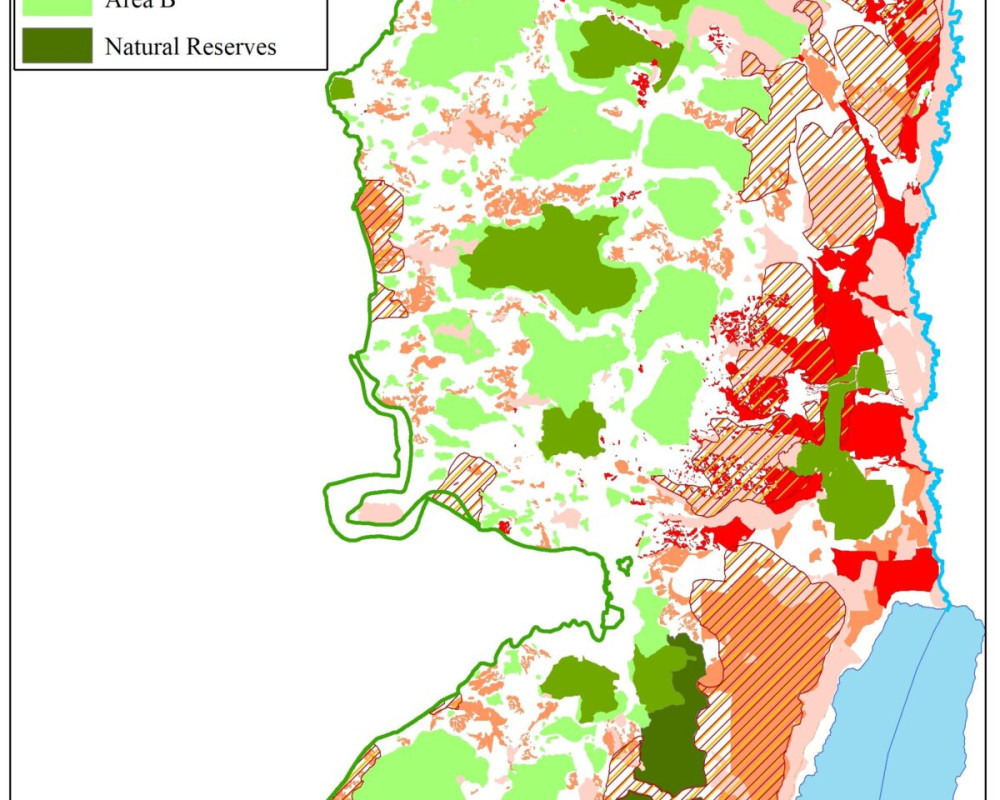
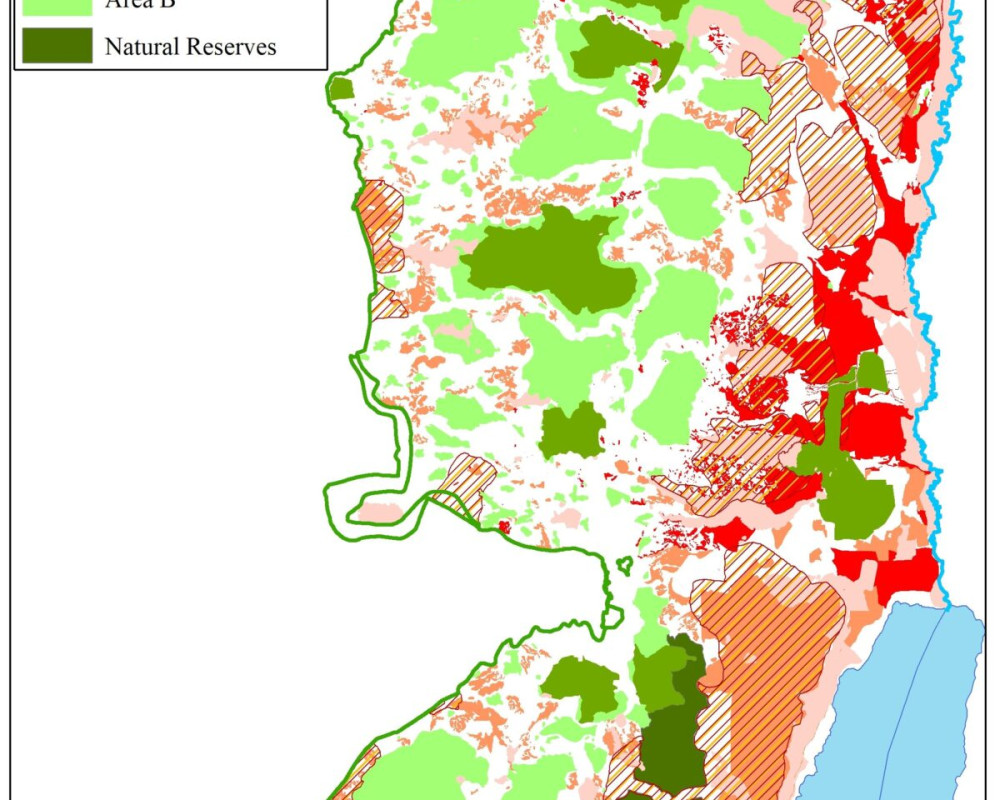
The Applied Research Institute–Jerusalem (ARIJ) said a new Israeli land settlement and registration plan in the occupied West Bank represents a shift from a technical administrative procedure to what it described as a political and legal tool aimed at consolidating permanent control over Palestinian land, particularly in Area C.
According to the report, a decision adopted by the Israeli government in May 2025 and implemented on Feb. 15, 2026, marks what the institute called a “qualitative transformation from temporary occupation management to the entrenchment of permanent sovereignty,” in violation of international law.
From Suspension to Reactivation
After Israel occupied the West Bank in 1967, it issued Military Order No. 291 in 1968, suspending land settlement procedures. The move halted the formal registration of Palestinian land ownership and allowed for the reclassification of land under Israeli categories such as “state land,” military zones and nature reserves.
Land settlement is a legal process designed to establish final ownership through binding registration. However, the report argues that implementing it under occupation, and through Israeli civilian institutions rather than a military administration, transforms it into a mechanism for restructuring land ownership in line with Israeli interests.
Transfer of Authority and Scope of Registration
The report says the transfer of land management powers from the military commander to Israeli civilian bodies, including the Justice Ministry and the Land Registration Department, reflects a legal redefinition of the land as part of Israel’s domestic legal system rather than occupied territory governed by international humanitarian law.
It notes that approximately 244 million shekels ($—) have been allocated to the project, targeting registration of about 58% of Area C — roughly 35% of the total area of the West Bank — indicating what it describes as a long-term strategic initiative.
Political and Settlement Dimensions
The institute links the land registration plan to settlement expansion, citing statements by Israeli officials, including Finance Minister Bezalel Smotrich, regarding strengthening Israeli control in Area C.
According to the report, the objectives include creating a strategic land reserve for settlement growth, preventing Palestinian administrative expansion in Area C, and establishing what it calls a framework for permanent Israeli sovereignty.
Impact on Palestinian Property Rights
At the individual level, the report warns that strict proof-of-ownership requirements could exclude many Palestinians from registering their land.
In many cases, ownership documents date back to the Ottoman or Jordanian periods and are stored in archives outside Palestine. Other lands are informally held, divided among numerous heirs, or lack documentation due to displacement and political upheaval.
The report argues that such conditions could result in what it describes as “legal dispossession,” not through direct confiscation orders but through exclusion from a legal system imposed by the occupying power.
Undermining Palestinian Institutions
The report also states that the Israeli decision invalidates land registrations issued by the Palestinian Authority in Area C and prevents its employees from operating in the sector, a move it says weakens Palestinian institutional capacity in land administration — a core element of state-building.
International Legal Framework
ARIJ argues that the measures contravene the 1907 Hague Regulations, which define an occupying power as a temporary administrator of the land, as well as the Fourth Geneva Convention, which prohibits actions that harm the rights of protected populations.
The report also references the 2024 advisory opinion of the International Court of Justice, which concluded that Israeli policies in the occupied Palestinian territory, including settlement expansion and land planning, violate international law.
Oslo Accords Dispute
The study rejects Israeli reliance on the Oslo Accords to justify the measures, noting that the accords established transitional arrangements and cannot override peremptory norms of international law, including the prohibition on acquisition of territory by force.
From Occupation to Annexation?
The report concludes that the land registration initiative represents a structural shift from temporary military administration toward a permanent civilian legal regime integrating the territory into Israel’s system.
It warns that the struggle over land in the West Bank is no longer limited to settlements or borders but extends to land registries themselves — and to the legal definition of ownership and sovereignty.