Ramallah / PNN / Wisal Abu Alia —
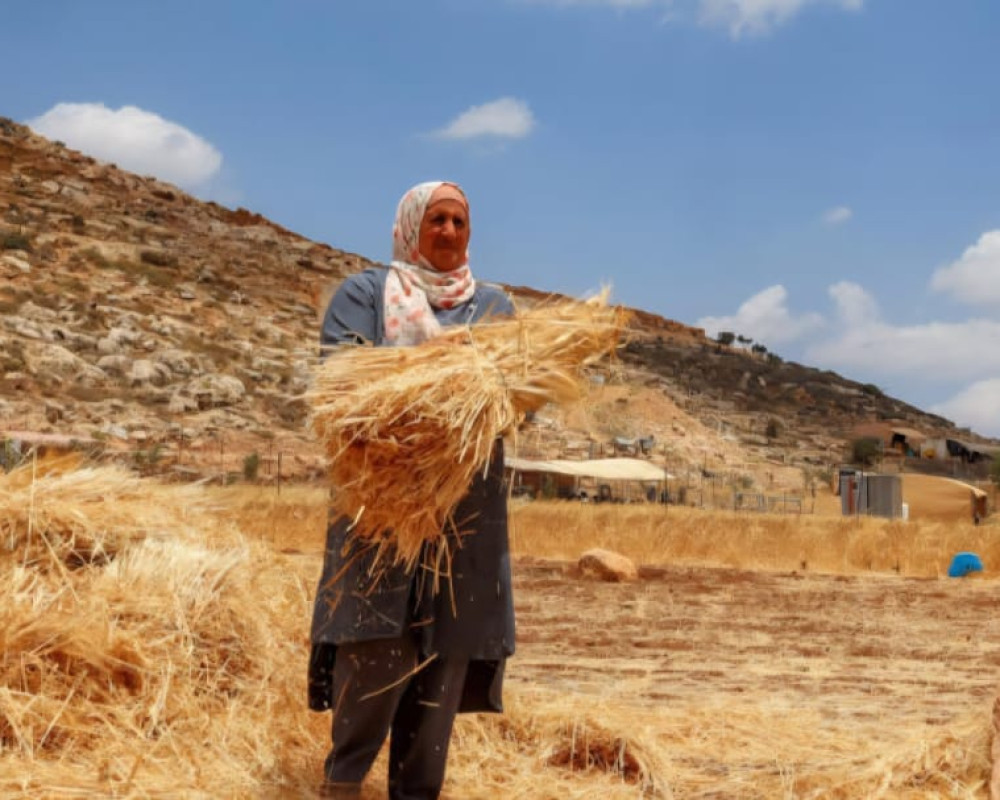
In al-Khalayel, south of the village of al-Mughayyir, northeast of Ramallah, heroism is not measured by slogans but by the ability to endure. There, Fatima Osama Abu Naim chose to confront land confiscation and settlement expansion in an unconventional way: by living in a cave, driving a tractor, and insisting that land is not protected by words alone, but by daily, backbreaking action.
Her story is not merely about a woman obtaining a license to drive an agricultural tractor. It is a narrative of female resilience that has redefined the role of women in the struggle to remain on the land.
When living in a cave becomes an act of resistance
Fatima left her home in the village of al-Mughayyir and chose to live with her family on their land in the al-Khalayel area, south of the village, following an escalation in settler attacks and attempts to seize Palestinian land. The decision was not easy, but it was decisive.
Today, Fatima and her family live in a cave on their land, a scene that evokes deep Palestinian roots, when people sought shelter in the land in order to protect it. “I chose to live on the land so it would not be confiscated,” Fatima said. “Our presence here is a message: this land has owners, and we will not leave it no matter the circumstances.”
Living in a cave, she added, was not a lifestyle choice but a necessity imposed by the realities of settlement expansion and ongoing pressure aimed at forcibly displacing Palestinian families.
The tractor: when a woman takes the wheel
As settler attacks intensified and Israeli forces confiscated the family’s vehicle in an apparent attempt to force them off the land, Fatima faced a new challenge. She said her husband could no longer manage everything alone, and the daily needs of the land and the family could not wait.
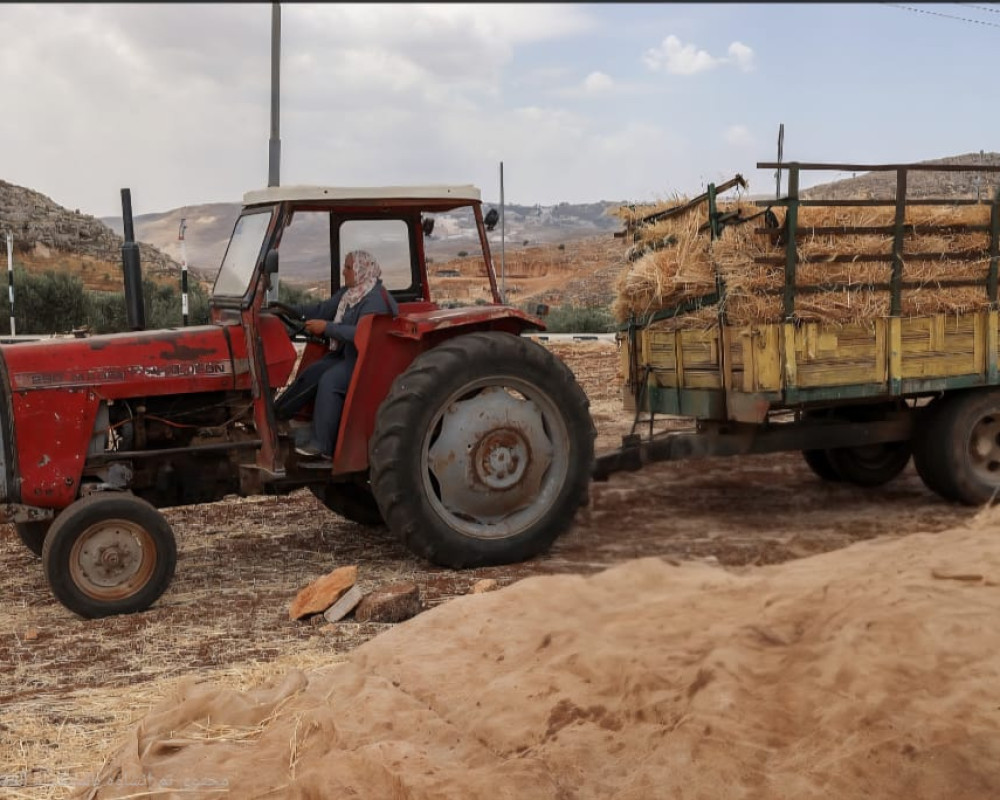
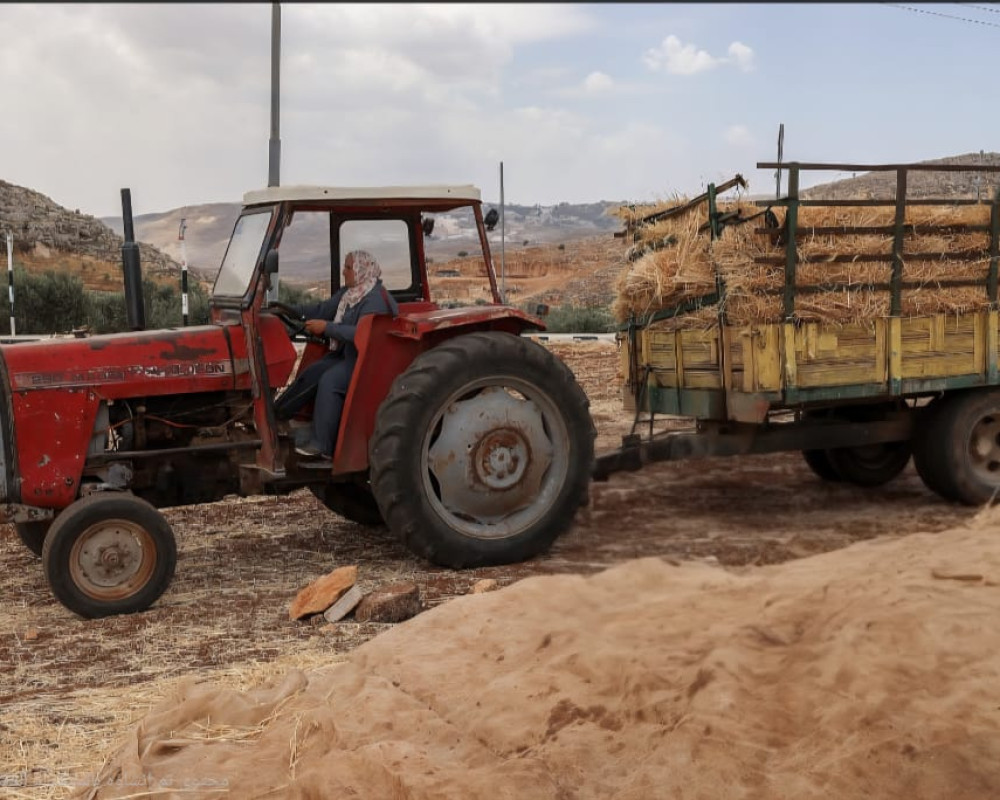
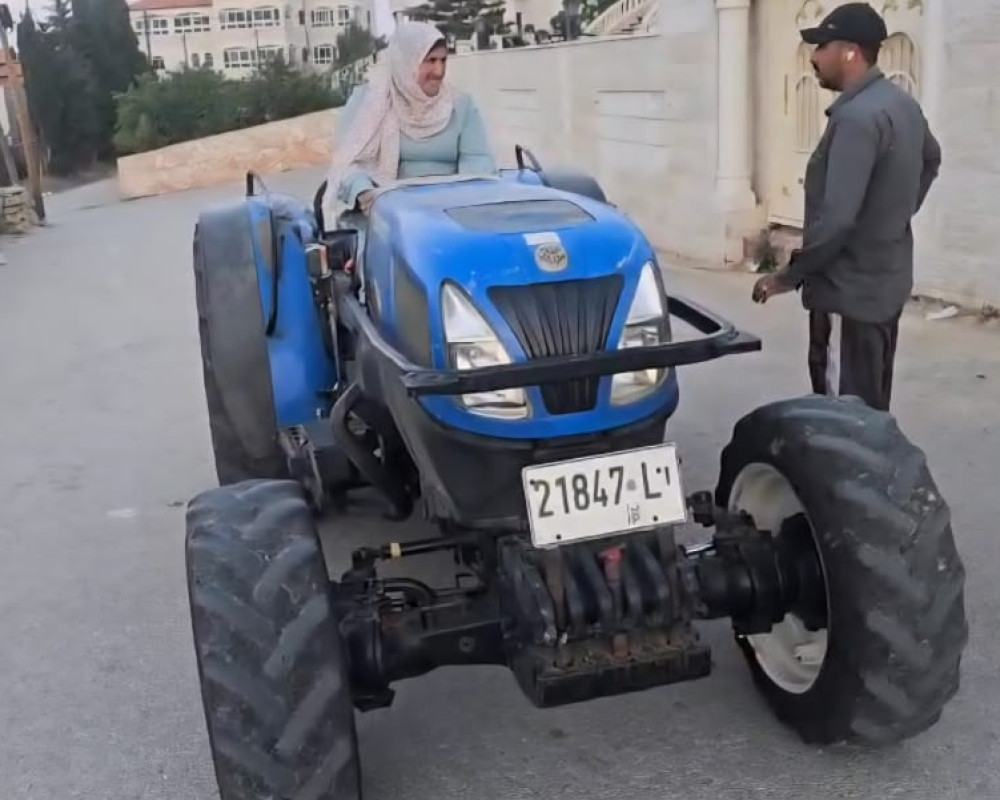
At that point, Fatima made an unprecedented decision in her community: she applied for a license to drive an agricultural tractor. “It was a deliberate step,” she said. “No matter the attacks, we will remain steadfast. I wanted to help my husband and ensure that the confiscation of a vehicle would not be a reason for us to leave.”
She initially felt embarrassed, she said, as tractor driving had long been considered a male-only domain. But the support of her husband and family became a powerful motivation, turning hesitation into determination.
A community surprised, a role redefined
Fatima’s step did not go unnoticed in the village. Surprise and questions followed, particularly from some residents: Why would a woman seek a tractor license? Why did her husband not do it instead?
Fatima saw the matter differently. For her, it was not simply about challenging social norms, but about expanding the meaning of responsibility.
“I felt it was an achievement,” she said. “As a Palestinian woman, anything that helps my family and my land, I will do. And I will be the first to do it if necessary.”
The tractor, once merely a farming tool, became a symbol — transformed from a means of labor into a clear declaration that women are full partners in the struggle for steadfastness, not on the margins and not in the background.
A 2023 license and an arrest for defending the land
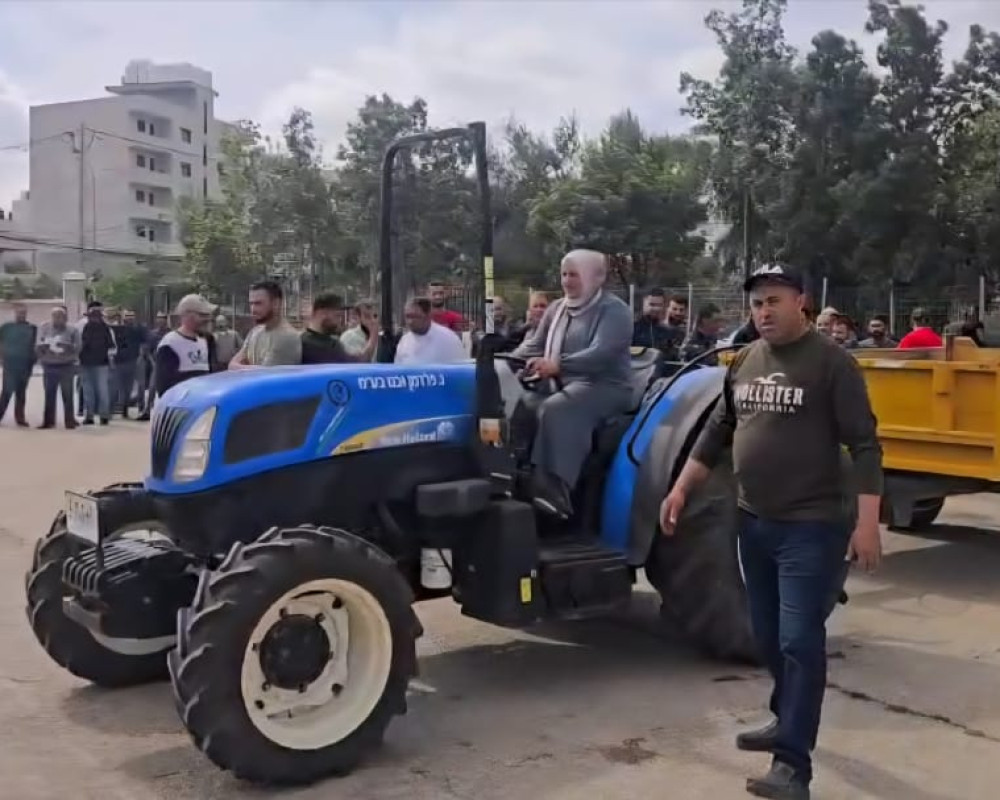
In 2023, Fatima Abu Naim obtained her tractor driving license, becoming — to date — the first Palestinian woman to do so. The milestone coincided with an unprecedented escalation in settler violence.
The achievement, however, came at a cost. After receiving the license, Fatima was directly assaulted by a settler who attempted to forcibly prevent her from reaching her land. She defended herself, only to be arrested by Israeli forces on charges of “assaulting a settler.”
“He attacked me physically,” Fatima said bitterly. “When I defended myself, they arrested me. In their eyes, our very presence is an act of aggression.”
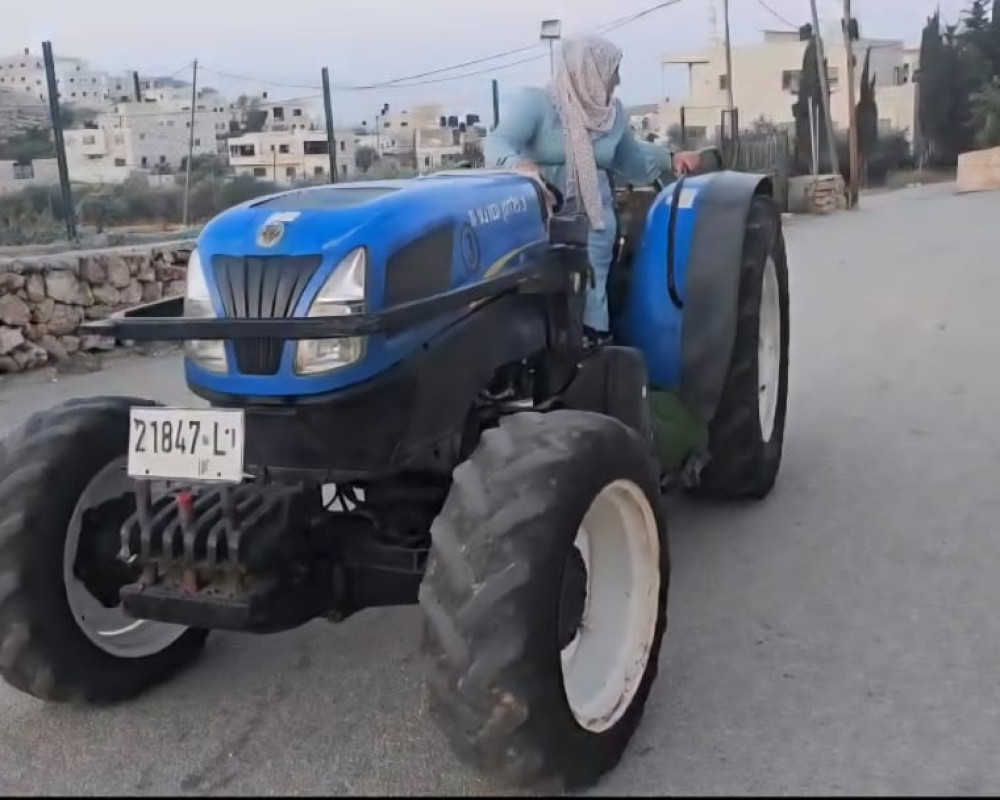
Despite the arrest, she did not retreat. Today, Fatima uses the tractor for agricultural work and to transport her children to school within the village, turning the same tool into a means of life and continuity.
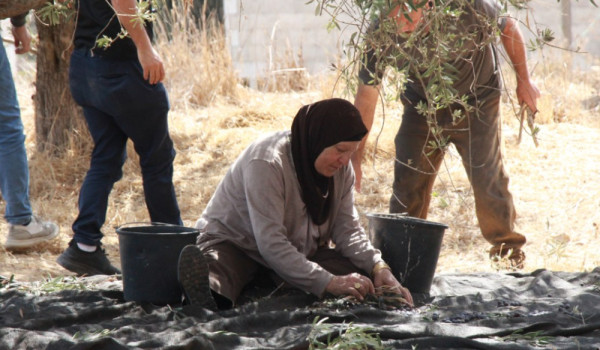
Fatima Osama Abu Naim’s story is not unique, but it is rare in its clarity and courage: a woman who lives in a cave to prevent land confiscation, drives a tractor to keep the land productive, and endures arrest because she refused to be a silent victim.
At a time when Palestinians are being pushed to leave, Fatima chose to stay — not with words alone, but through action. She has shown that steadfastness is not a stereotype, and that Palestinian women are capable of leading the land as they lead life itself. In her hands, the tractor becomes more than a machine — it becomes testimony to survival.
This story was produced as part of the “Steps” project, funded by the European Union.