Ramallah / PNN / Wesal Abu Alia –
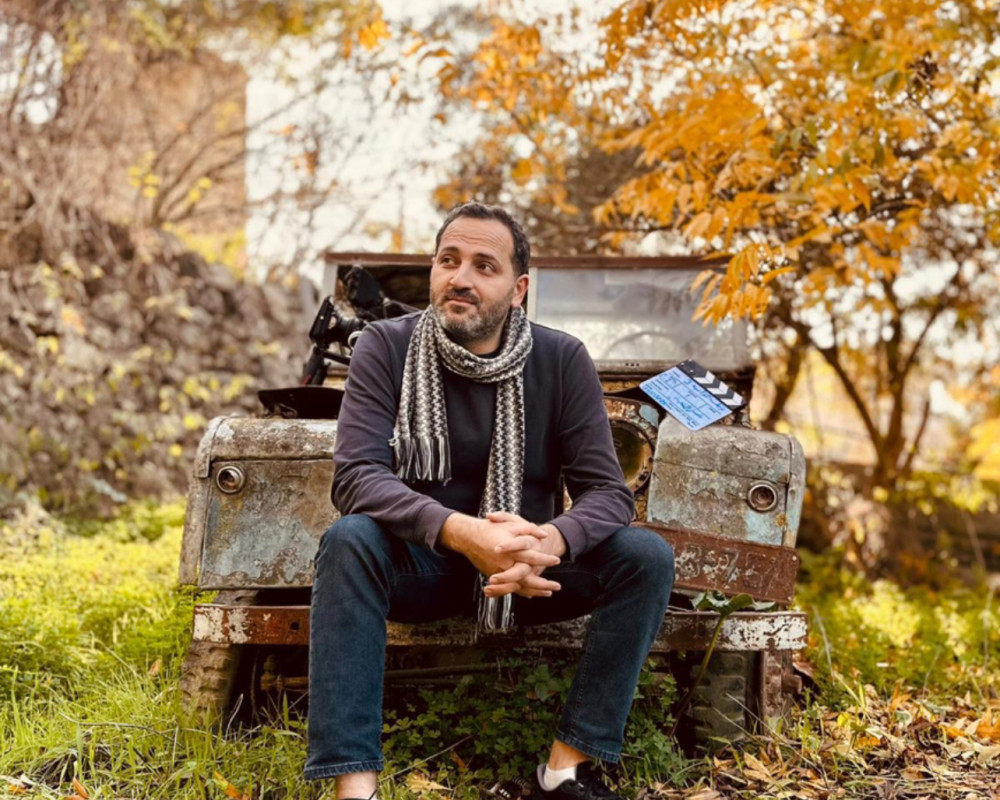
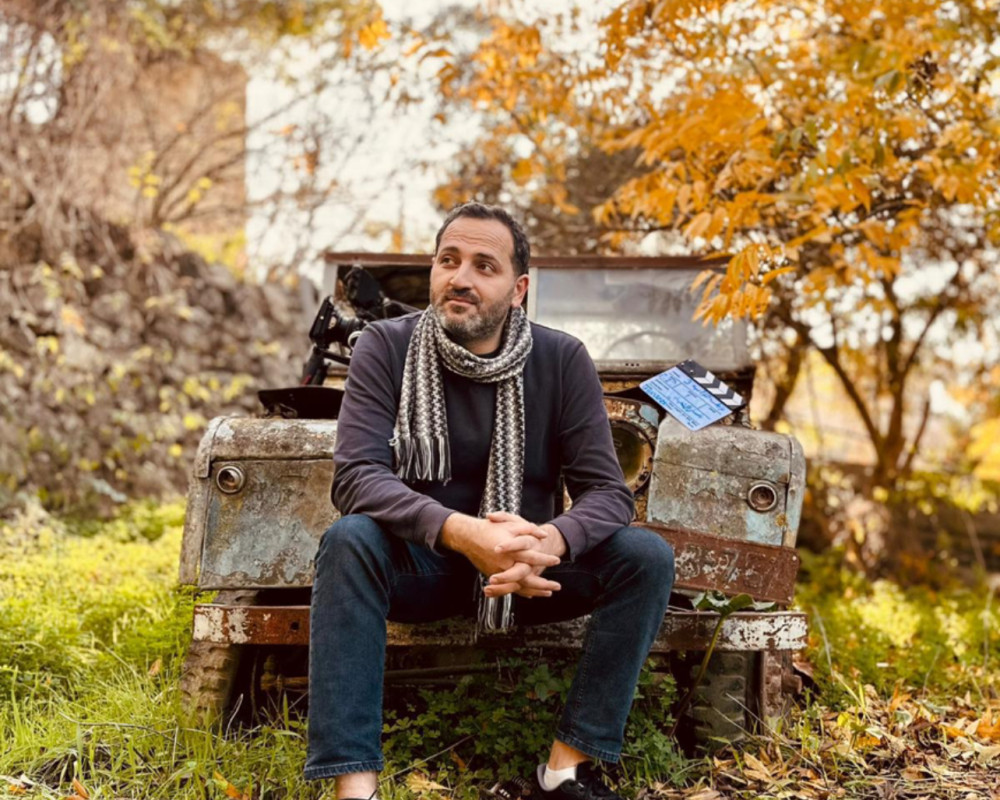
From the village of Burin, south of Nablus, where farmland sits under the weight of geopolitics, Palestinian director Bashar Al-Najjar emerged carrying a dream that once seemed larger than his surroundings yet deeply rooted in them.
Raised in a rural environment that shaped his visual and human awareness, Al-Najjar’s early relationship with storytelling was formed not as an artistic luxury, but as a means of survival and expression.
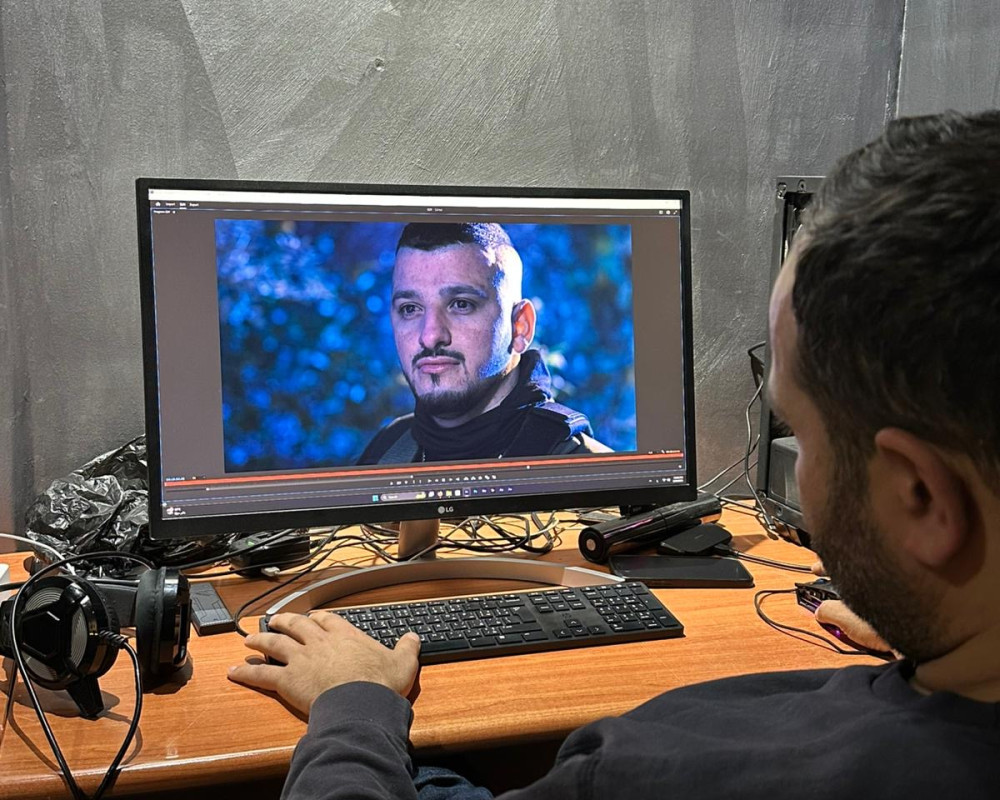
Al-Najjar, 37, holds a bachelor’s degree in media studies and is currently completing a master’s degree in cinema and television. His entry into the world of images did not begin with drama. He started his career in journalism, working as a producer with a media agency and contributing to documentaries, television reports and programmes. Still, his central ambition remained deferred: moving from documenting reality to shaping it through drama.
From journalism to drama
Al-Najjar describes 2013 as a turning point in his career, when he directed his first drama series, La Tussaddiqu Khalaf Law Halaf. The work marked more than a debut; it signalled a deliberate move into one of the most challenging creative fields in Palestine – drama – amid scarce funding, limited production infrastructure and the absence of institutional backing.
A succession of works followed, including Al-Aghrab, Kafr Al-Louz (Part One), Awlad Al-Mukhtar, Souq Rubaa Markazi, Umm Al-Yasmin, culminating in his most prominent project, Nazif Al-Turab (Bleeding Soil), a three-part series widely seen as the peak of his artistic and human development.
Rural roots as creative capital
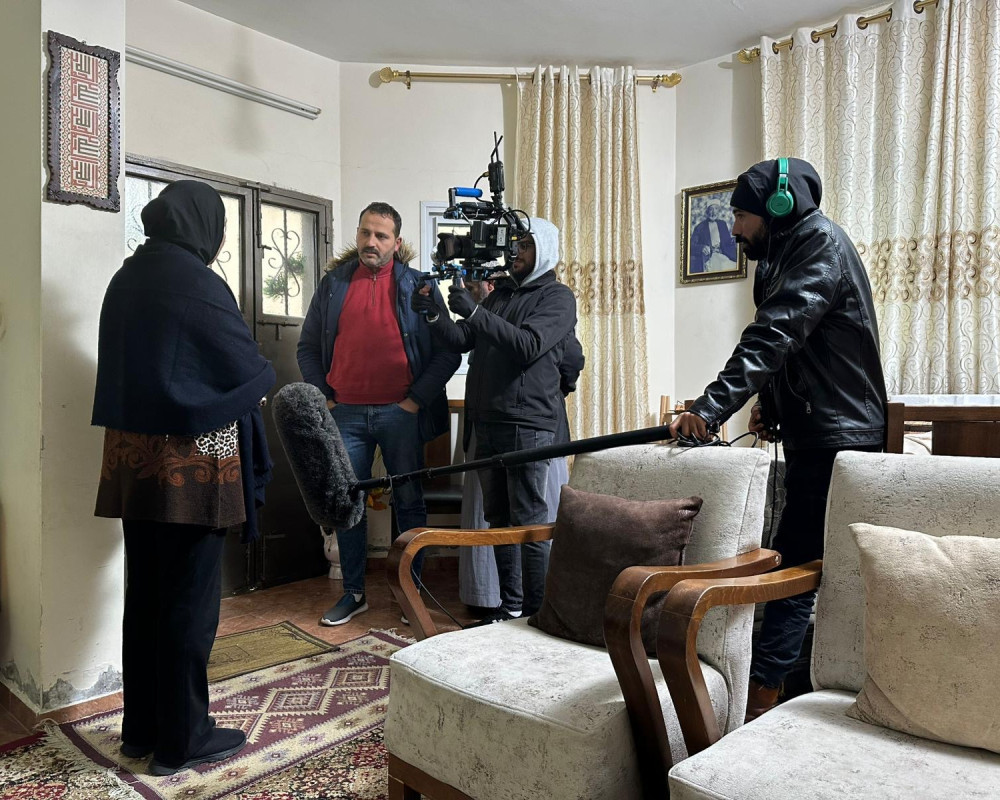
Al-Najjar says the rural environment in which he grew up became a central pillar of his work. It was not merely a backdrop, but a production asset that allowed him to control the details of drama – from props and tools to character dynamics and social relations. In the absence of funding, proximity to place became both a practical solution and a source of artistic authenticity.
He believes genuine creativity stems from closeness, arguing that when a director works within a world he knows intimately, he does not replicate it, but re-discovers it. Over time, audiences began to recognise a growing need for Palestinian drama that reflects their lived realities beyond the confines of news reporting and political rhetoric.
Learning by doing
Although Al-Najjar did not work directly in theatre, he quickly recognised its importance in shaping actors and refining directorial awareness. He collaborated with theatre professionals, including trainer and director Saeed Saadeh, whose involvement in rehearsals and workshops became a formative learning experience, particularly in actor direction and casting.
Through practice, Al-Najjar built a core group of actors who evolved with him from one project to the next, contributing to series, short features and full-length films. Gradually, the local rural community itself began supporting early productions, drawing the attention of television channels, production companies and investors who placed their trust in the team and its vision.
Drama grounded in reality
In choosing his stories, Al-Najjar says he is guided by an ethical conviction before an artistic one: drama must resonate with the collective mood. During times of war or uprising, he argues, comedy detached from public suffering becomes untenable.
As a result, works such as Kafr Al-Louz, Umm Al-Yasmin and Nazif Al-Turab either directly mirror unfolding events or offer a dramatic reading of Palestinian and Arab realities in their historical moment.
Arab reach, growing international interest
Al-Najjar says Palestinian drama has begun to leave its mark across the Arab world. While international exposure remains limited, it is expanding, with international institutions requesting translations of some productions. Regionally, he notes, Palestinian drama has helped convey the Palestinian cause beyond the news frame, presenting it instead as a complete human experience, with its contradictions and everyday details.
He says participation in festivals and visits across the Arab world revealed a widening Arab audience and growing interest in Palestinian storytelling as a universal human narrative rather than an exceptional one.
Challenges of writing and production
Al-Najjar openly acknowledges the gaps in the experience, particularly the shortage of specialised scriptwriters and a broader culture of dramatic writing, which limits character complexity. Despite this, he and his team continue to develop the craft and move away from familiar stereotypes in Arab drama.
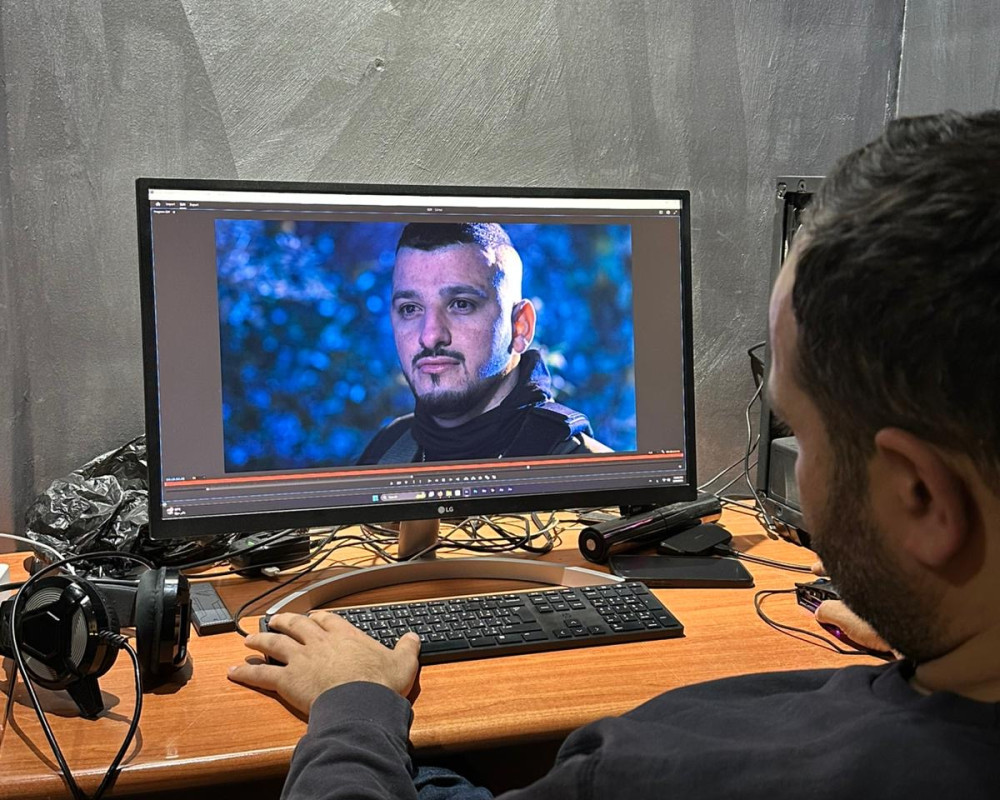
Technically, Al-Najjar seeks to improve his visual language with each project, despite the fact that many productions were self-funded. He recalls selling his own car to complete Umm Al-Yasmin, a decision he says reflects his relationship with cinema: passion that outweighs calculation.
An open-ended ambition
Today, Al-Najjar stands at a crossroads defined by ambition: to establish himself as a Palestinian director with an Arab and international presence. He sees engagement with Arab productions and visits to filming locations not as a luxury, but as essential to understanding the industry and advancing his work.
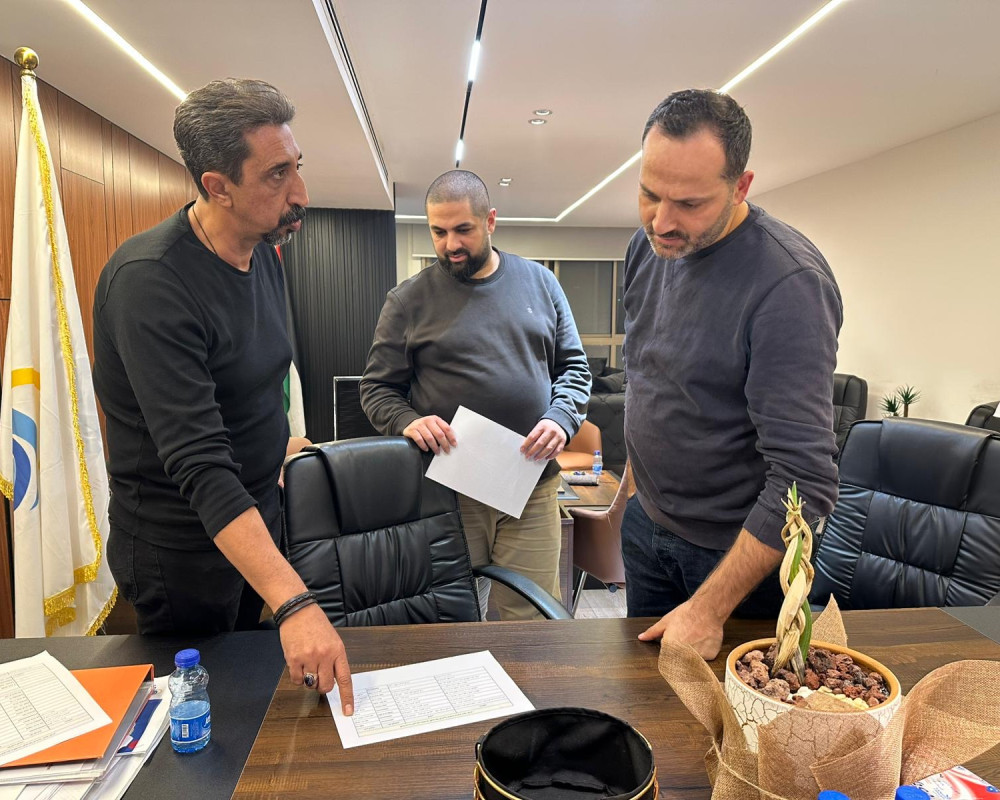
At the same time, he acknowledges the need for a professional production team that would free him from administrative burdens and allow him to focus fully on directing as a creative act.
From Burin, where the dream was born among fields and memory, to widening Arab screens, Bashar Al-Najjar continues his journey with a firm belief that Palestinian drama is not a seasonal project, but a long path shaped by patience, experimentation and honesty with both self and audience.
This story was produced as part of the “Steps” project, funded by the European Union.