GAZA /PNN /
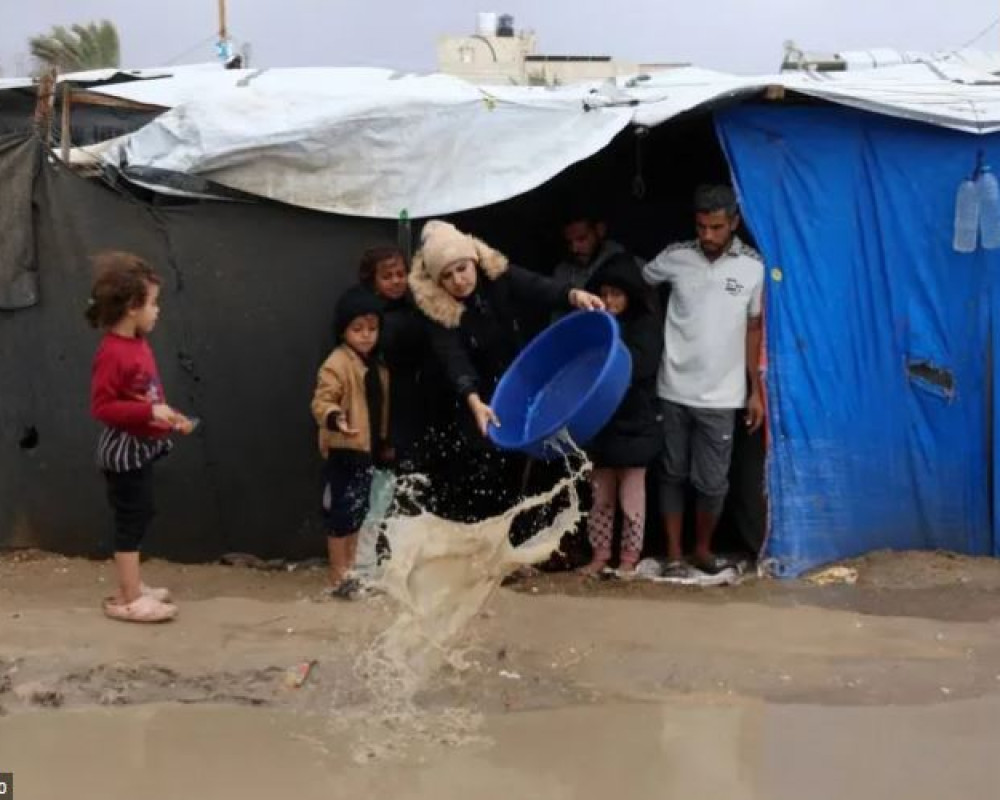
Palestinian sources have warned that the humanitarian situation in the Gaza Strip has reached a critical stage amid the current weather system, which has brought heavy rain and strong winds. With inadequate shelter in temporary tents, hundreds of thousands of displaced people, particularly children, the elderly, and the sick, face immediate life-threatening risks. Two children have already died from extreme cold, raising the total number of child fatalities to six since the start of the winter season, according to the Palestinian Ministry of Health.
The government operations room said in a statement that the deaths were an inevitable consequence of the international community failing to fulfil its legal responsibilities, citing Israel’s refusal to allow entry of prefabricated housing units and reconstruction materials. Officials warned that reliance on tents, which offer little protection from harsh winter conditions, is extremely dangerous.
The statement added that extensive damage caused by the recent conflict — affecting around 299,000 housing units, either fully or partially — has forced thousands to live in partially destroyed homes, posing a direct threat to life, particularly for children and the elderly. The current storm has already claimed four more lives due to partial collapses of damaged buildings across several areas of Gaza.
Thousands of tents have been flooded or destroyed by strong winds, leaving families, including infants and the elderly, exposed to rain and freezing temperatures.
Children Among Six Dead as Gaza’s Storm Crisis Deepens, Winter Storms Worsen Gaza Crisis, Leaving Families Exposed and Children Dead, Families Struggle to Survive Amid Freezing Cold and Floods
Gaza Municipality spokesperson Husni Mahna told PNN that the situation in Gaza is worsening daily. The municipality had warned of building collapses due to the storms and the extensive destruction from the recent conflict. “We are witnessing a humanitarian catastrophe. Our capacities are insufficient to assist citizens living in these fragile tents,” he said.
Mahna said Gaza’s infrastructure, including roads and drainage systems, has been severely damaged, with only 20% of the water network operational. This has caused widespread flooding as rainwater mixes with sewage, while rising sea levels compound the problem. Strong winds have also caused further tent collapses, and the municipality fears new structural failures that could endanger lives.
He called on the international community to intervene urgently, pressing Israel to allow the entry of caravans, tents, food, and medical supplies to support displaced families living under extreme weather conditions.
Mahna added that the municipality had received 250 emergency assistance requests in Gaza City alone, including reports of flooded areas, collapsed buildings, and destroyed tents. He stressed that municipal teams are working with limited resources and cannot meet the demand until essential equipment and supplies are provided.
Civil defence officials reported large numbers of mothers rushing to hospitals to treat their children for cold-related illnesses. “There is little we can do to assist citizens suffering from extreme cold. This crisis cannot be resolved internally; it requires international intervention,” the spokesperson said, calling for immediate global action.