Gaza / PNN /
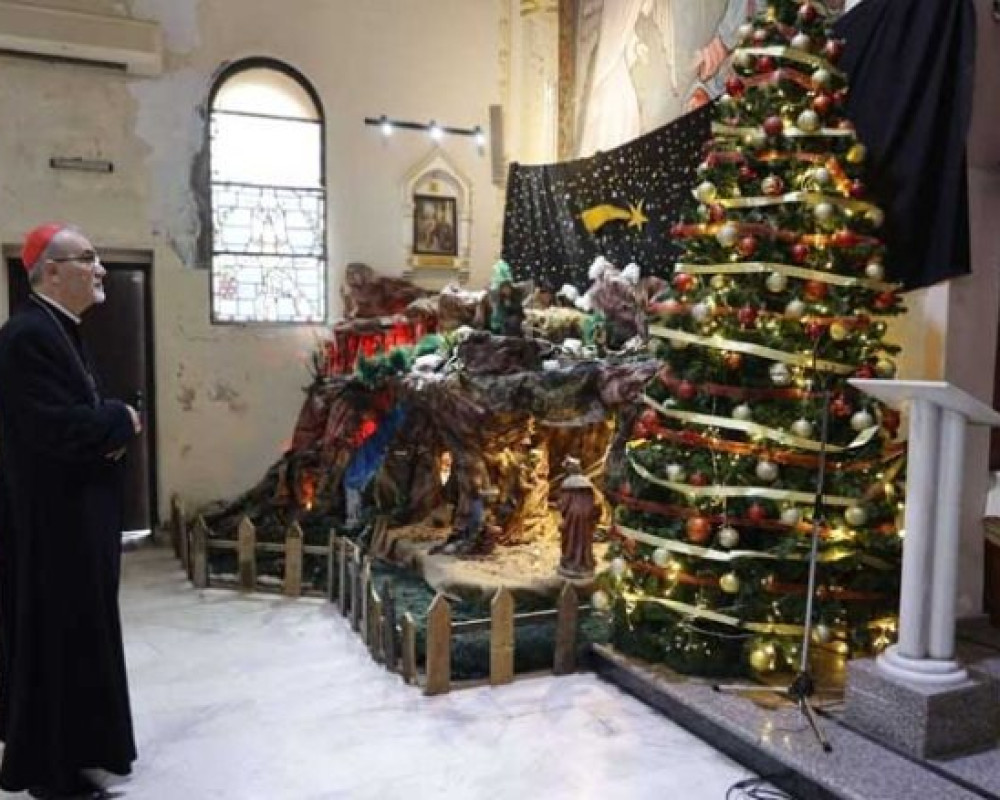
Christmas has arrived this year for Gaza’s Christian community in a markedly different atmosphere, marking the first observance since the war amid a fragile truce. The holiday carries mixed emotions, combining relief at the return of religious rites with deep sorrow over the loss and pain left by the war.
Tony Asaad Al-Masri, a resident of the Gaza Strip, said Christmas this year comes after two years of forced absence from the familiar traditions. He explained that the previous two Christmases were spent displaced with his family in southern Gaza, living in a tent far from their home and church.
Al-Masri said the 2023 and 2024 holidays passed while they were displaced along the seashore and in southern areas of the enclave, noting that this is the third Christmas since the war began, but the first in which they are able to celebrate inside a church.
He said their arrival at the church was made possible through the support and care of parish priests Father Gabriel and Father Youssef, expressing happiness at celebrating this year among members of the Christian community despite the harsh conditions that still surround them.
Al-Masri stressed that the joy of Christmas remains incomplete as pain continues to weigh heavily on their hearts in solidarity with Palestinians who were killed or went missing during the war. “What we are living cannot be separated from the suffering of our people,” he said.
He emphasized that Palestinians — and Christians in particular — carry a message of peace, not war, recalling the teachings of Jesus Christ based on love and peace. He said Christ never called for killing or death, but for coexistence and humanity.
Despite the pain, Al-Masri said this year’s Christmas message remains an open call for peace, adding that his wish, like that of many others, is for his people and the world to enjoy safety and stability.
He said he was grateful to be able to mark Christmas this year, while acknowledging that the joy is incomplete in light of the immense losses suffered by Palestinians — children, women and the elderly — and wounds that remain unhealed.
His wife, Amal Nasser Amouri, said the repeated displacement they endured during the war left a deep psychological impact on their lives and on the meaning of Christmas for them. She said they were displaced multiple times, most recently to the Qadisiyah area in southern Gaza.

She explained that the family was forced to move repeatedly even within the south before settling in Qadisiyah, only to later be asked to leave again because of security conditions, eventually returning to Gaza City. Their first return home, she said, brought temporary relief that quickly faded amid the scale of suffering.
Amouri said gathering this year with members of the Christian community inside the church provided significant psychological support. She noted that Christmas had been absent from their lives for the past two years, and that this year they experienced it only partially, through religious rituals alone.
She added that the presence of the church and praying inside it made a profound difference compared with the period of displacement in the south, where there were no churches or Christian religious symbols, deepening feelings of absence and deprivation.
Amouri said Christmas before the war was entirely different, filled with joy and preparations — from decorations and sweets to family gatherings. Displacement, she said, deprived them even of the simplest religious symbols, such as the Christmas tree and nativity scene.
She said the war had taken a severe psychological toll on them, especially amid feelings of fear and isolation. The couple, both elderly, live alone without their children beside them, and have been unable to visit Bethlehem for three years.
She said Bethlehem had always been a central destination for her every Christmas, as she used to visit and celebrate there, particularly on Dec. 24 and 25 with the arrival of the patriarch. Being unable to go, she said, has intensified the sense of loss.
“We do not love war,” Amouri said. “We want peace, and we want to celebrate our holidays in safety, just as we used to.”