GAZA CITY, Gaza Strip / PNN /
The war in the Gaza Strip has devastated far more than people's homes and lives. It has also damaged agriculture, livestock, the environment and the livelihoods of thousands of families. Among those trying to preserve what remains of these resources is Nevin Al-Ashqar, a beekeeper from Gaza who found a reason to keep going after discovering that one of her beehives had survived beneath the ruins of her home.
Al-Ashqar said she and her family were forced to leave their home and move to the southern Gaza Strip during the war. They returned during the first truce, only to find that their home had been reduced to rubble by bombardment and destruction in the area.
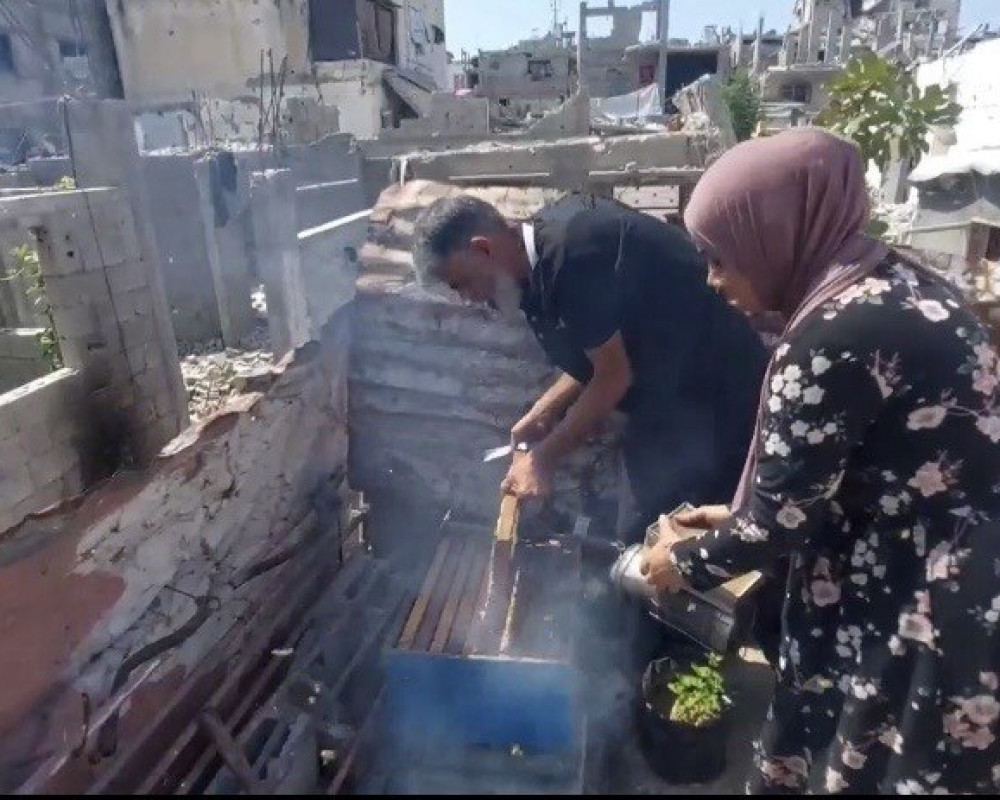
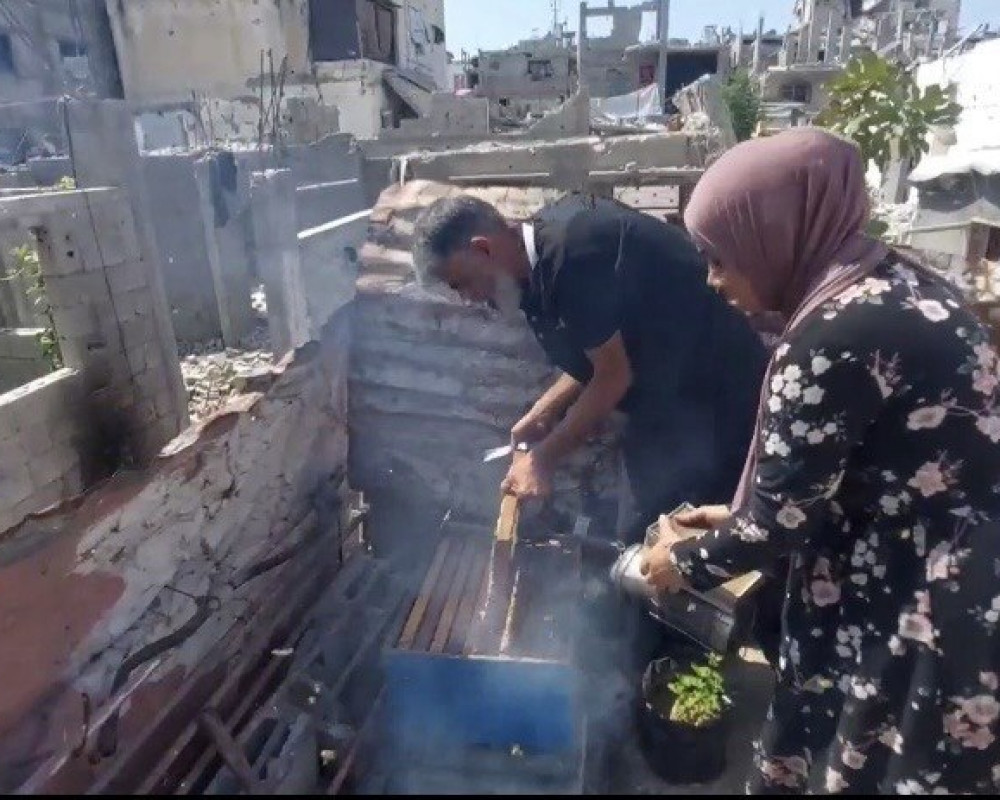
One of the first things she thought about after returning was the beehive she had left behind, although she did not expect to find it alive. With the help of her husband, she began searching through the rubble and was surprised to see a swarm of bees emerging from the ruins, confirming that part of the hive had survived.
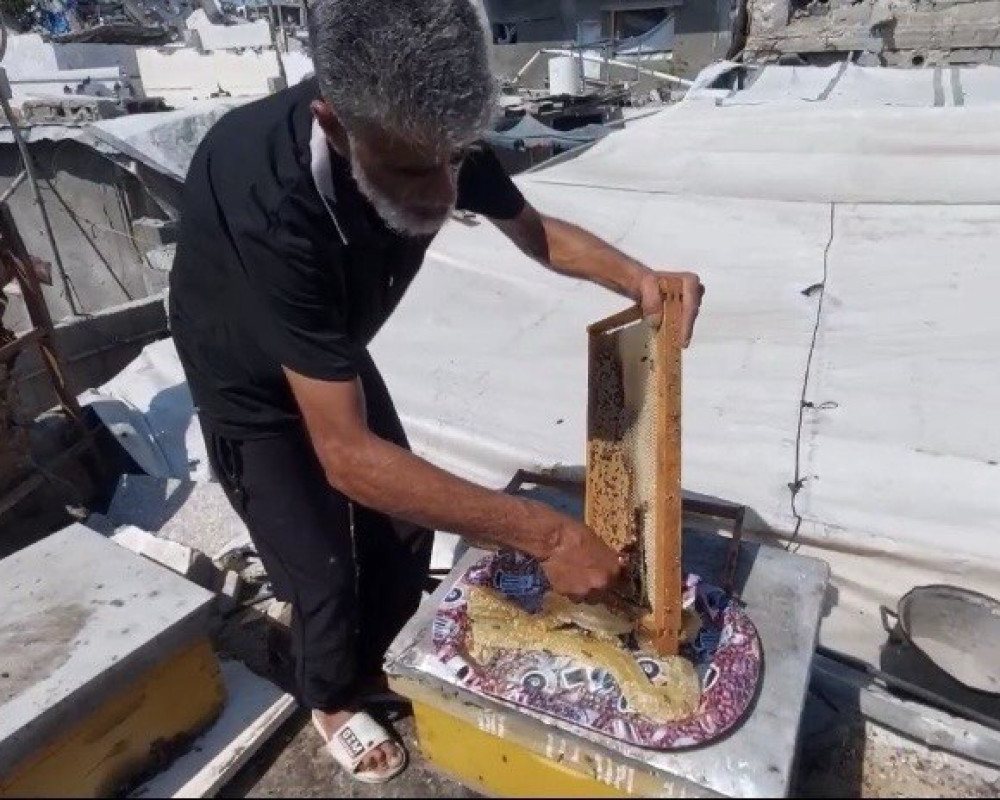
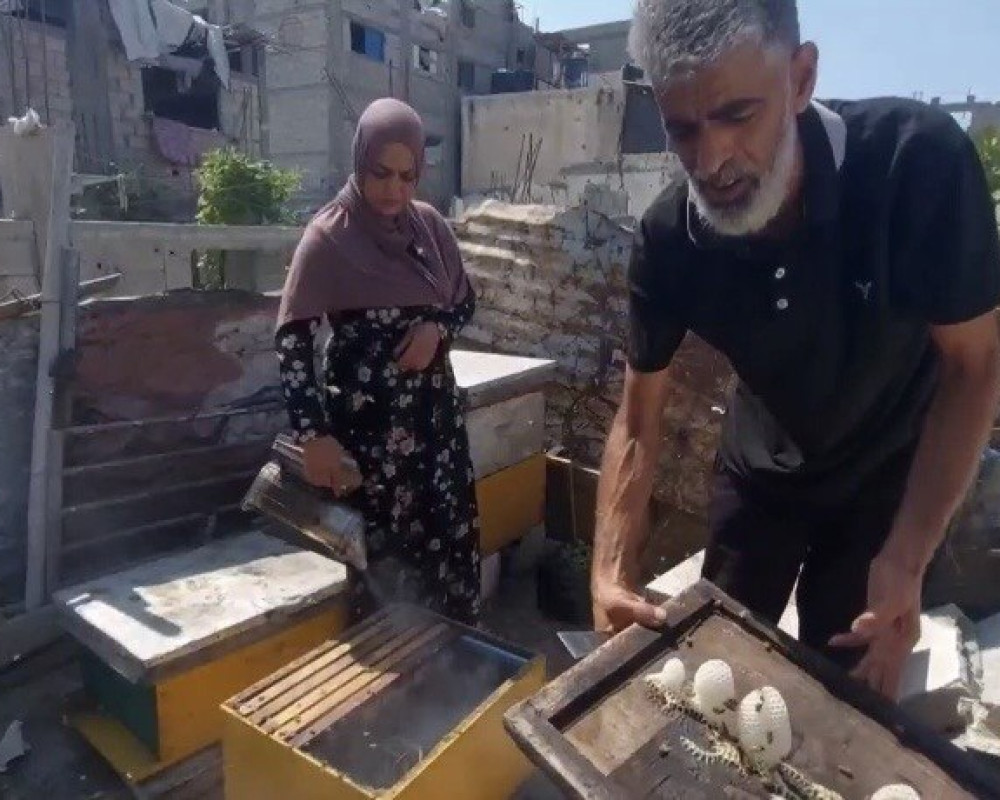
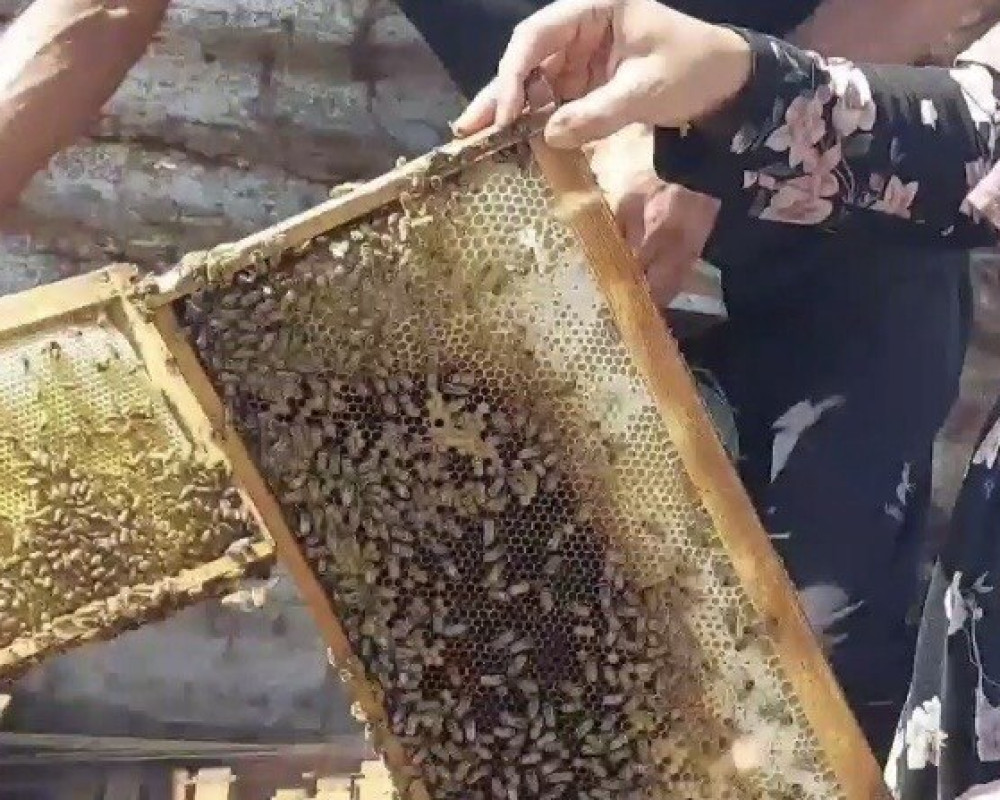
Al-Ashqar and her husband began clearing away the rubble and rescuing the hive. They managed to retrieve it and care for it, discovering that it remained in relatively good condition, with honey and frames containing brood.
The discovery encouraged her to hold on to the hive and try to revive her small beekeeping business despite the circumstances surrounding her.
But surviving beneath the rubble did not mean the end of her struggle. Al-Ashqar now faces severe shortages of nearly everything needed to keep bees. She lost beekeeping equipment and hive supplies, while the economic losses caused by the war have made it extremely difficult to replace them.
Her husband also does not have a stable source of income, she said, making it even harder to keep the project going. Still, she insists on preserving the hives she has left, viewing them as part of Gaza's agricultural and environmental wealth.
Al-Ashqar said there is demand for honey, with customers approaching her to buy quantities of it. But her current production is extremely limited because she has so few hives and cannot easily obtain the supplies needed for beekeeping.
She said her current production is not enough to meet demand, but believes that support and assistance to expand the number of hives could turn her small operation into a viable source of production in the coming period, particularly with the arrival of spring and the availability of natural grazing areas for bees.
Al-Ashqar is calling on the world to help save Gaza's environment and natural resources. The territory, she said, has significant agricultural, livestock and environmental resources, and protecting them means more than preserving livelihoods. It also means protecting resources that can help provide food and income for the population.
For Al-Ashqar, bees are not simply an economic project but a “precious jewel” she is determined to save. The honey they produce can serve as both food and a source of traditional remedies, she said, while preserving the hives also means protecting part of Gaza's agricultural environment, which has suffered extensive damage during the war.
Today, she says, she needs support to rebuild her hives and obtain the equipment required for beekeeping so she can increase production and gradually restore her business. She hopes the coming spring will bring more hives and a better honey harvest, giving her and other farmers an opportunity to return to work and production.
As beekeepers in Gaza struggle to preserve the agricultural and environmental sector despite the war, Abu Fares Al-Ashqar, another beekeeper from Gaza, describes the dramatic changes that have affected the profession and the areas once known for beekeeping.
Al-Ashqar said the areas of Erez, Zikim, Beit Hanoun and surrounding communities were once home to large numbers of beehives and provided important environments for beekeeping and honey production. But the war, destruction and displacement have stripped those areas of many of their agricultural resources.
The current conditions have made it difficult to continue working in the way beekeepers did before the war, he said. Many of the plans and ambitions they had for developing their businesses disappeared when the war began.
When Al-Ashqar returned home after being displaced, he was surprised to discover that a beehive had survived amid the rubble. He said he found it among the ruins of the house, with bees gradually emerging from it — a sight that gave him a sense of hope after he had believed that everything had been destroyed.
He began caring for and strengthening the hive until he was able to gradually multiply it. The single surviving hive became four, and eventually five, as he tried to rebuild his business under extremely difficult conditions.
The experience made him realise the value of the hive, Al-Ashqar said. What brought him the greatest happiness after returning home was not what remained of his possessions, but finding the beehive alive amid the destruction.
He recalled that he had left a car at home before being displaced. It was destroyed during the war, and he was unable to retrieve or save it. Yet the survival of the beehive became, for him, a greater source of joy and hope because it represented something living that had endured amid the ruins.
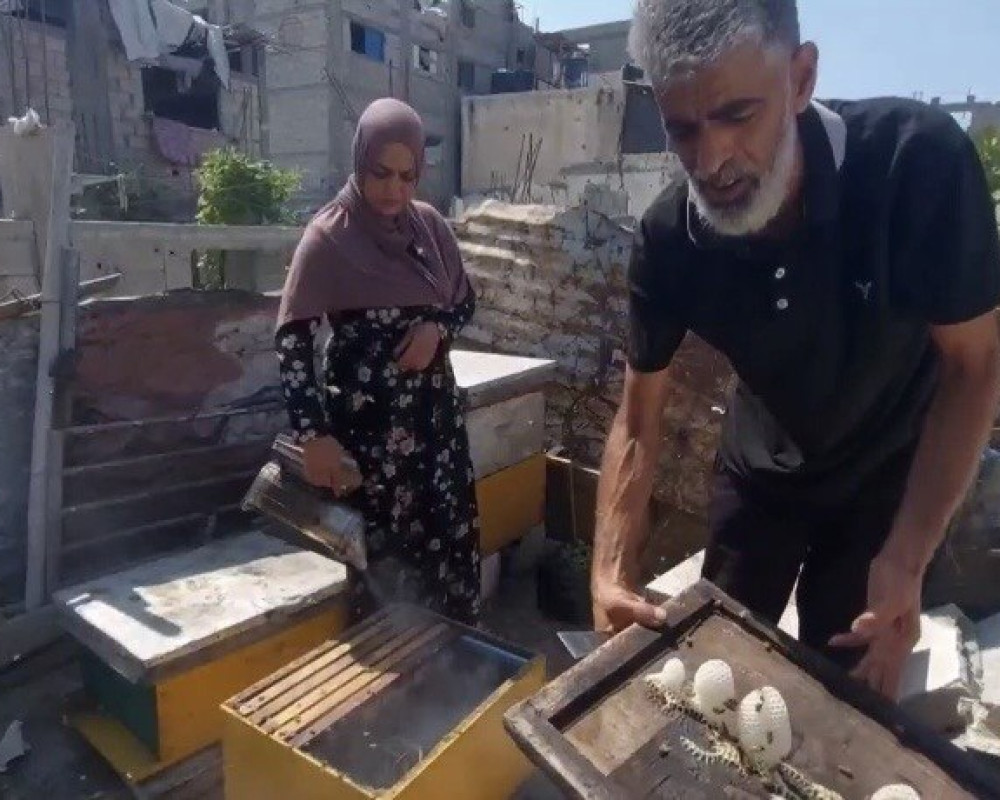
Al-Ashqar is calling on the international community to support Gaza's beekeepers and help them rebuild their businesses. Bees, he said, do not serve one particular group; they are closely connected to agriculture, the environment and food production. Supporting beekeeping therefore means supporting an entire agricultural and environmental system.
From the ruins of Jabalia in northern Gaza, Al-Ashqar is appealing to relevant institutions and organisations to stand with beekeepers and provide the equipment, hives and supplies they lost during the war so they can resume their work.
Despite living amid rubble, restrictions and destruction in northern Gaza, Al-Ashqar said he remains hopeful that he can rebuild his business. He called for help for himself and other beekeepers to restore the beekeeping sector, bring honey production back and revive an agricultural profession that once provided livelihoods while also playing an important role in Gaza's natural environment.
This video was produced with financial support from CFI, Expertise France and the European Union. Responsibility for the content of this document rests entirely with the beneficiary and it should not in any way be considered to reflect the views of CFI, Expertise France or the European Union.