GAZA (PNN) — By Islam Al-Mazloom
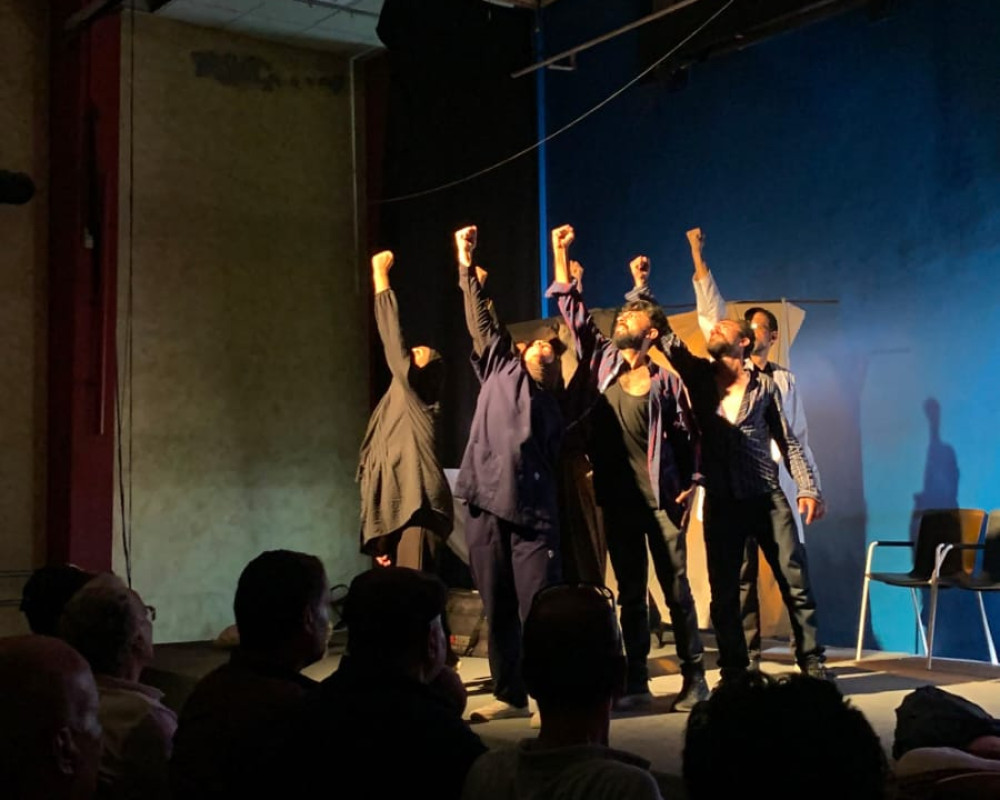
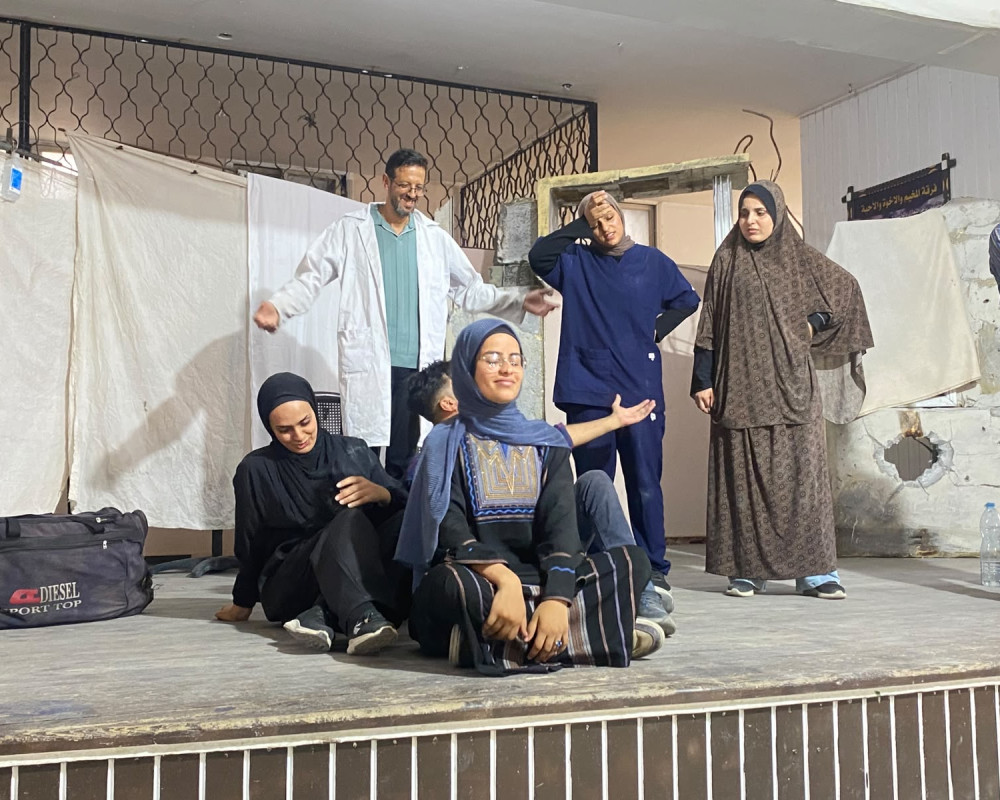
In a tent among the displaced, a piece of cloth can become a curtain, an empty can of peas a puppet, and a narrow street or small square a stage. Here, Palestinian artists are reinventing theatre with whatever is at hand after war has destroyed venues, scattered performers and erased formal stages.
Theatre has not stopped. It has changed its place, form and function. It has become a space where children can breathe and express themselves, a tool for artists to preserve stories, and an attempt to reclaim fragments of life amid displacement and rubble.
In Gaza, the question is no longer only where performances can be staged, but how theatre can endure when the stage itself has disappeared.
A space to breathe
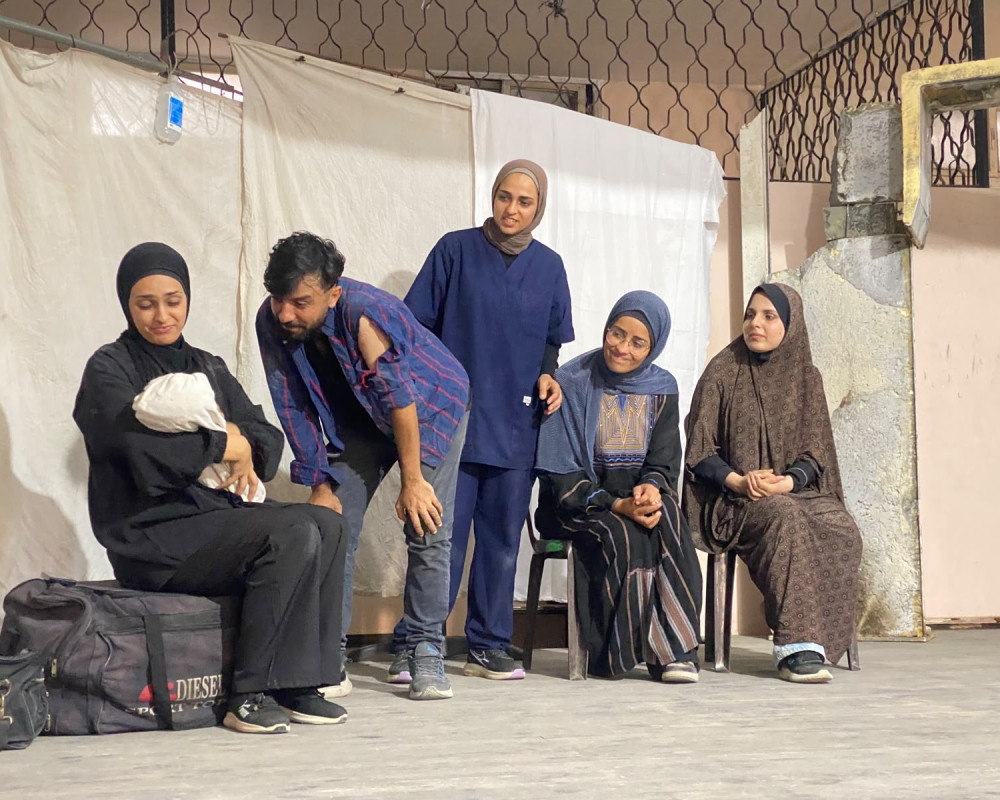
Tamer Najm, an actor and drama trainer, said that when stages vanished under bombardment, he found a new arena in displacement camps. Working with displaced children, he uses theatre-based techniques for psychological relief, including Theatre of the Oppressed, puppetry and psychodrama exercises.
“For us, theatre is no longer just a performance,” he said. “It is a space for support — its first function is breathing and expression. A child needs to breathe out fear and anger, to express silence through play, movement and sound.”
He added that full recovery is impossible after two years of destruction, but even brief moments matter. “We have given children a moment to breathe amid the rubble.”
Puppets from scraps
After losing his home and workshop in the bombardment, director Mahdi Krira turned remnants of daily life into theatre. Tin cans, cartons and discarded packaging became puppets in his hands, each with its own character and voice.
With the help of his children and the “Khuyout” team, he staged performances for displaced children in camps, drawing audiences who gathered around as if the puppets opened a small window onto joy.
“Death is present in Gaza,” he said. “But I believe we must keep working and making people happy, even if death comes while we are laughing.”
For Krira, the puppets are more than props; they are living entities on stage. Their story reflects a broader reality — how the remnants of war can be reshaped into tools of life, and how theatre becomes a daily act of healing.
Preserving memory
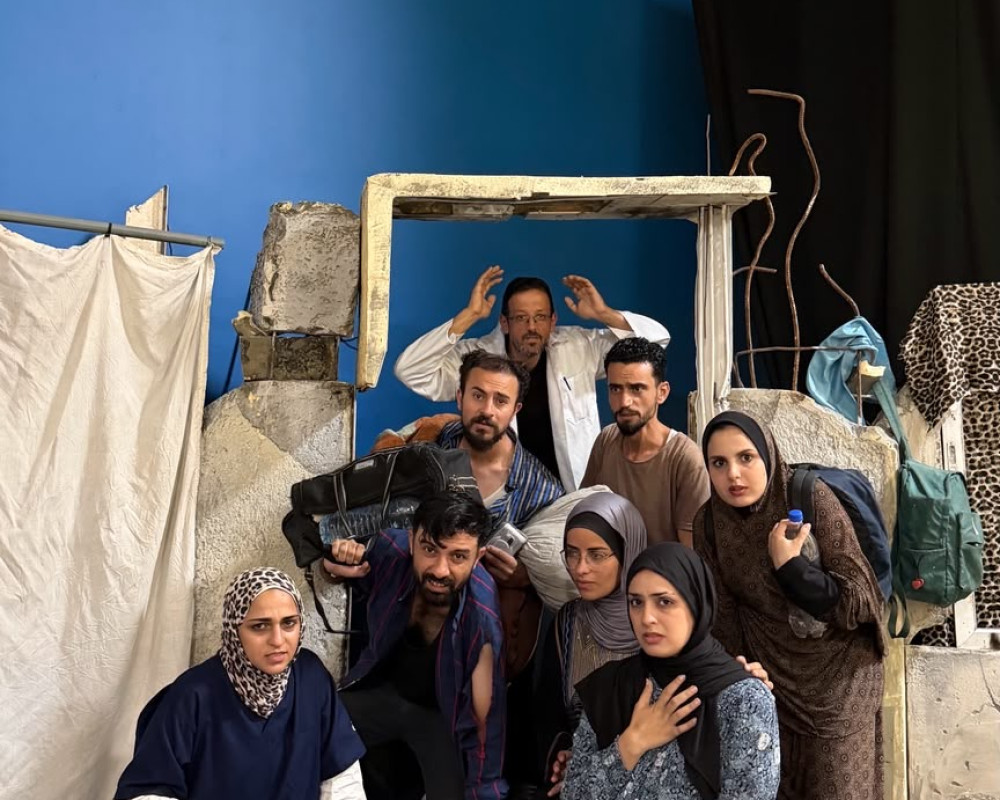
Artist and director Raafat Al-Ayedi sees theatre as more than a physical stage. “It is a shared space between us and the audience — a voice and a continuous story,” he said.
Before the war, theatre in Gaza was active, with performances in schools, streets and institutions despite limited resources. The war, he said, has taken a heavy toll, including the loss of artists and the trauma of displacement. Yet performances continue in camps and public spaces.
“Today, theatre has become memory and voice,” he said. “It helps preserve people’s names, dreams and stories. Sometimes a single actor telling a story in a tent is an act of resistance.”
A history older than war
Documented theatrical activity in Gaza dates back to 1911, when Hamlet was staged in the city at a time when Palestinian theatre relied heavily on amateur productions and translated works.
Over decades, the theatre movement developed, particularly in the 1990s with the emergence of groups such as Al-Shumou’, Al-Amal for Art and Theatre, Hanadel and Al-Karama Complex, often relying on individual efforts amid scarce resources.
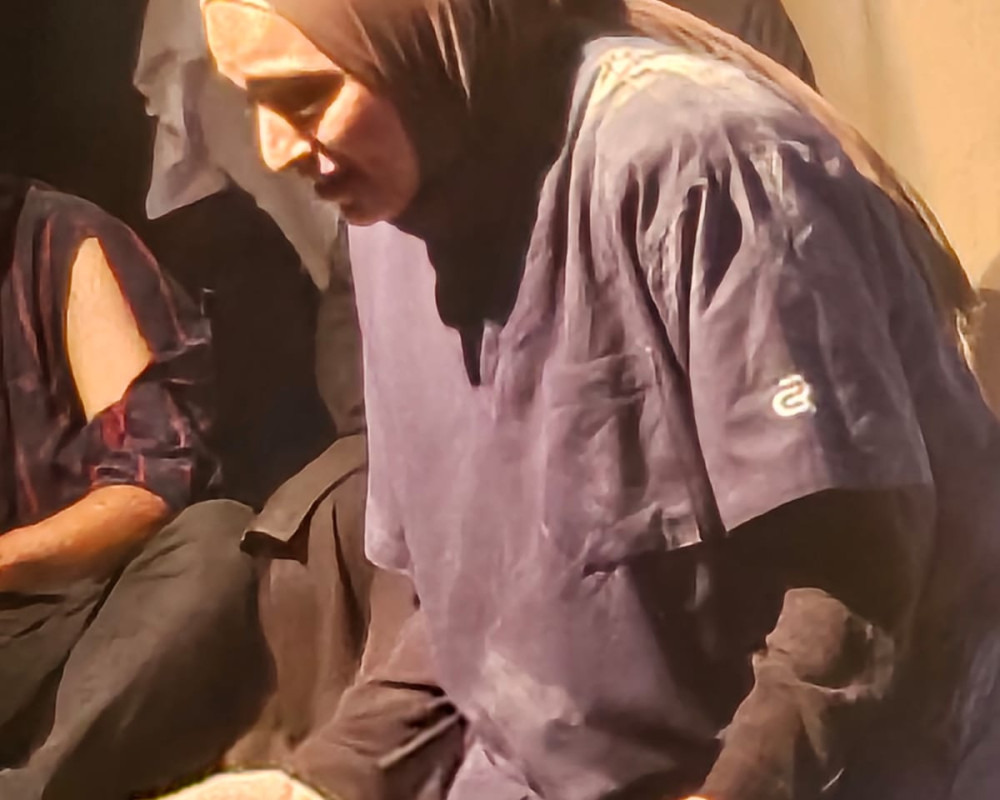
Ali Abu Yassin, director of Al-Bayader Association for Theatre and Arts, said Palestinian theatre did not begin with the current war and has never been easy. “It has always existed between struggle and resilience, joy and sorrow,” he said, noting that stability is essential for artistic growth.
He added that Palestinian theatre participated in Arab and international festivals before the blockade, but has repeatedly been damaged in successive wars. Among his notable works are Gaza Monologues after the 2009 war and The Cage after the 2014 war, which was translated into several languages and performed at the Edinburgh Festival.
Searching for new form
Ashraf Sahwil, director of the Gaza Centre for Culture and Arts, said the war has imposed new forms of theatre, including street theatre, Theatre of the Oppressed and puppetry — formats that do not require stages or technical infrastructure.
He noted that cultural venues have been systematically targeted, including the Palestinian Red Crescent Theatre in 2008, Al-Mishal
Theatre in 2018, the National Library and Rashad Al-Shawa Cultural Centre, leaving the sector without infrastructure capable of supporting production.
Despite this, theatre in Gaza remains free and open to all, offered as a cultural and human right rather than a commercial activity.
From tents and narrow streets to improvised puppets made from food cans and cardboard, artists continue to create spaces for laughter and expression. In doing so, they preserve collective memory and offer moments of life amid destruction.
The loss of theatre is not only the loss of a venue, but of a shared memory. What artists are doing today is an effort to keep that memory alive — until stages return, audiences reclaim their seats, and theatre finds its home again.