Gaza / PNN / Report by Intisar Mohammed Abu Jahl —
When Palestinian journalist “Amal” checks the death toll in Gaza, she does not read the names as news alone. Each time, she fears a new name among them could belong to a family member killed, wounded or missing beneath the rubble of bombardment that continues despite the ceasefire.
Amal, a 35-year-old journalist using a pseudonym, writes reports on the attacks while periodically looking up at the ceiling, afraid it could collapse above her. When the working day ends, the coverage does not. Images of family members and fellow journalists who were killed follow her into sleep, while memories of her destroyed home and more than 10 forced displacements between tents and overcrowded schools remain with her when she is awake.
For Amal, the distance that normally separates a journalist from the story they cover has disappeared. She documents loss while experiencing her own, reports on displaced people while being displaced herself, and writes about fear while not knowing whether she will survive the next attack.
As the war continued, her ability to cope began to deteriorate. Insomnia and nightmares were no longer the only problems; the pressure began to affect even the most basic tools of her profession. On some days, she would sit in front of her words unable to write even a simple headline.
It was not the result of a single traumatic event, but of accumulated layers of loss, displacement, fear and isolation. The war came on top of earlier family difficulties and trauma, while displacement forced Amal and her relatives to share cramped spaces inside tents and school classrooms, adding to the pressures she was already experiencing.
Even the places she sought out for safety were not always psychologically safe. Amal says some displaced people were afraid to have her among them because of her work as a journalist, fearing that the presence of a journalist could make the location a target for Israeli attacks.
She therefore found herself facing a painful contradiction: the profession that gave her a means of documenting what was happening around her had also become part of the fear that followed her.
When she reached a point where she could no longer work, she decided to seek psychological support. The decision was not easy. It was preceded by feelings of guilt and hesitation, before she realised, she says, that continuing to carry the voices of those she had lost first required her to preserve her own ability to carry on.
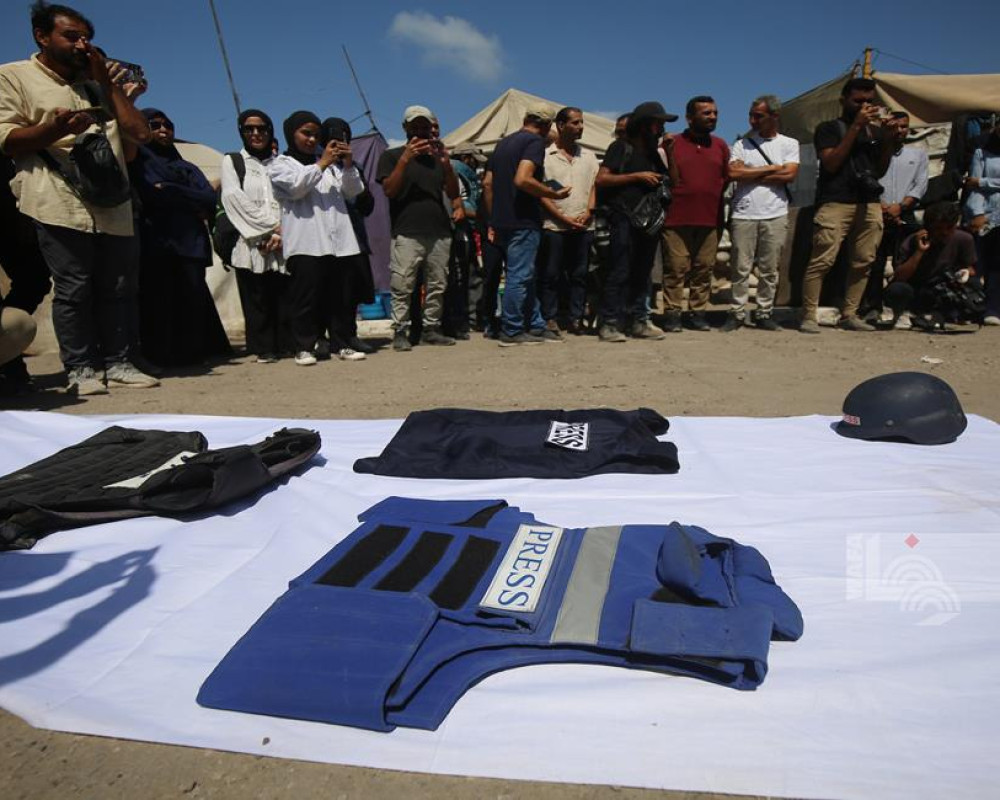
After more than two years of loss, displacement and repeated exposure to danger, Palestinian journalists face an unusual psychological dilemma: How does a person recover from trauma that has not ended, while being expected to return to the field every day to document it?
The dilemma has prompted Palestinian media organisations to seek psychological responses that go beyond the short-term support programmes previously offered.
Among them is the Palestine Journalism Centre, which launched a psychological support programme currently serving about 200 journalists in the Gaza Strip and 100 in the West Bank.
Shorouq Al-Asaad, the centre’s director, said the scale of trauma, anger, grief and loss among media workers had prompted the organisation to move from limited, short-term interventions to a more structured and sustained psychological support programme.
The programme was designed, Al-Asaad said, in consultation with trauma specialists and with the support of organisations concerned with journalists’ safety and freedom. Registration through an online form attracted a large response, resulting in 98% of applicants being accepted.
Priority was given to field journalists most exposed to trauma, as well as young journalists and women. In the West Bank, priority was given to journalists working in areas most exposed to military incursions and settler attacks, as well as those who had been injured or detained.
The programme began with in-person group sessions for psychological support and emotional release, before gradually moving to individual sessions ranging from eight to 14 sessions, depending on each participant’s needs.
But what specialists encountered during the sessions revealed a deeper problem: many journalists were not dealing with a traumatic event that had ended, but with danger that continued to recur.
Hala Sukkar, a psychologist and social worker who supervises the mental health department at the National Rehabilitation Society in Gaza and participates in the programme, said continued exposure to danger makes journalists’ experiences different from the traditional model of post-traumatic stress disorder.
The concept of “post-trauma”, she said, essentially assumes that the event has become part of the past. For a journalist working in Gaza, however, a new traumatic experience may begin before there is time to process the previous one.
According to data provided by Sukkar, 70.3% of participating journalists experience hypervigilance and persistent physical tension, while 55.2% reported a reduced sense of self-efficacy and a lack of stability. Another 39.3% reported physical dissociation or emotional numbness as a defensive mechanism.
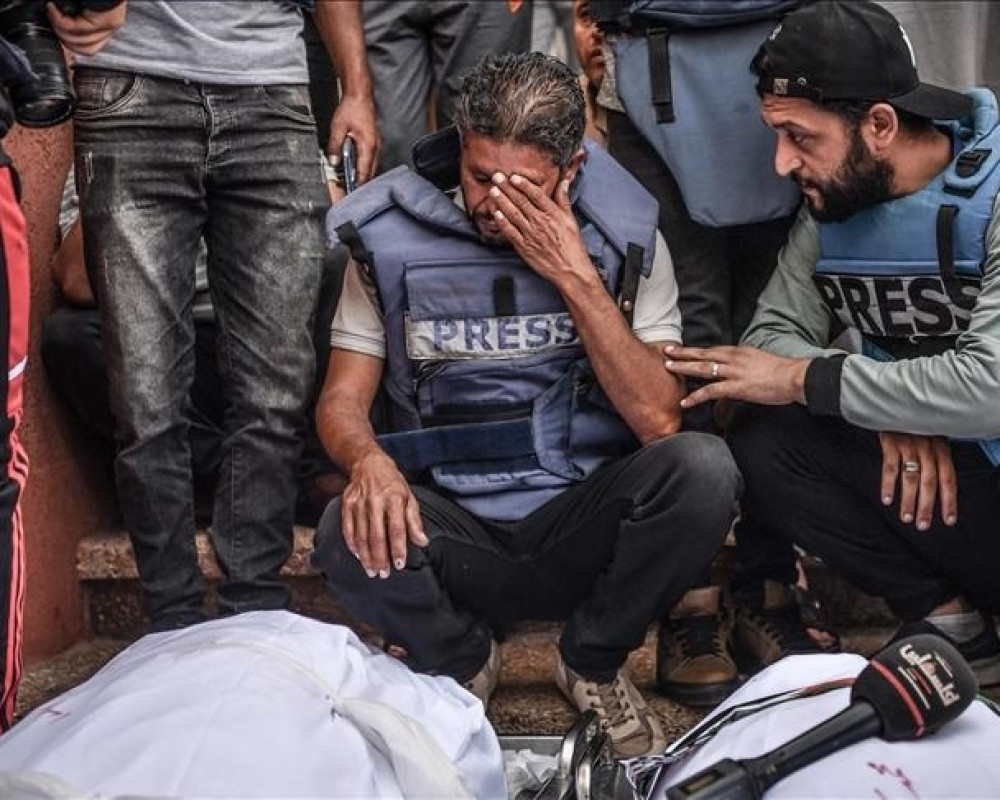
“Survivor’s guilt” also appears among journalists who find themselves in a dual position: witnesses to a tragedy tasked with documenting it, while also being victims of it themselves.
For this reason, Sukkar said, the programme is based on the concept of Continuous Traumatic Stress (CTS) rather than addressing cases solely through the framework of Post-Traumatic Stress Disorder (PTSD).
The intervention focuses on helping journalists cope with danger in the present, rather than solely processing memories of an event that has become part of the past. It includes techniques to regulate physical and physiological responses and expand the capacity to tolerate stress, alongside expressive arts, group work and some meaning-centred therapy techniques.
According to Sukkar, 82.2% of participants considered techniques related to physical and nervous-system regulation among the most useful interventions.
Access to support, however, does not necessarily make it easy to talk.
Sukkar observed that some female journalists feel more cautious during individual sessions, where they may feel they are “under direct scrutiny”, in addition to social reservations about showing fear or crying.
Others prefer individual sessions when their experiences involve family or personal details they do not want to disclose in front of colleagues. Some journalists in managerial positions also prefer individual sessions because they fear that revealing psychological vulnerability could undermine the professional image others are accustomed to seeing.
The majority, however, according to Sukkar, tend to favour group sessions. Hearing another journalist talk about insomnia, fear or an inability to concentrate gives participants an important realisation: what they are experiencing is not an individual weakness, and they are not alone.
Al-Asaad said journalists experience the same loss, displacement and fear as other Palestinians, but they also carry the responsibility of returning to that suffering every day to document it and communicate it to others.
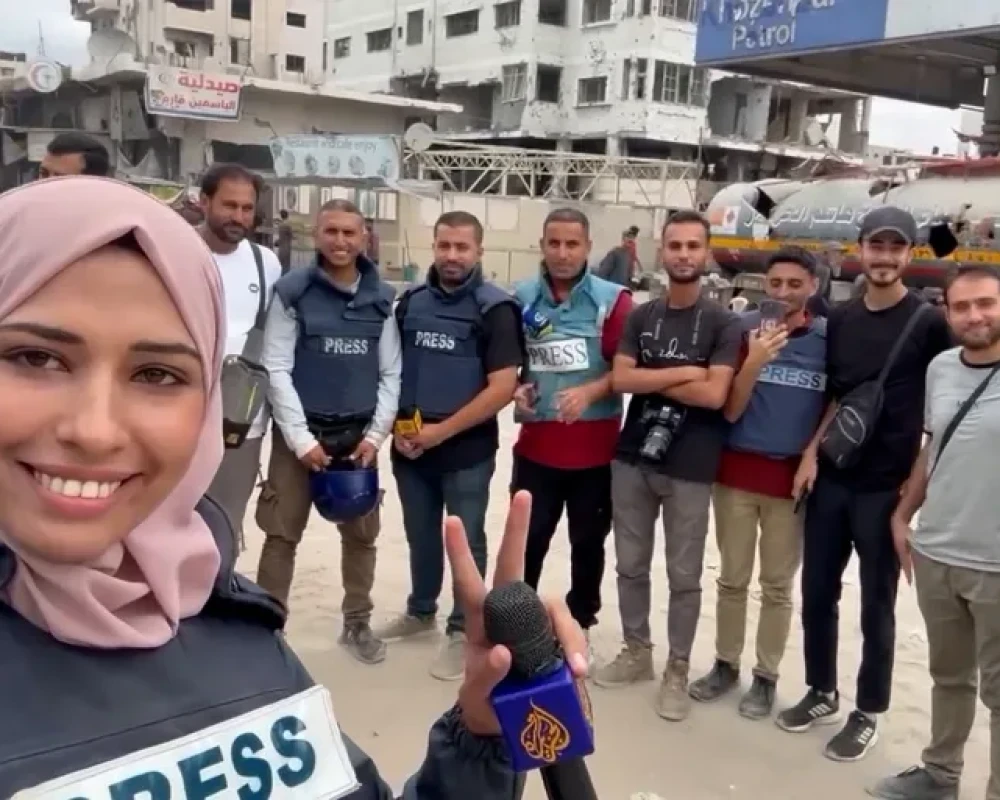
Recovery therefore requires continued spaces for listening rather than temporary interventions, she said, and trauma should be treated as a human response to the circumstances journalists are living through, rather than as a sign of weakness or a stigma.
Even the therapists who listen to these stories every day are not immune to their effects. In the absence of external supervision, they rely on breathing techniques, artistic expression, writing and communication with colleagues, while also trying to maintain a separation between the therapeutic space and their personal lives to reduce the risks of secondary trauma and compassion fatigue.
As for Amal, she is not waiting for her memories to disappear before returning to journalism, nor for the war to end before beginning to rebuild herself.
For her, recovery appears more modest and urgent: being able to sleep, regaining her ability to concentrate, and sitting in front of a blank screen and finding the words again.
In a place where trauma remains an everyday reality, the ability to write the next headline may itself be the beginning of recovery.
This story was produced by Palestine News Network (PNN) in cooperation with the Palestine Journalism Centre as part of a project supporting media during times of crisis.