Hebron / PNN / Report by Shaimaa Abu Rayan —
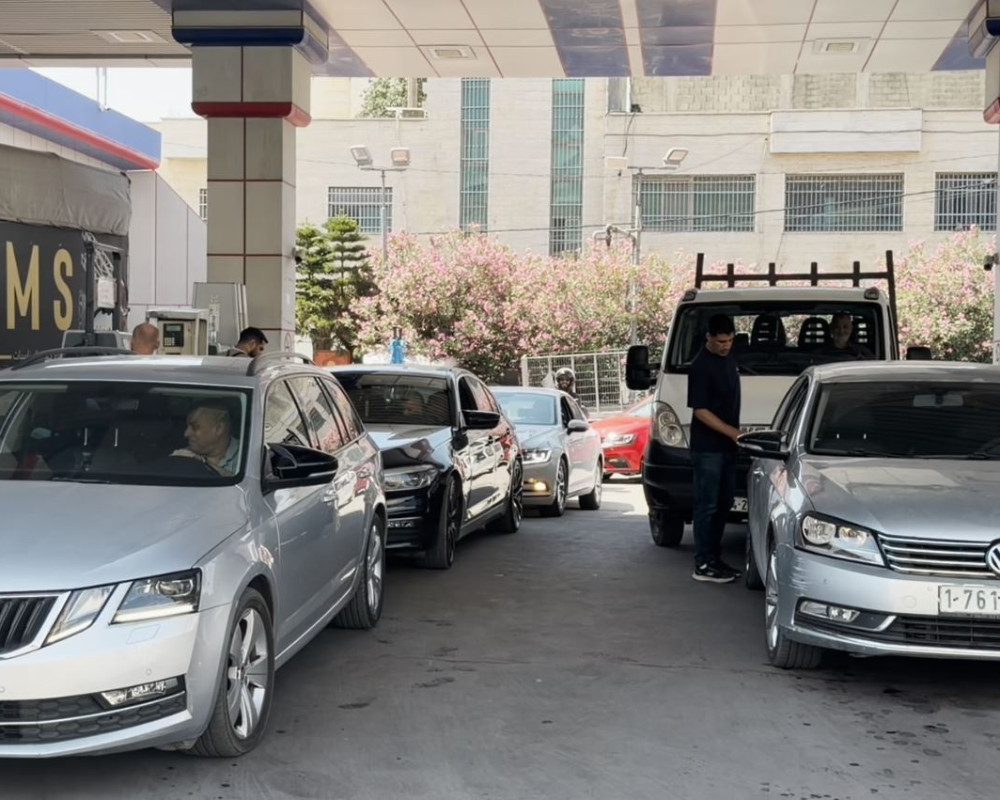
As fuel shortages persist, Palestinians are being forced to wait for hours outside petrol stations in the hope of securing limited supplies. Many complain about rising prices, which have left them buying only small quantities within their means.
Resident Alaa Al-Muhtasib told PNN that the long queues outside petrol stations were disrupting his work and wasting his time, while the continued rise in petrol prices was adding to the financial burden on citizens.
Wissam Abu Manshar told PNN that the fuel crisis was wasting people's time as they waited at petrol stations, while higher prices were directly affecting household finances and making it harder for families to meet their daily needs.
The fuel shortage comes as Israel continues to withhold part of the Palestinian Authority's clearance revenues, its main source of income, triggering a severe liquidity crisis. With the circulation of the Israeli shekel declining and some traders reluctant to accept it, it has become increasingly difficult to secure the cash needed to pay fuel suppliers. This has contributed to reduced fuel deliveries to petrol stations and prolonged the crisis.
As petrol prices continue to rise, Hamza Al-Joulani told PNN that the solution was to lower prices, saying people cannot do without fuel despite the difficulty of using a boycott as a means of applying pressure.
Wissam Abu Manshar said solutions remained difficult under the current circumstances, arguing that the crisis was not limited to fuel but extended to different aspects of daily life.
Alaa Al-Muhtasib said the problems facing Palestinians went beyond petrol, diesel and cooking gas shortages to include essential sectors such as education and health, describing the situation as part of broader circumstances affecting Palestinians.
The impact of the fuel crisis extends beyond shortages at petrol stations and into Palestinians' daily lives. Public transport drivers are struggling to continue working, while students and employees face difficulties reaching universities and workplaces. At the same time, the cost of living continues to rise as the crisis persists with no clear end in sight.
For many Palestinians, the question remains: How long will the fuel crisis continue to disrupt their lives?
This report was produced as part of the Media Support in Times of Crisis project, implemented by Palestine News Network (PNN) in cooperation with the Palestine Media Hub.