BETHLEHEM, West Bank (PNN) —
What happens when waste becomes a source of income, fuel becomes scarce and safe alternatives are out of reach?
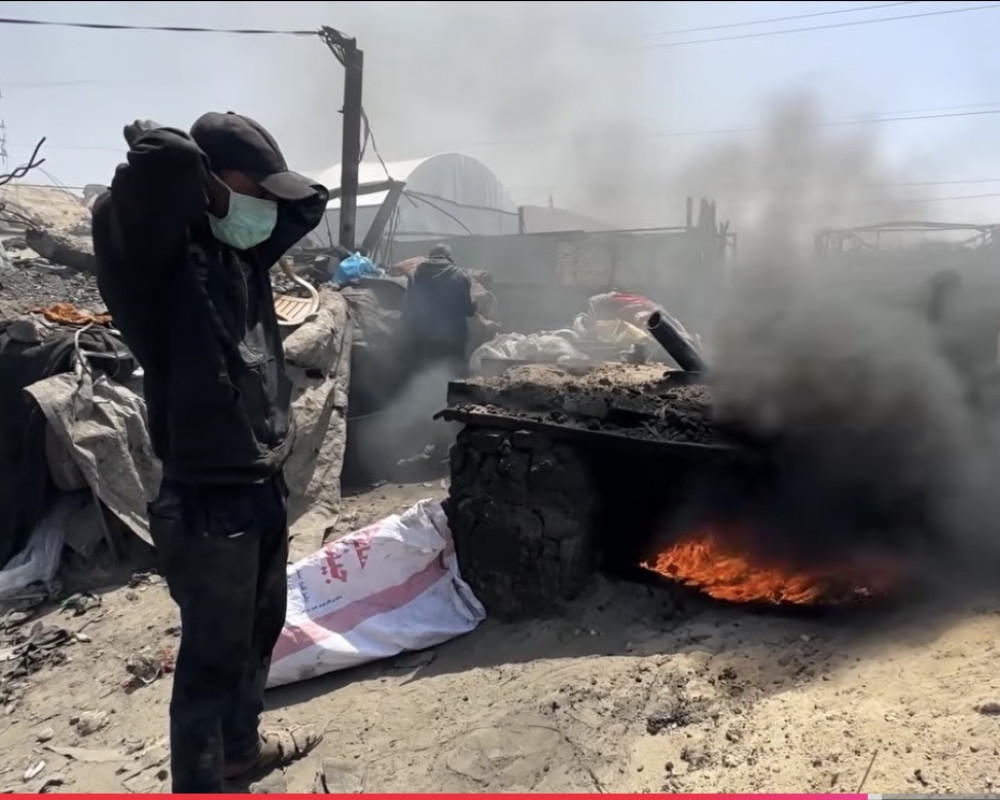
PNN’s television program “Ala Al-Makshouf” explored these questions in an episode examining the burning of electronic and plastic waste in southern Hebron and improvised attempts to produce alternative fuel from waste in the Gaza Strip.
The episode, presented by PNN journalist Sara Rizk, brought together field reporting, official responses and expert perspectives to examine how the lack of safe and affordable alternatives can turn an environmental problem into a wider public-interest issue — one that affects health, livelihoods and the environment.
Burning Wires, Living With the Smoke
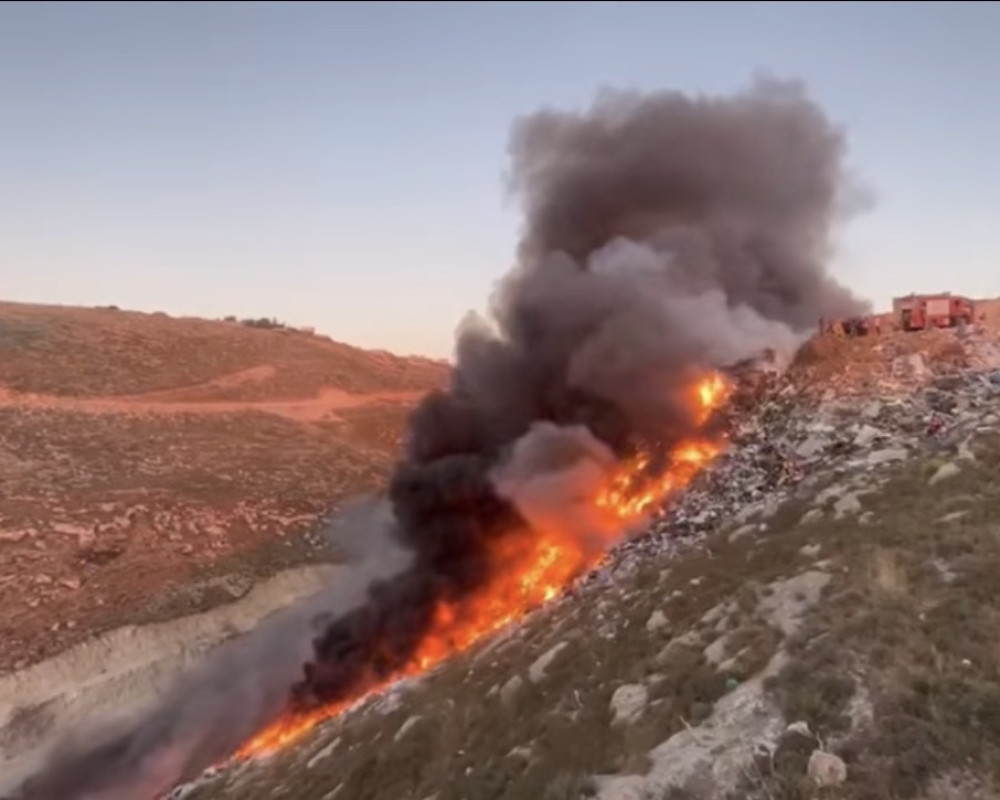
The programme’s field report travelled to southern Hebron, particularly the areas of Idhna, Deir Sammit and the western area, where the burning of electrical wires and electronic waste has become a growing concern.
Residents described how smoke from burning waste has become part of their daily lives, affecting the communities surrounding the burning sites.
The Southern Hebron Environmental Justice Movement told the programme that hundreds of burning sites exist across the area. It called for greater coordination between official institutions and local communities, alongside safe and accessible alternatives for disposing of electronic and other waste.
During a phone interview, Hashim Salah, director of the Hebron office of the Palestinian Environment Quality Authority, told the programme that burning waste — particularly copper wires and electronic waste — violates Palestinian environmental law.
He said joint campaigns with security agencies had resulted in about 56 people being detained and referred to judicial authorities.
Salah said Palestinian environmental legislation provides penalties for the burning of hazardous waste, including prison sentences of up to three years and fines of as much as 3,000 Jordanian dinars.
But enforcement alone, he said, cannot address the problem. Some burning sites are difficult to reach, while tackling the practice requires coordinated action by government institutions and local communities.
The smoke generated by burning electronic and other waste contains toxic gases that can affect air quality and public health, particularly among children and older people, Salah said. Air around the burning sites can become unsafe because of the pollutants released during the process.
Finding a Safer Alternative
The programme also examined whether the problem can be addressed through safer economic alternatives.
Salah said licensed facilities already extract copper from electrical cables using mechanical methods rather than burning them. He called for expanding the number of specialised, licensed facilities capable of handling electronic waste safely.
Mazen Qumsiyeh, director of the Palestine Institute for Biodiversity and Sustainability at Bethlehem University, told the programme that burning electronic and plastic waste releases hazardous pollutants that can contaminate the air and soil and threaten biodiversity.
Qumsiyeh referred to studies examining the phenomenon and called for stronger enforcement of environmental laws, alongside safe recycling solutions that could also create employment opportunities.
Gaza: Turning Waste Into Fuel
The programme then shifted its focus to the Gaza Strip, where fuel shortages have pushed some residents to experiment with producing alternative fuel from waste.
With conventional fuel difficult to obtain, some people have turned to improvised methods to meet basic needs, despite being aware of the potential health and environmental risks.
The programme examined the phenomenon not simply as an environmental issue, but as a reflection of the difficult choices people face when essential resources become scarce.
Economist Haitham Daraghmeh described the situation in Gaza as a “survival economy” created by extraordinary circumstances rather than a sustainable alternative economic model.
People, he said, are often driven to seek the least expensive option as their purchasing power declines.
Daraghmeh stressed that responsibility should not rest solely on individuals making these choices under difficult circumstances. He called on the government and authorities responsible for the energy sector to provide safer and affordable alternatives that protect both people and the environment.
He said addressing the problem requires more than environmental enforcement. It also requires economic and livelihood solutions that give people access to safe and affordable energy alternatives.
When Environmental Protection Becomes a Public-Interest Issue
By bringing together residents, environmental officials, academics and economic experts, “Ala Al-Makshouf” examined a common thread linking two seemingly different realities: the burning of waste in southern Hebron and the production of alternative fuel from waste in Gaza.
In both cases, the programme found that limited access to safe and affordable alternatives is an important part of the problem.
The episode concluded that protecting the environment cannot be separated from protecting people’s health and livelihoods. Sustainable solutions therefore need to address the underlying economic and social pressures that push people toward unsafe practices, while ensuring that safer alternatives are accessible and affordable.
Watch the full episode of “Ala Al-Makshouf” on PNN’s YouTube channel.
This video was produced with financial support from CFI, Expertise France and the European Union. The content of this document is the sole responsibility of the beneficiary and does not necessarily reflect the views of CFI, Expertise France or the European Union.