BETHLEHEM, West Bank / PNN /
As economic hardship deepens and job opportunities shrink, many young Palestinians are looking for new ways to earn a living by putting their skills to work in unexpected fields.
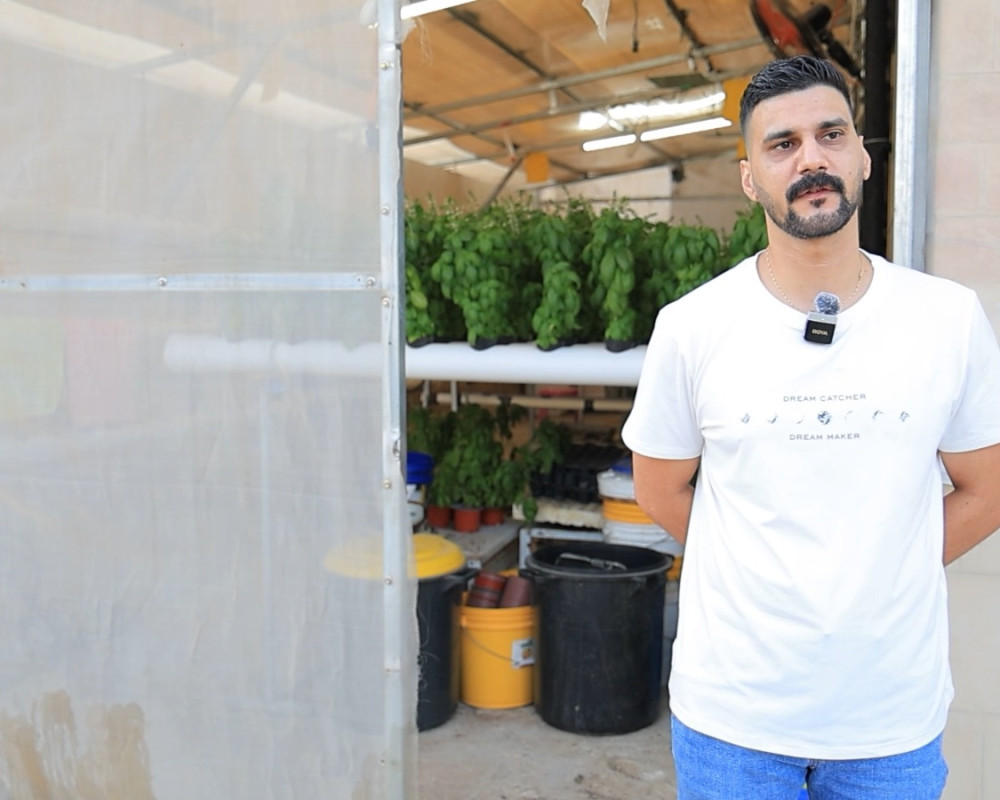
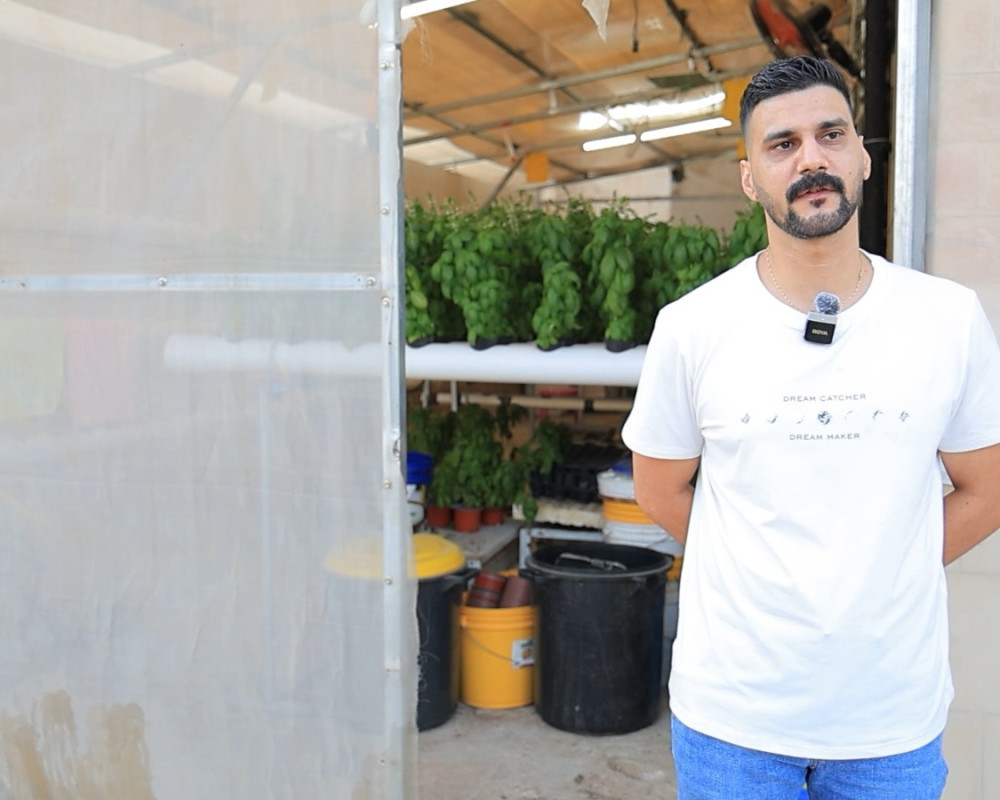
Among them is 29-year-old Waleed Salman, who studied tourism and hotel management and worked in the hotel industry before war and the resulting shutdown of businesses forced him to look for another way forward.
He turned to hydroponic farming inside his home.
Working with limited space and a system that recycles water, Salman has transformed what began as a small experiment into a modest production business supplying restaurants and hotels with vegetables and other products they need.
Salman said his background in tourism and hospitality had given him a clear understanding of what restaurants and hotels regularly require.
But when the war disrupted the sector and brought his work to a halt, he realised he needed to find another source of income.
That was when he began experimenting with hydroponics at home.
The idea was simple: use a small area inside the house to grow vegetables without traditional soil.
He started with lettuce and basil — two products commonly used by restaurants — and drew on his previous experience in the hospitality sector to identify potential customers and eventually establish connections with restaurants and hotels interested in his produce.
His first attempts were modest.
Salman relied largely on information he found online, testing the system himself, monitoring the results and gradually refining the process.
Over time, he became convinced that hydroponics could be more than a home experiment. It could become a viable business with room to grow.
He began with relatively simple equipment, saying the initial investment was modest compared with many conventional agricultural projects.
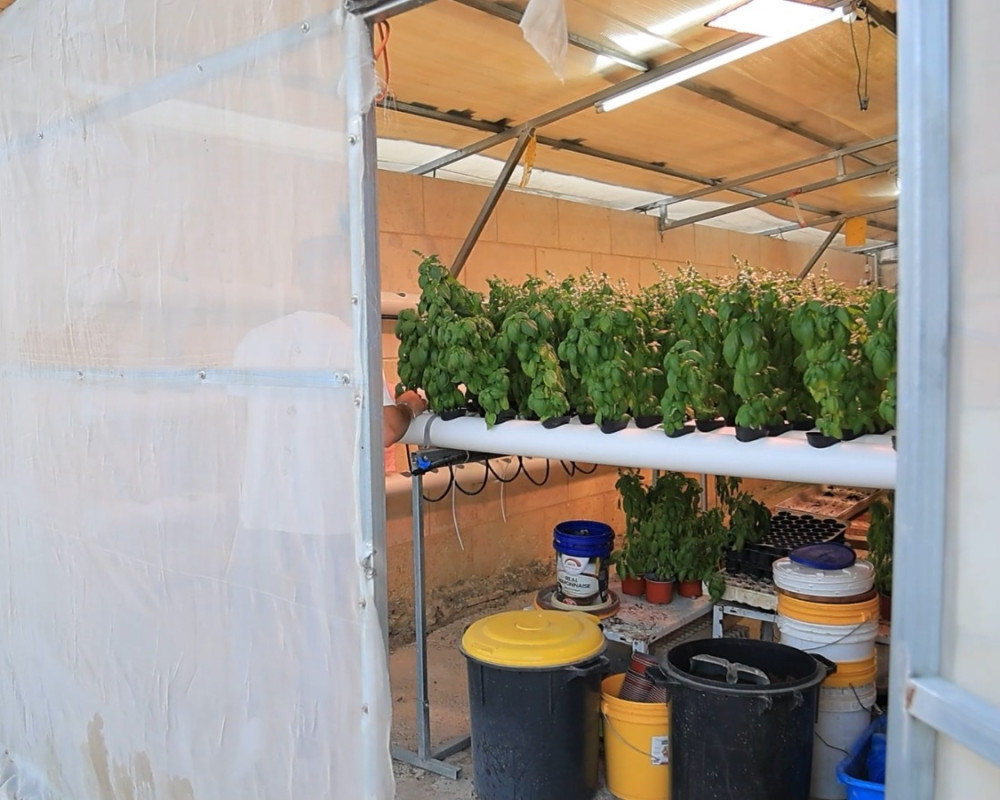
Much of the cost went into the basic infrastructure: metal frames, pipes, a water tank, a pump, hoses and other materials needed to build the hydroponic system.
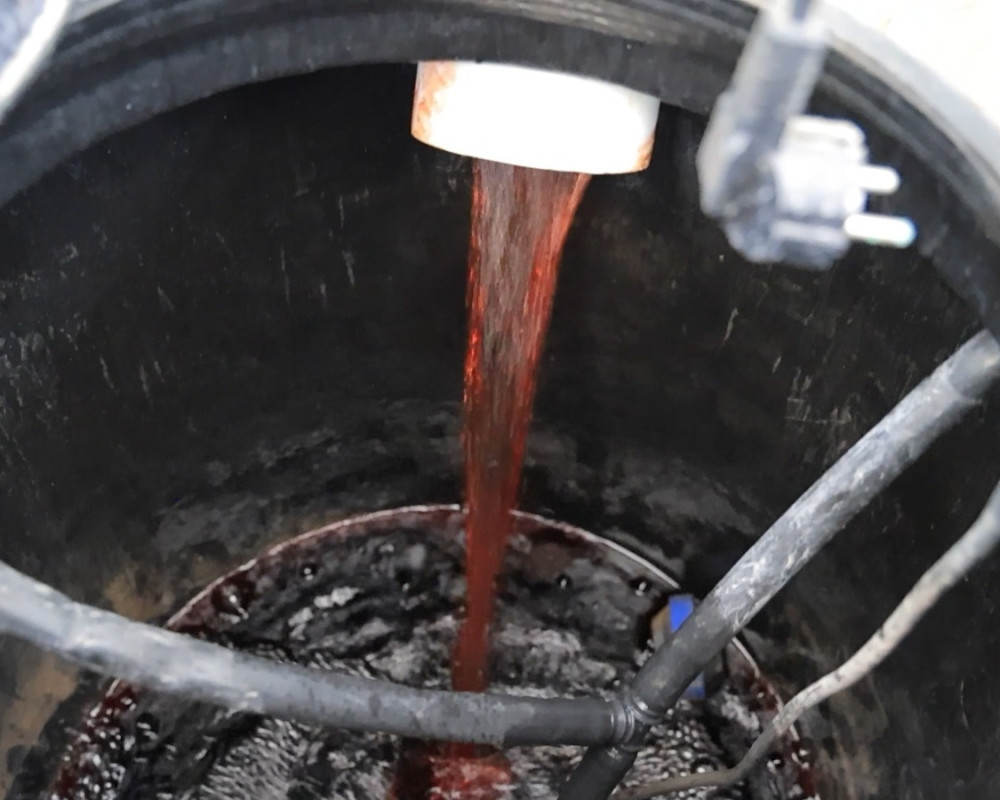
The system works by continuously circulating water through the pipes. A pump carries the water to the plants, where it passes around their roots before returning to the system and being pumped through again.
For Salman, the ability to reuse the same water is one of the project's greatest advantages, particularly at a time when conserving water is increasingly important.
Hydroponics also allows him to make better use of limited space than traditional farming, he said.
Instead of requiring large areas of agricultural land, the system can be built vertically, with pipes arranged at different heights to increase the number of plants grown within a small area.
The size of the available space still determines how much he can produce, but the system allows him to make much more efficient use of that space.
Another advantage, Salman said, is flexibility.
He can grow crops throughout the year rather than relying entirely on traditional agricultural seasons. With the right conditions, some crops normally associated with particular seasons can be produced outside their usual growing period.
As his experience grew, so did the project.
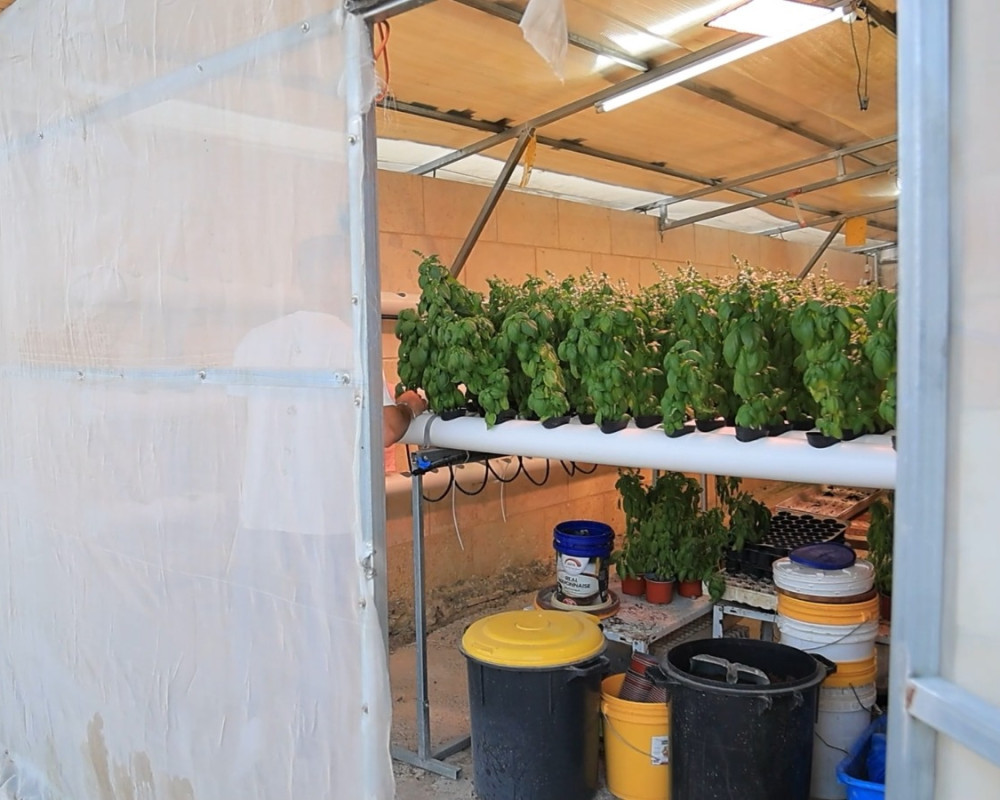
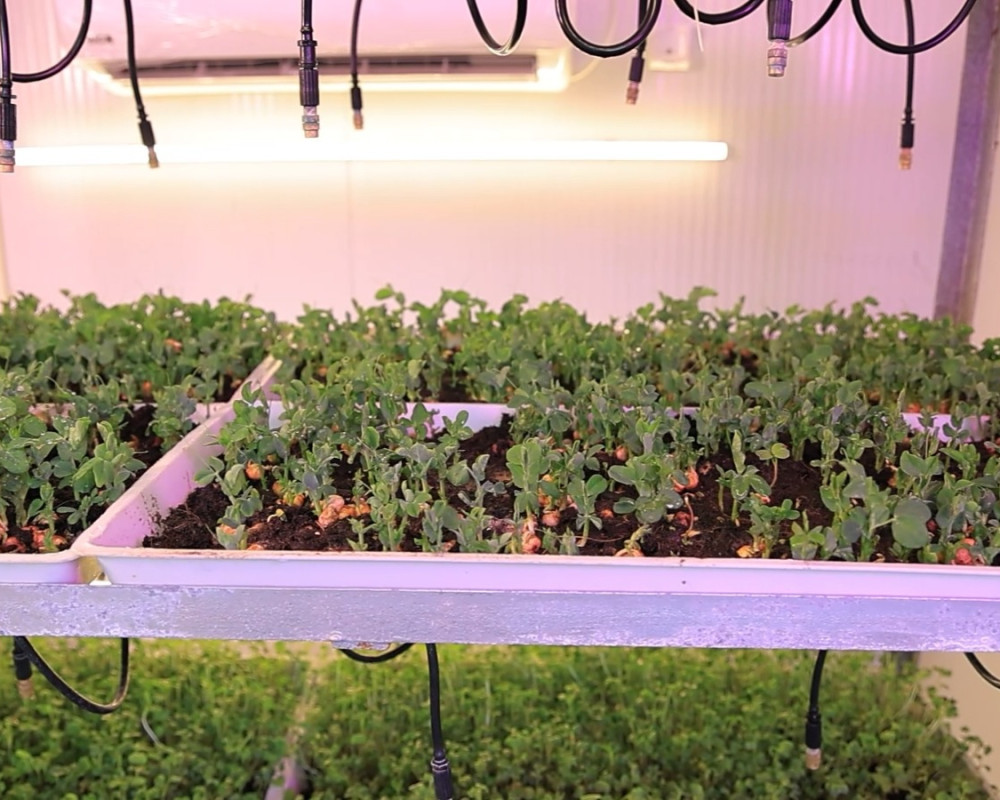
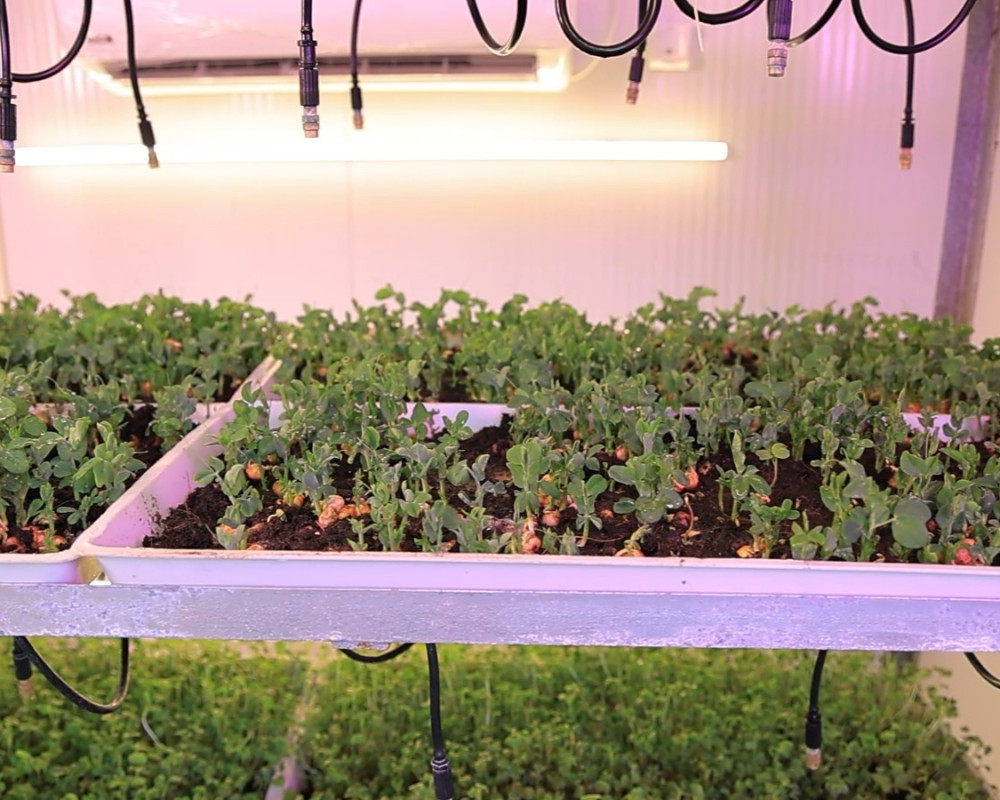
Salman expanded beyond lettuce and basil, adding a small nursery for producing seedlings and propagating different varieties.
He now grows crops including rocket, radishes and peas.
Managing the growing environment has also become part of the work.
Salman uses equipment to regulate temperature and ventilation, including a timer that controls when fans switch on.
He said he keeps the system at about 26 degrees Celsius, based on what he has learned through online research, reading and hands-on experimentation.
Water remains at the heart of the system.
Rather than using it once and discarding it, the pump continuously circulates it through the pipes and back to the starting point.
That reduces waste and allows Salman to make the most of the water available to him.
During hotter periods, however, some water is lost through evaporation and must be replaced.
Depending on temperatures and surrounding conditions, he said, he may need to add about 20 litres of water every three days.
The amount also changes as the plants grow and their root systems develop.
What began as a small project inside his home has now become something Salman sees as a potential long-term business.
He has gradually increased production, added the nursery and diversified the crops, while drawing on the relationships and knowledge he gained from his years working with restaurants and hotels to find markets for his produce.
Salman says he did not choose hydroponics because it was an easy path. He turned to it because the labour market had left him with few alternatives.
But what he found was an opportunity.
The system requires relatively little capital to get started, can operate within a limited space, uses water efficiently and gives him greater control over production.
For Salman, that combination has turned an economic setback into a new beginning.
From a small corner of his home, he is growing lettuce, basil, rocket, radishes and peas — but also building a livelihood at a time when traditional employment has become increasingly difficult to find.
His ambition now is to expand the operation, increase production and make greater use of hydroponic farming as a practical, low-cost opportunity for young people searching for work and new ways to earn an income.
This video was produced with financial support from CFI, Expertise France and the European Union. The beneficiary is solely responsible for the content of this document, which in no way reflects the views of CFI, Expertise France or the European Union.