Gaza / PNN/ Eman Hillis
For 13 years, Zeynep Hassouna patiently built a reputation as one of Gaza City’s most skilled beauty experts. In one single morning, Zeynep’s world and dreams shrank to a tent.
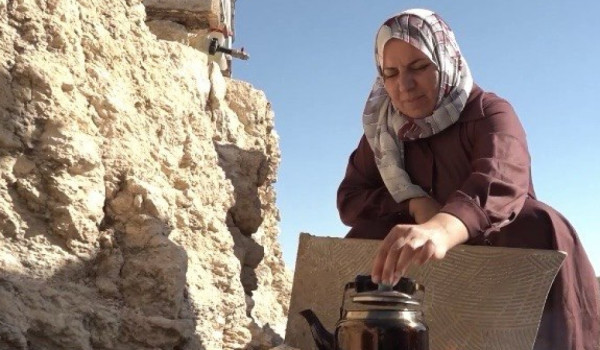
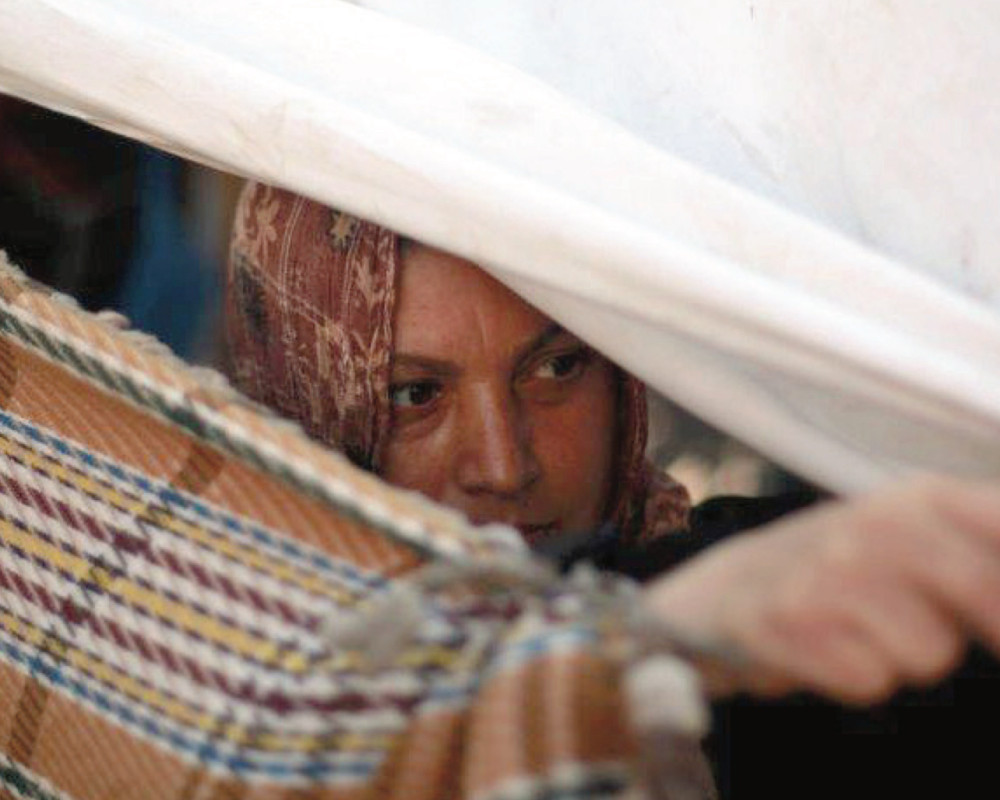
Today, Zeynep, 36, lives in a crowded tent in al-Yarmouk playground with her family and her brother’s. Piles of rubbish sit in front of the tent, occasionally emitting a foul stench and attracting flies.
“Before the war, I used to live as a queen — my business was excellent.” Zeynep managed to achieve remarkable success despite Israel’s 18-year blockade.
Women from the southern Strip traveled hours to her salon, Zain Salon, to have their hair or makeup fixed.
Her business was the source of income for her family and her brother’s as well.
In the first hours of war, Zeynep and her staff waited for clients, but none came. “In the [salon's] street, hardly one man would pass every one hour or two,” Zeynep described the Sahaba Street, one of the most lively streets in Gaza City.
Feeling an upcoming calamity, Zeynep locked the salon by noon on October 7. She called the property owner to end the salon’s rental contract. “For a while,” she said, but that “while” extended for two years and is still ongoing.
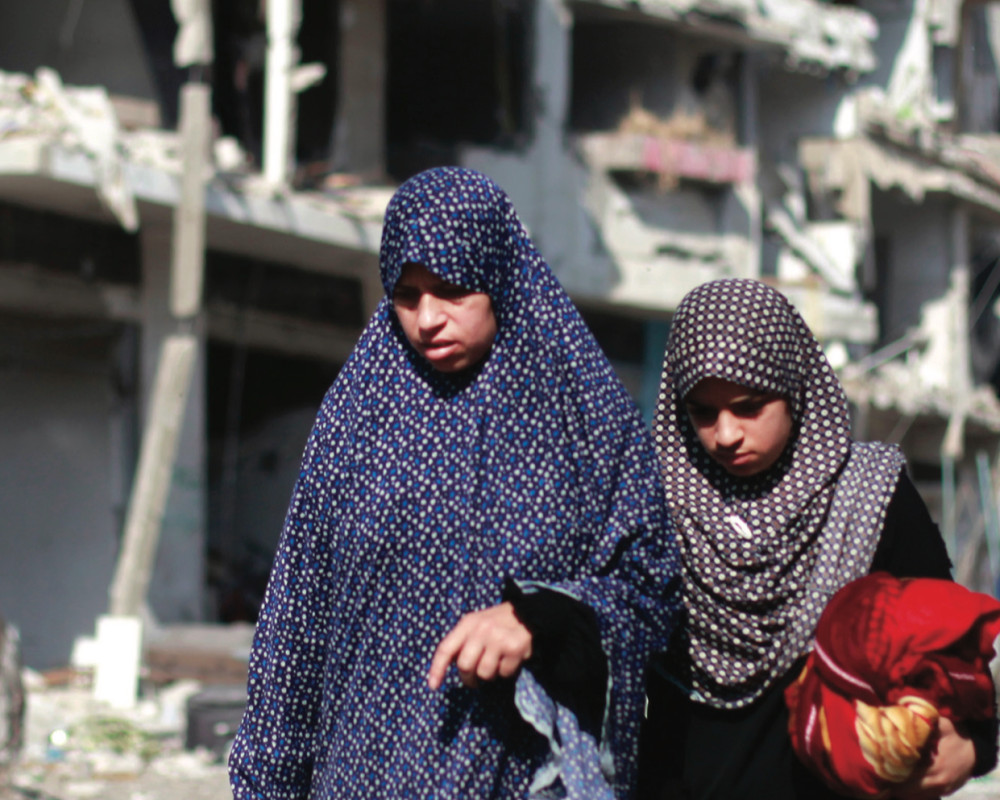
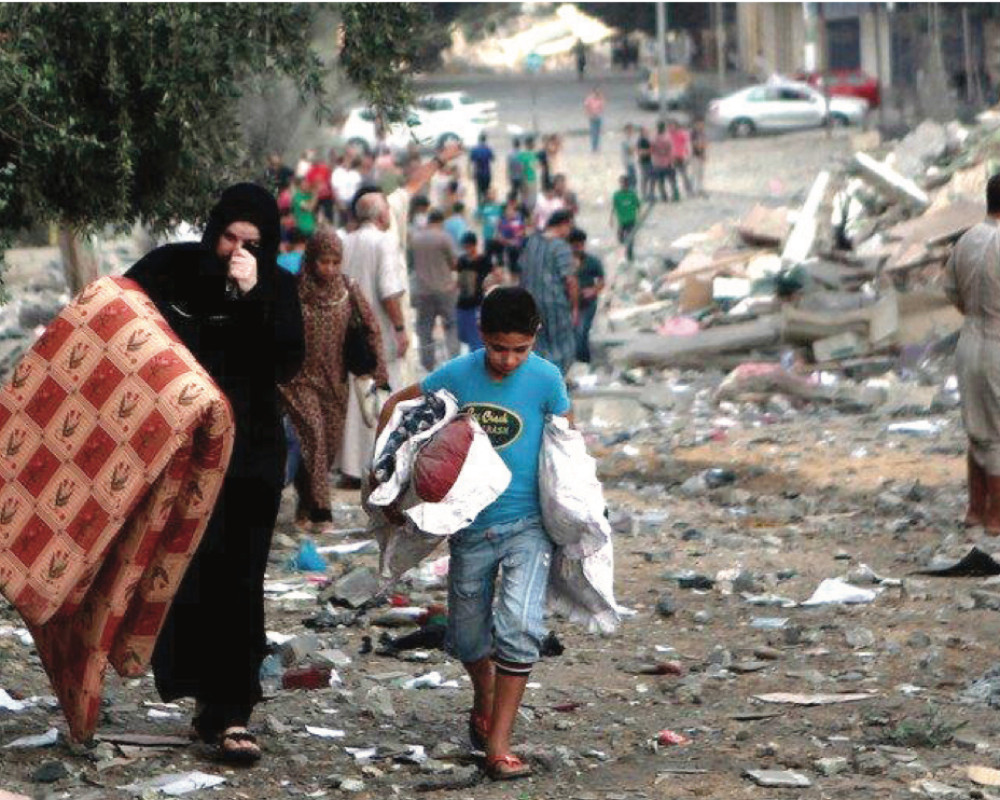
The successful beauty expert became an evacuee. The Israeli army forced her to flee with her family to al-Shifa hospital, to al-Zarqaa neighborhood, to a tent in al-Yarmouk playground, to a tent in the southern Gaza Strip, and to a tent in al-Yarmouk playground once again.
Beauty for the Bereaved
Even with the salon closed, Zeynep tried to resume her work in any way. She called her regular clients, offering beauty services, but all said they could not. They were mourning one or more family members.
“Many of my clients were martyred. One woman was a regular client of mine with her five daughters — all of them were martyred. Some lost their husbands, and some lost their children.”
For the first 14 months of war, Zeynep did not gain one shekel.
According to Zeynep, one year and nearly two months into the war, people began to seek beauty experts. Her phone started ringing again, with women asking to do bridal makeup.
During that period, all of the brides Zeynep attended had experienced personal tragedy.
“I fixed makeup for a bride who lost both parents, a bride who lost her mother-in-law, and a bride who lost her brothers-in-law."
"I also fixed up makeup for many war widows who were to marry their late husband’s brothers," she added,
The makeup would be very simple, “just to get through the celebration.” During that period, celebrations were a way to cling to normalcy and tradition rather than a display of joy. Mourning families wanted to reclaim the means to smile and ensured to honor their martyred loved ones in the celebrations.
Zeynep’s work remained limited, not bringing in enough income to cover her family’s basic needs in the city with the [highest cost of living.
What if
“If I were able to work properly and bring any food, my nephew wouldn’t have eaten feces from the ground.”
One morning during the harsh famine, Zeynep took her six-year-old nephew to a school to register for humanitarian aid during the famine. She left him at the door for just a moment.
When she returned, she found him sitting in the school bathroom, a tiny piece of bread in his small hand, pressing it into the dirt.
Zeynep tortures herself with the thought that her inability to work was the reason behind all of her family's and her brother’s family problems.
Unlike many Gazans, Zeynep did not lose her home due to bombardment. Before that, the war deprived her of living happily in it, forcing her to be displaced repeatedly.
Eventually, her family was kicked out of the home, and did not find any place other than a simple tent sheltering them. It had taken Zeynep and her brother nine years to finally find an apartment spacious enough for both families. They lived in it for six years, where Zeynep's nephews knew no other home. Losing it meant losing the last piece of normal life they could offer to the children.
“If I were working, we would not have been here in the tent. My mother would not have been in this state.”
Zeynep’s mother, 72, became paralyzed due to the harsh famine in northern Gaza. In the first days of famine, Zeynep’s mother began to see hallucinations suddenly.
“She was scolding us, telling unreal things, like why her brother was martyred and no one told her. She once hallucinated a bomb directed at her. I assumed it was a side effect of the high blood pressure drug. But when I took her to the hospital, she was diagnosed with a stroke in the brain.”
As the famine and the war intensified, Zeynep’s mother was diagnosed with three more strokes.
“My mother needs diapers because of her condition right now. But I can’t even afford to buy them.”
Unreached dream of beauty tent
Zeynep hoped that the ceasefire would allow her to work as before, to continue pursuing the dream she had left, and consequently to enhance her family’s and her brother’s lives. But the ceasefire fulfilled none of those hopes.
“Even after the ceasefire, the raw materials needed for my work were not available. For example, if a client asks me to dye her hair, I have to provide hair bleach powder, which is barely available in Gaza.”
Zeynep occasionally wanders the city searching for raw materials. If found, prices are often about 15 times their usual price. “The problem is I can’t buy and store them — these products spoil quickly, and I don’t have a salon that guarantees enough clients to use them all.”
This reality makes her consider opening a beauty tent to widen the circle of her clients.
“I am going to buy a tent and set it in the playground. One mirror, one chair — and I’ll resume work. I will start by offering the simplest services: cutting hair, removing facial hair, or shaping eyebrows.”
“I wish I could reopen my past salon, but I no longer have the capacity to do that.”
This expert’s current aim is a bitter contrast to her former ambition. Before, she put great effort into saving money to buy advanced machines that are rarely found in Gaza, dreaming of having the Strip’s only salon of its kind.
Normally, a beauty salon would have air conditioners to protect makeup from melting in the heat; the fabric of the tent traps the heat instead. On rainy days, Zeynep has to stay cautious, ensuring the rain does not seep into the tent, ruining everything.
She will not be able to leave the tent even during the night, fearing theft, especially in the state of [chaos](https://www.theguardian.com/world/2025/may/07/desperate-traumatised-people-gaza-faces-wave-of-looting-theft-and-violence) that overwhelmed Gaza following the war.
But even this simple yet challenging dream is unreachable for Zeynep. She needs to buy another tent to pursue her dreams, but her mother’s medical care consumes every shekel she spares.
Zeynep knows that she can no longer restore what the war deprived her of. Her wide salon, her mother’s health, her nephews’ memories of stability — all belong to the past now.
Despite this, Zeynep still wanders the Strip, searching for raw materials, and walks long distances to her clients' houses, with her dream of owning the Strip’s only salon of its kind in her mind