Washington / PNN /
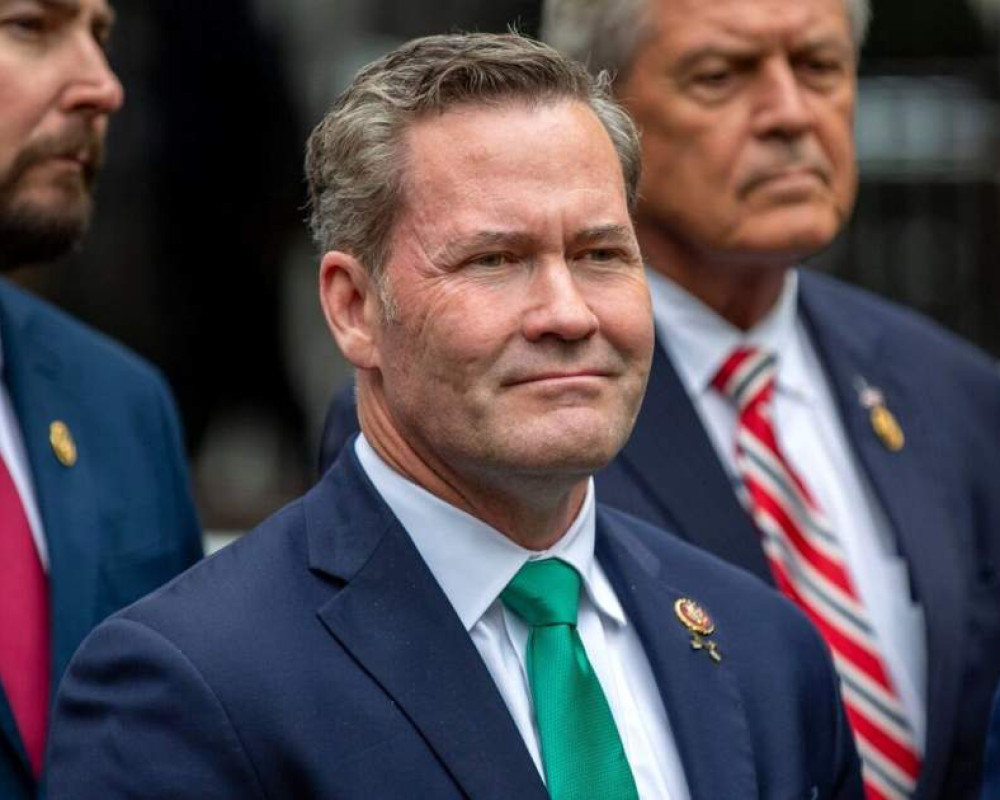
In an op-ed published Friday in The Washington Post, U.S. Ambassador to the United Nations, Mike Waltz, strongly defended President Donald Trump’s proposal to establish a new international body called the “Peace Council,” tasked with overseeing Gaza’s reconstruction and managing the post-war transitional phase. Waltz described the council as “the only path toward a secure Gaza, where Palestinians can determine their own future free from terrorism or occupation.”
Waltz emphasized that opposing the U.S. resolution at the UN Security Council would constitute “taking sides with the continuation of Hamas rule or a return to war with Israel,” warning that the region cannot bear another round of conflict. According to the proposal, Trump is expected to chair the Peace Council, with former British Prime Minister Tony Blair joining as a senior member.
The United States has officially pushed for the resolution’s adoption at the Security Council, requesting that the proposed international force, named the International Stability Force (ISF), be authorized to operate in Gaza for two years with broad powers, including “all necessary means” to ensure security, according to Reuters. The draft indicates support from Egypt, Qatar, Saudi Arabia, Turkey, and the UAE, providing Washington with regional backing to advance its plan.
Waltz stated that the Peace Council aims to support a Palestinian technocratic committee responsible for civil services in Gaza during the transitional period, while the Palestinian Authority would simultaneously implement its reform commitments. He argued that this approach “finally opens the path for Palestinians to determine their own future free from Hamas’ grip.”
The council would also coordinate humanitarian aid, accelerate reconstruction, and launch economic development plans, with Waltz noting initial support from World Bank President Ajay Banga.
Meanwhile, Taher Al-Nunu, a Hamas official, told Al-Arabi that the movement had not received a copy of the plan nor was involved in drafting it, highlighting a wide gap between the U.S. vision and the political reality in Gaza. This exclusion reflects an American effort to bypass Hamas entirely in post-war arrangements, despite the group’s renewed presence on the ground following the Israeli withdrawal under the ceasefire.
Reuters reported that Hamas carried out a “settling of scores” campaign after the ceasefire took effect, resulting in 33 deaths according to sources. These developments occur amid widespread destruction from the war, which lasted over two years, collapsing infrastructure and threatening hundreds of thousands with hunger due to restrictions on aid access.
Waltz argues that it is time to “push the peace process through stronger measures,” viewing the proposed framework as laying the foundation for “an emerging Gazan economy capable of growth without permanent dependence on foreign aid.” The central element of Waltz’s vision is the International Stability Force—a multinational unit intended to disarm Gaza, dismantle military structures and factions, and protect civilians over a two-year period.
Waltz acknowledges that the road to “lasting peace” in Gaza and the region is “long and arduous,” but stresses that the Security Council faces a decisive moment “to demonstrate its commitment to the spirit of its founding principles.”
The Peace Council plan reveals a U.S. attempt to reshape the Gaza landscape according to a security and political vision that sidelines Hamas and gives Washington and its allies a direct role in managing the transitional phase. However, the absence of Palestinian consensus and the inclusion of a broadly empowered international force raise questions about public acceptance in Gaza and the potential for the council to become a new form of international guardianship. Placing Trump at the head of the council adds a sharply political dimension to the initiative at a time of domestic U.S. division, which could limit its independence or effectiveness.
Experts note that, despite its rhetoric of reconstruction and stability, the U.S. plan resembles a disguised international trusteeship, keeping Palestinian decision-making hostage to donor nations and major powers. The exclusion of key Palestinian actors, particularly Hamas, weakens its practical implementation on the ground and risks turning the Peace Council into a tool for reshaping Gaza according to an external, unilateral vision. Granting the international force broad powers may further escalate tensions rather than create lasting solutions.
Source: Al-Quds Newspaper