Gaza / PNN /
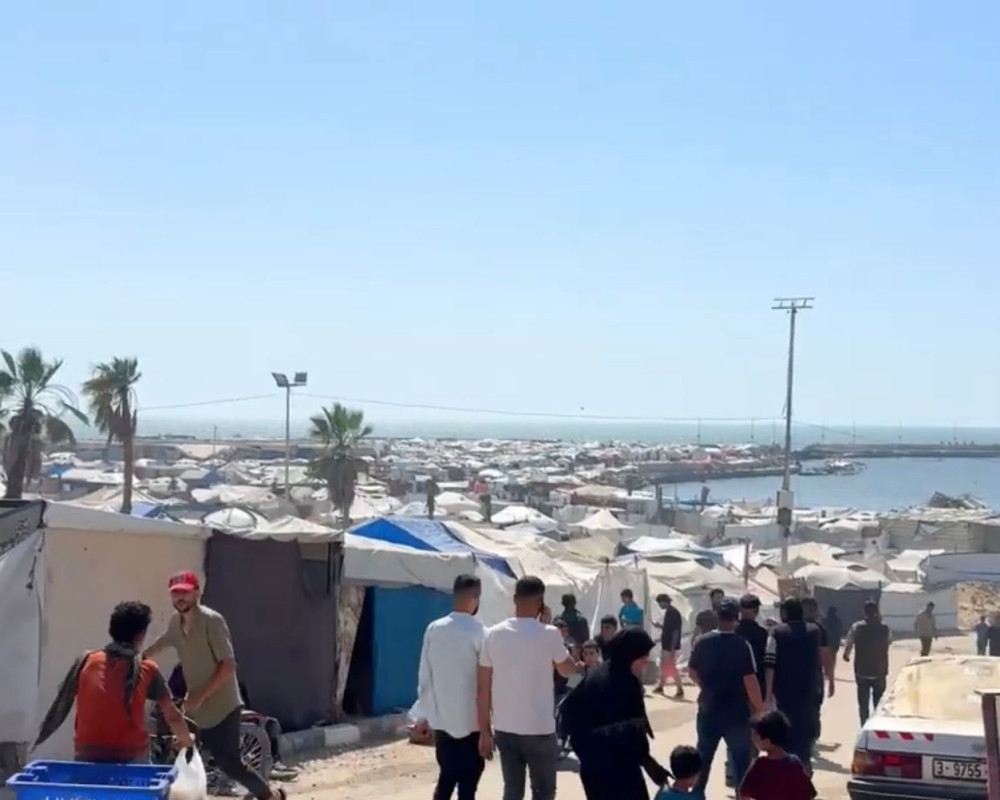
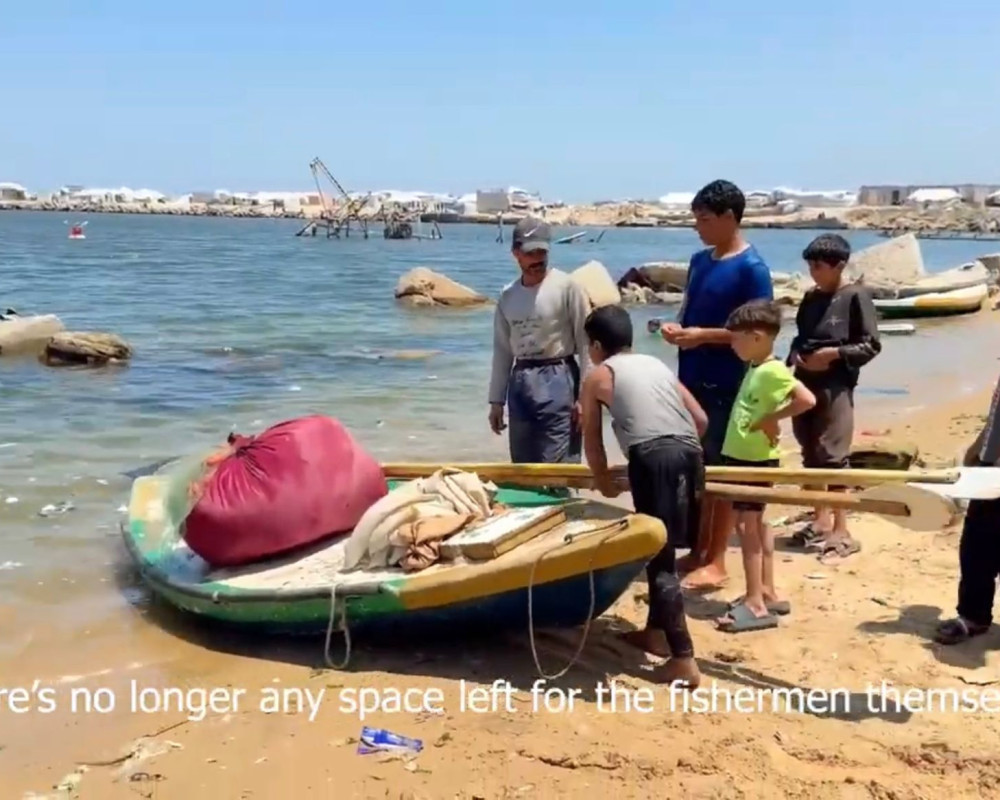
In Gaza, nothing remains as it once was. Amid the chaos of displacement and piles of intertwined rubble, the features of the city vanish. At the fishermen’s port on the Gaza shoreline, hundreds of tents shelter displaced families whose lives have been torn apart, forced by the occupation to endure a painful reality filled with fear, the smell of gunpowder, and the sounds of bullets and shells. Dreams of many have sunk—some grew up on fishing boats and turned it into a profession and livelihood, now worn down by loss, destruction, and ruin; others have taken it as a refuge, setting up their tents in hopes of shielding their children and keeping their families together.
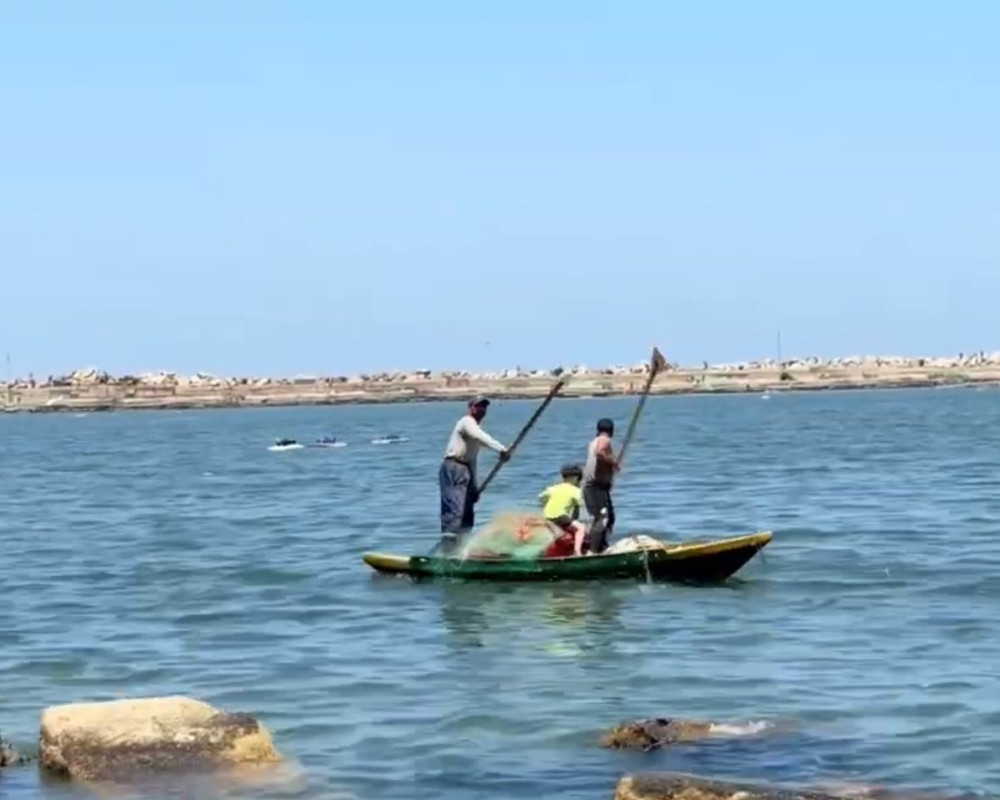
At the Gaza fishermen’s port, hundreds of Israeli boats patrol the waters, chasing fishermen and preventing them from earning a living for their families. Fisherman Mohammad Abu Al-Khair, who has been going back and forth to the sea since he was six, learned the craft from his ancestors. Speaking with a voice heavy with sorrow, he recounts the tragedy of Gaza’s port, which Israeli boats and aircraft have turned into heaps of rubble and ash. There is no boat left unscathed, no fishing net, no engines, no hooks or reels for the fishermen—everything has been destroyed by the occupation.
Since the outbreak of Israel’s extermination war in Gaza, the dangers have intensified. Mohammad Abu Al-Khair, who still goes to the sea seeking his daily sustenance and the livelihood of his children, knows well that the threats of Israeli boats and patrols loom over everything, constantly tracking fishermen in Gaza’s waters. Many fishermen have been injured or killed; Israeli gunboats lie in wait. This is exactly what happened to Mohammad and his cousin, who was killed about three months ago. Israeli boats pursued them, opening fire until Mohammad was injured in his leg, while his cousin was martyred on the spot.
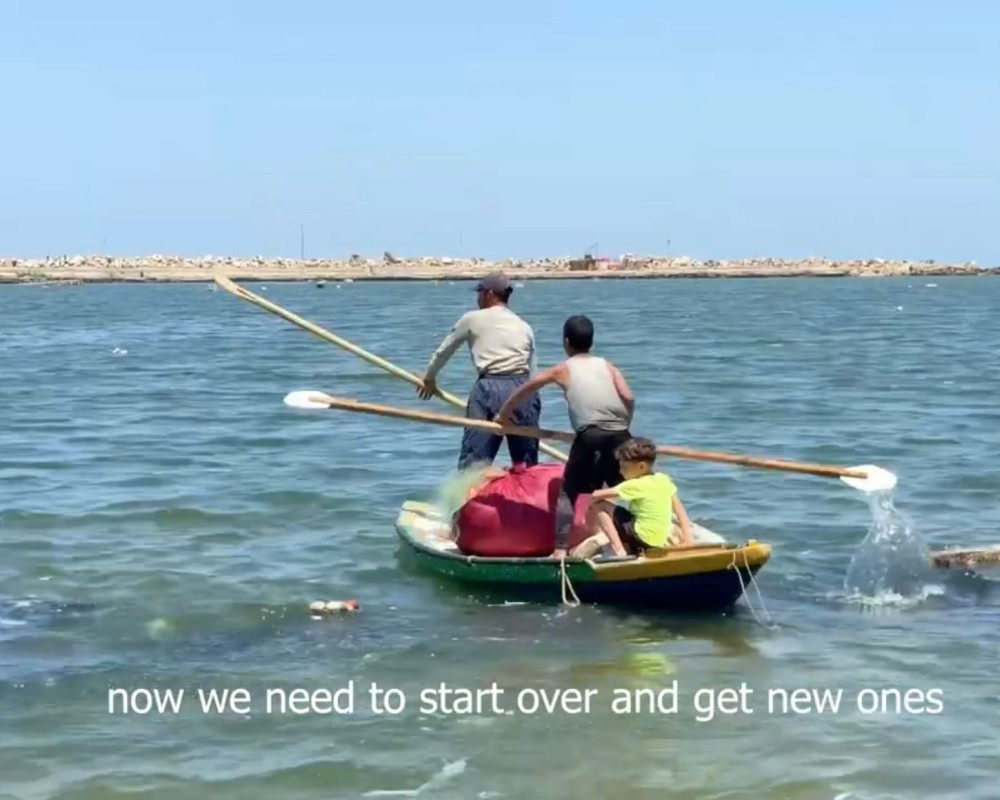
This did not stop him from returning to the sea, despite knowing the risks and dangers. The fisherman leaves the port of Gaza fully aware that he cannot know for certain whether he will return from his fishing trip, be arrested, or be killed—a fate shared by all Gazans. He rebuilt his equipment with his own hands after the occupation destroyed it, working with simple, makeshift tools and materials he could find. Everything new must be improvised to adapt to the reality imposed by the occupation and Israel’s extermination war.
Fisherman Mohammad Abu Al-Khair hopes that life in Gaza will return to normal once the war ends, allowing him to obtain a new boat to replace the one destroyed by Israeli boats, along with new engines, fishing nets, hooks, and reels. He dreams of fishing freely and safely, of the port becoming a workplace again, away from displacement and tents, and of children and families returning to play, relax, and spend time together.
Displaced mother Shireen Abu Tabl, surrounded by her children, looks out from a tent at the fishermen’s port, hoping her children can live safely, free from the fear of gunfire, shells, and Israeli boats firing at the displaced. She and her family fled under the fire of quadcopter drones from Jabalia Camp and found no safer place than the seashore. Abu Al-Khair explains that the area remains unsafe; children are constantly frightened and terrified by the continuous fire from the occupation’s boats targeting both the displaced and the fishermen. She hopes to return home and for life to resume as it once was, so her children can enjoy a better future and a safer life.
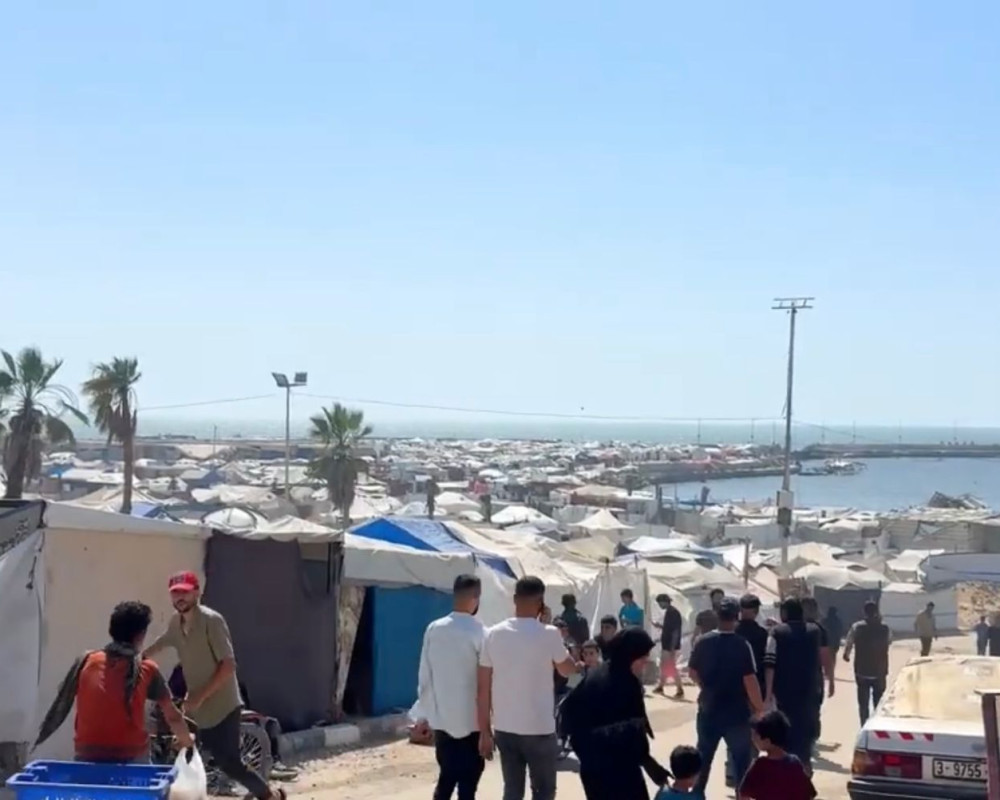
Meanwhile, Gaza Fishermen’s Syndicate head Nizar Ayash warned that losses in the maritime fishing sector have exceeded $75 million, alongside damage affecting approximately 70% of port facilities in the central and southern regions. He noted that Israeli authorities continue to impose strict restrictions on fishing activities within Gaza’s territorial waters, allowing only short-distance sailing with small boats, which significantly reduces daily production.
This story was produced under the Qarib program, implemented by the French Media Development Agency (CFI) in partnership with and funded by the French Agency for International Cooperation (AFD).