Gaza / PNN /
The British newspaper The Guardian said that Israel’s renewed bombardment of Gaza violates the fragile ceasefire agreement, describing it as one that “exists in name only.”
After Israeli airstrikes killed more than 100 Palestinians overnight, the illusion of calm in Gaza lies in ruins.
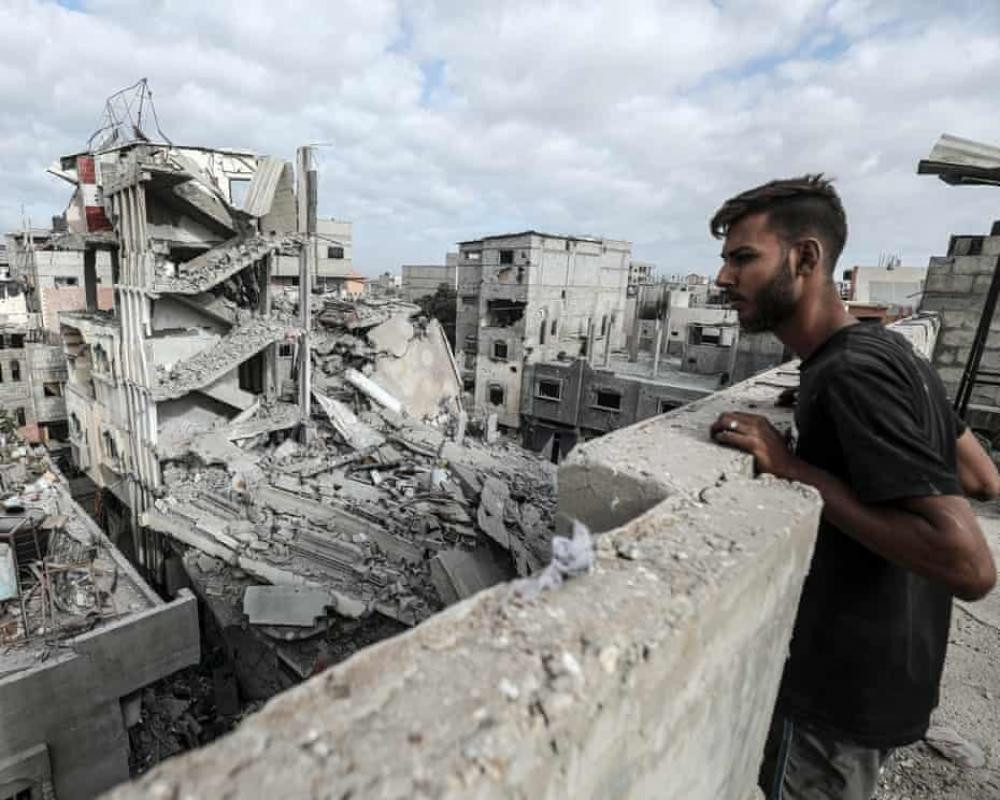
On Wednesday, the world once again woke up to news of heavy bombing and harrowing images of destruction in Gaza.
At least 104 Palestinians were killed in Israeli air raids on Tuesday night, including 35 children. Among the targeted sites was a camp housing cancer patients—all this despite a ceasefire agreement reached only three weeks ago.
Following the attack, U.S. President Donald Trump claimed that “nothing will endanger” the ceasefire deal he helped broker on October 10.
In its Thursday editorial, The Guardian questioned whether the ceasefire would hold. To answer that, Middle East correspondent Emma Graham-Harrison wrote a detailed report.
U.S. Vice President J.D. Vance downplayed the deadly strikes as mere “skirmishes,” insisting that the ceasefire remained intact.
But Tuesday night’s assault exposed the fragility of a truce marred by violence since it began. Before the latest air raids, Gaza’s Government Media Office reported that Israel had already committed 80 violations since the start of the ceasefire.
When asked if she believed the truce would last, Emma flipped the question: “Was this ever truly a full ceasefire?”
“An average of ten Palestinians have been killed daily since the ceasefire was signed,” she said. “From the pattern of killings in Gaza, we know that the vast majority are likely civilians. If people were being killed at this rate elsewhere, it would be considered an active conflict—even if the rate is lower than before the ceasefire. So when we talk about a ceasefire, we must recognize that the killing has never actually stopped.”
Last week, the United Nations World Food Programme reported that despite a slight increase in aid deliveries to Gaza after the ceasefire, the territory still receives only about 750 tons of food per day—far below what’s needed to prevent famine.
“Gaza needs about 2,000 tons of food daily just to meet the bare minimum survival needs—not a balanced diet, but simply to prevent starvation,” Emma said. “The current deliveries are barely a third of that amount, so we are nowhere near meeting survival needs.”
The reporter noted that the shortage of aid was a key reason behind accusations that Israel is violating the ceasefire.
Civil society organizations also condemned Israel for blocking the entry of industrial equipment needed to clear debris and recover the bodies of an estimated 10,000 Palestinians still trapped under the rubble.
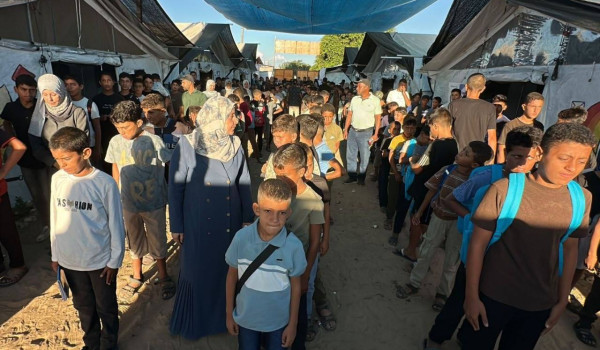
There is also a dire need for tents and temporary shelters, especially with winter approaching. Last week’s issue of The Guardian highlighted the worsening humanitarian situation in Gaza even after the ceasefire.
So far, Hamas has handed over the remains of 15 captives, while 13 bodies are believed to remain in Gaza. The group says it has lost contact with some units that were holding captives who died either on October 7 or during their detention.
After the latest bombardment, Israel announced that it was “resuming” the ceasefire. But as the dust settles and Palestinians search for their loved ones among the dead, the future remains uncertain.
Iyad Amawi, a representative of the Gaza Relief Committee, said: “The genocide continues, only in a different form. With new international legitimacy and global silence, what’s happening now is the normalization of a slower war—one that continues under international cover that also blocks aid.”
When asked whether this is the new status quo, Emma said nearly two million starving people are desperately waiting for aid that has yet to arrive, while hundreds continue to die under the so-called ceasefire.
Amawi added: “I don’t think this situation can hold. If you speak with people experienced in complex ceasefire negotiations, you’ll find that there was a certain momentum that led to this point—driven by urgent pressure to stop the killing and by Trump’s eagerness to broker a deal.
“But if that momentum isn’t used to build a more stable reality and address core questions about who will govern Gaza and ensure security there, it’s highly likely the territory will relapse—or collapse—into an even bloodier conflict,” Emma concluded.
Meanwhile, some politicians are increasingly worried about Israel’s growing international isolation as a result of the war, which has eroded its support in the United States and among key allies.
There is also grief and anger over the losses suffered by Israeli soldiers in the fighting—many of whom were reservists who volunteered for duty.