Bethlehem / PNN /
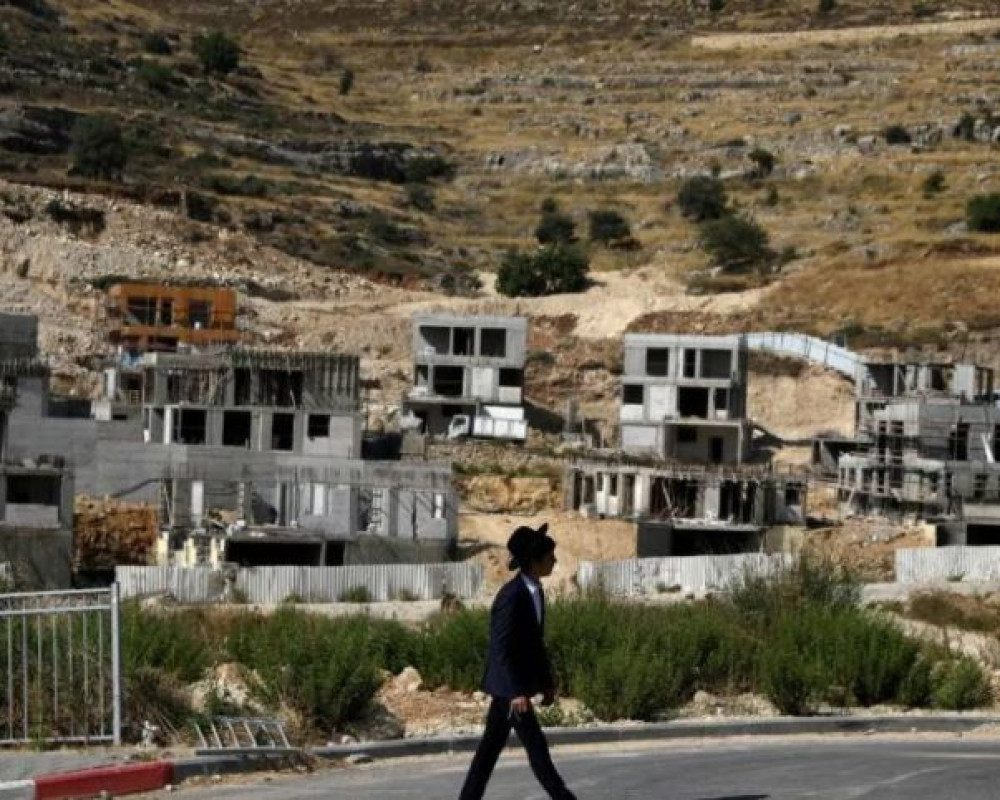
The Israeli government is advancing unprecedented large-scale settlement projects across the occupied West Bank, seeking to push through as many as possible before the upcoming general elections. It also aims to approve additional projects to be implemented later, in a bid to establish irreversible facts on the ground should a new government come to power.
Since taking office, Prime Minister Benjamin Netanyahu’s government has overseen significant settlement expansion, led by Finance Minister and Minister within the Defence Ministry responsible for settlement affairs, Bezalel Smotrich.
According to Yedioth Ahronoth newspaper on Tuesday, around 48,000 settlement housing units have been built or approved since the current government was formed at the end of 2022. The figure is expected to reach 50,000 by the end of this year.
The paper reported that roughly 26,000 dunams of West Bank land have been seized during Netanyahu’s current term through declarations of “state land.” By comparison, Israel had confiscated 28,000 dunams in this manner over the previous 27 years combined.
The surge in settlement projects, the report said, is designed to prevent the establishment of a Palestinian state. “Although former U.S. President Donald Trump prohibited Israel from formally annexing territory, what we are seeing under this government is a de facto annexation—visible and deeply felt on the ground,” said Yoni Mizrahi, head of the settlement monitoring team at the Israeli peace movement Peace Now.
Smotrich is expected to push further settlement initiatives ahead of the general elections scheduled for October, though early elections remain a possibility.
Meanwhile, Israel has been carrying out major infrastructure projects to benefit West Bank settlements, including the expansion and conversion of several roads into highways, some of them around occupied East Jerusalem, where construction is still ongoing.
One of the government’s main goals, according to Yedioth Ahronoth, is to expand settlements in “strategic areas” to sever Palestinian territorial continuity and block the establishment of a future Palestinian state. In May, the Israeli government approved the legalisation of 22 settlement outposts, several of which are currently being established in the northern West Bank.
In August, the so-called “Higher Planning Council” of the Civil Administration — which operates under Smotrich’s authority — approved the construction of 3,400 housing units in the controversial E1 area. This project would effectively cut off the geographical link between the northern and southern parts of the West Bank. Smotrich described the plan as one that “buries the idea of a Palestinian state.”
The report added that Israel is preparing a new project in Area C involving a comprehensive land survey as a prelude to further confiscations. Palestinians will be required to prove ownership of their land “to make it easier for Israel to declare them as state lands.” Hundreds of millions of shekels have reportedly been allocated for this effort.
The fact that a full government ministry—not merely a directorate—is implementing these projects, Yedioth Ahronoth noted, reflects a profound shift in Israel’s approach to managing the occupied territory.
The department tasked with legalising informal settler outposts, which falls under Smotrich’s authority, is currently working to connect more than 80 unauthorised settler outposts—established by far-right activists across the West Bank—to infrastructure networks including roads, water, electricity, sewage, and telecommunications.