Hebron / PNN /
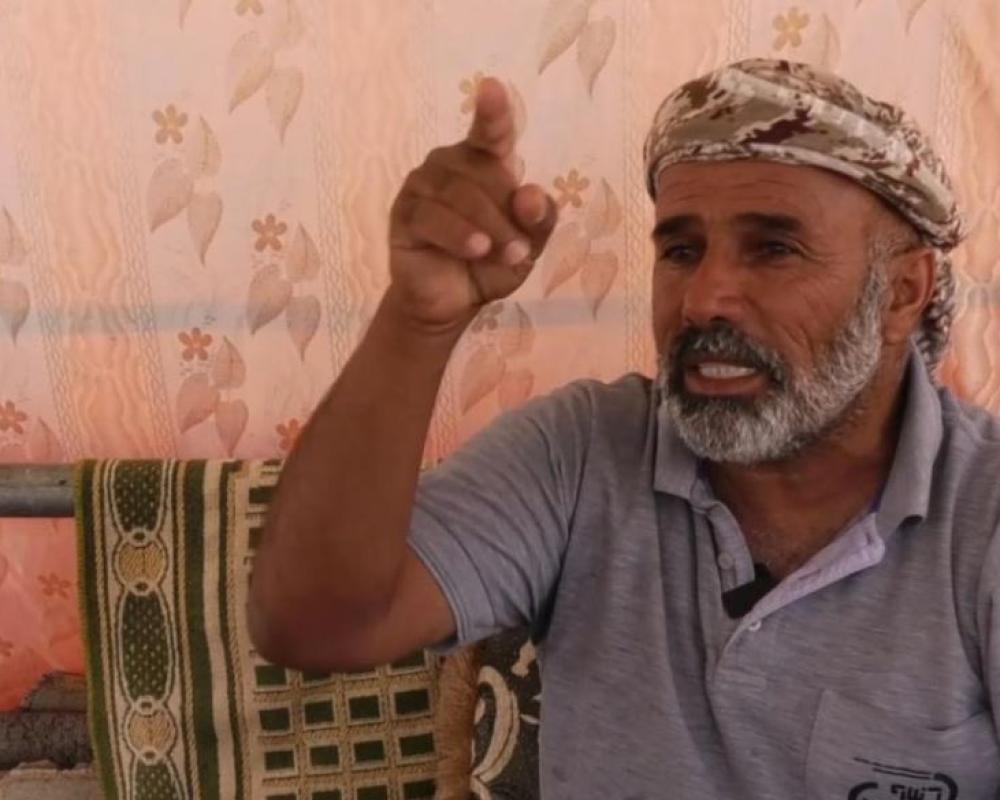
Under a makeshift tent he erected over the rubble of his demolished home, Yasser al-Hathaleen sits on the bare ground in the tiny hamlet of Umm al-Khair, part of Masafer Yatta, south of Hebron. His presence alone stands as a symbol of defiance and resilience against Israeli occupation policies that aim to uproot Palestinian residents from Area C in a broader plan of forced displacement.
Al-Hathaleen lives under siege — a blockade that affects people, livestock, and even the land itself. Like his neighbours across Masafer Yatta, he is forbidden from rebuilding his house on the ruins of the one demolished by Israeli forces.
Umm al-Khair lies perilously close to Israeli settlements; the settlers have erected a wall that runs almost flush with the village’s homes. This proximity has left residents constantly threatened with demolition.
A Policy of Pressure and Isolation
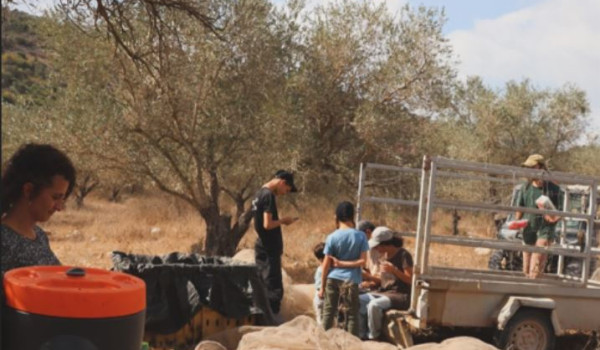
Israel’s ongoing demolitions and settlement expansion are part of a strategy to pressure Palestinians in Umm al-Khair and other communities of Masafer Yatta to leave their lands. Residents are often barred from accessing grazing areas for their sheep and goats or reaching their farmlands where they cultivate wheat and barley. In summer, after harvesting, they usually let their animals graze freely in the fields to avoid the high cost of fodder — a practice now made nearly impossible.
“We live off livestock,” says Yasser al-Hathaleen, “and it’s our only source of income. Many families can no longer meet their basic needs or even afford a single sack of flour. The occupation has seized vast areas of our farmland, fenced them off, and banned us from entering. We’re forced to keep our herds locked in small enclosures, and when we let them out to feed, they can only move about 100 metres. Farmers now spend huge sums to buy fodder after losing access to the open pastures.”
Escalating Violence and Daily Harassment
Al-Hathaleen says the situation has worsened since the outbreak of the war in Gaza and the accompanying surge in settler violence, often carried out under the protection of Israeli soldiers. “They attack us to make us leave our homes and lands so they can take over,” he says.
He explains that Israeli authorities have confiscated land, destroyed water wells, and banned Palestinians from accessing natural water sources — forcing residents to buy and store water in costly tanks. Hundreds of olive trees have been uprooted, and even fences have been torn down. “Settlers and soldiers assault Palestinian residents — beating them, humiliating them, and cursing them. They don’t spare the elderly or the young,” he adds.
Enduring Despite Everything
According to al-Hathaleen, “the situation keeps tightening around us. Life is getting harsher.” Yet despite the economic hardships, rising feed prices, mounting debts, and settler harassment, residents of Umm al-Khair remain determined to stay. “We will not leave — even if we starve or freeze. No matter what price we pay, even if it’s our lives, we won’t abandon Umm al-Khair. This is our homeland, and we will not leave it.”
Masafer Yatta as a whole faces a systematic campaign of harassment and displacement designed to connect the southern Hebron settlements with the Negev area, clearing the way for new Israeli urban projects.
Earlier this month, Israeli forces expelled around 250 residents from the nearby community of Khallet al-Dabe’a, destroying homes, caves, and shelters in an attempt to seize their lands under military pretexts.
Last August, local teacher Odeh al-Hathaleen was killed after a settler shot him at point-blank range as he tried to defend his village. The attacker was later released by Israeli authorities — a move widely seen as a blatant affront to Palestinians.
This story was produced within the framework of the “Qarib” Programme, implemented by CFI – the French Media Development Agency, with funding from the French Development Agency (AFD).